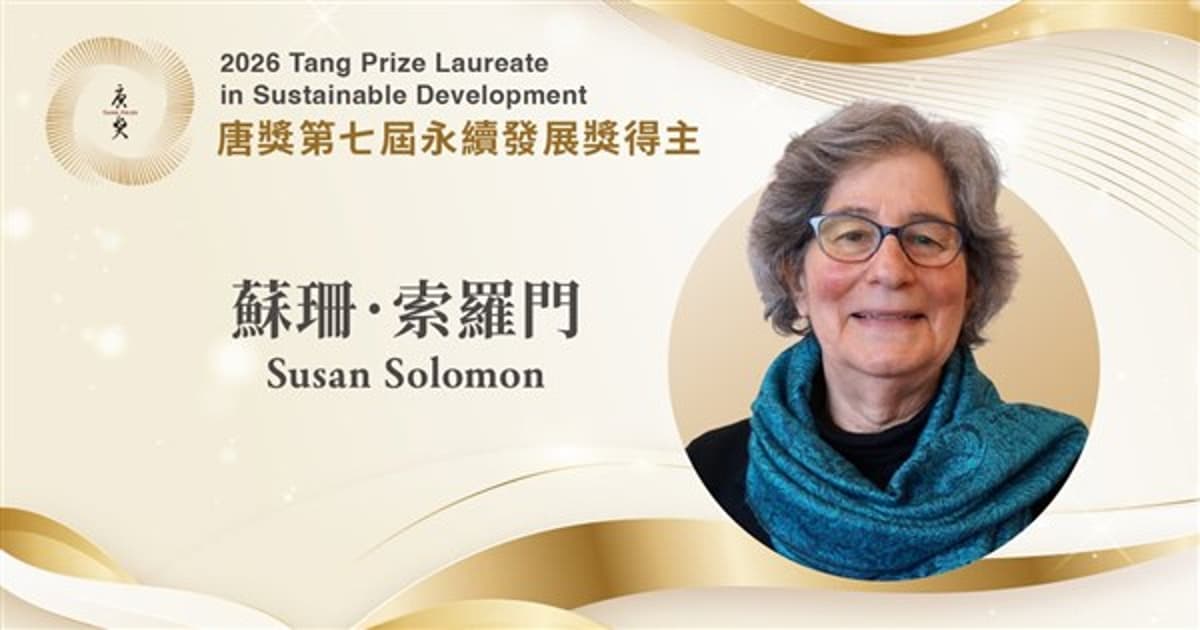
American Scientist Solomon Wins Tang Prize in Sustainable Development
Why It Matters
Solomon’s research underpins landmark international agreements like the Montreal Protocol and informs climate‑risk assessments, making her recognition pivotal for future policy and mitigation strategies.
Key Takeaways
- •Solomon’s CFC research led to the Montreal Protocol’s ozone phase‑out
- •Her 2009 study shows CO₂ warming can linger for a millennium
- •Antarctic ozone hole shows early signs of recovery after CFC bans
- •Tang Prize award includes $1.58 million prize and $200k research grant
- •Solomon co‑chaired IPCC Working Group I, shaping global climate policy
Pulse Analysis
Susan Solomon’s Tang Prize win highlights a career that bridges rigorous science and actionable policy. Her 1980s discovery that chlorofluorocarbons catalyze Antarctic ozone loss provided the empirical foundation for the 1987 Montreal Protocol, the first global treaty to phase out a class of pollutants. By translating complex atmospheric chemistry into clear regulatory pathways, Solomon set a precedent for how scientific insight can drive international cooperation on environmental challenges.
Beyond ozone, Solomon’s 2009 research revealed that the thermal inertia of the oceans can lock in warming for up to a thousand years after CO₂ emissions stop. This finding reshaped climate‑risk modeling, emphasizing that mitigation efforts must account for long‑term heat retention. As a co‑chair of the IPCC Working Group I for the Fourth Assessment Report, she helped synthesize this science for policymakers, influencing national carbon‑pricing strategies and adaptation plans worldwide. Her work continues to inform the latest IPCC reports and underpins the urgency behind net‑zero pledges.
The Tang Prize, valued at roughly $1.58 million plus a research grant, signals growing recognition of climate science as a cornerstone of sustainable development. Awards of this magnitude raise the profile of atmospheric research, attract new talent, and encourage cross‑disciplinary collaborations at institutions like MIT and NOAA. For the U.S. business community, Solomon’s achievements underscore the economic risks of delayed climate action and the competitive advantage of investing in green technologies that align with emerging regulatory standards.
American scientist Solomon wins Tang Prize in Sustainable Development
Comments
Want to join the conversation?
Loading comments...