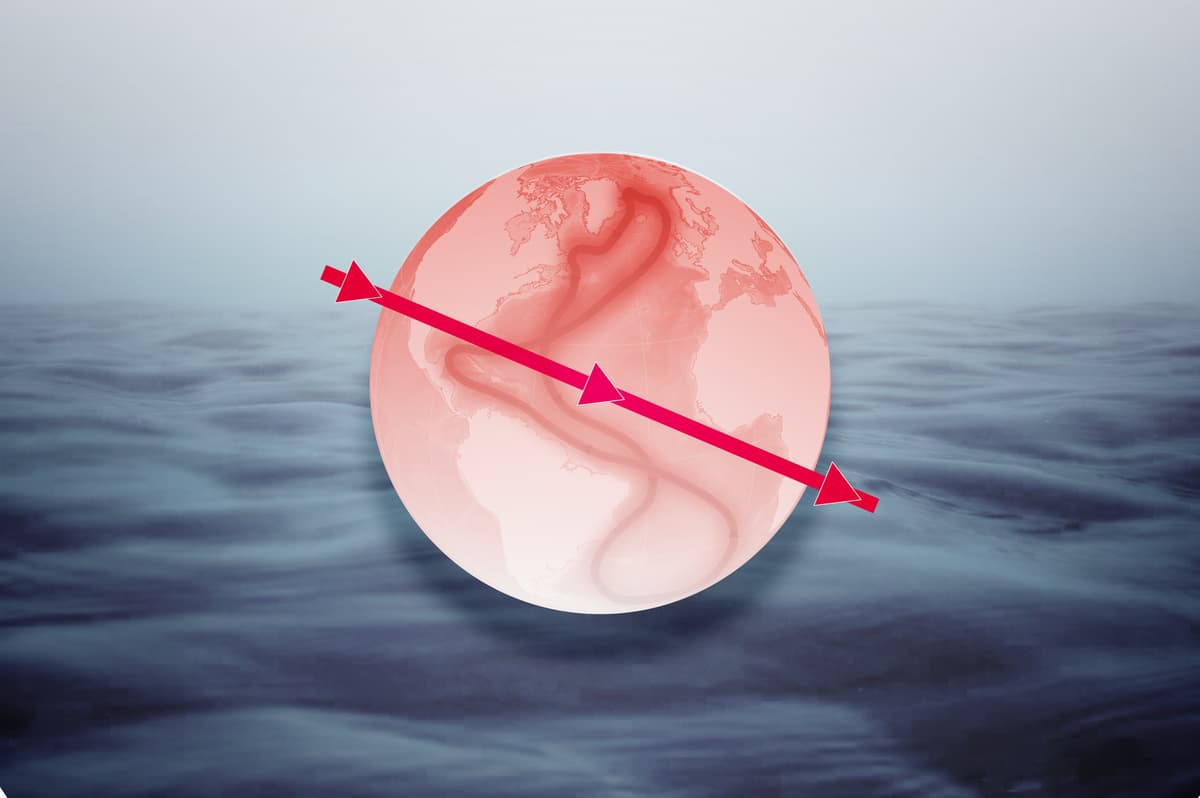
AMOC: Is Global Warming Tipping Key Atlantic Ocean Currents Towards ‘Collapse’?
Why It Matters
A weakened AMOC could plunge European temperatures despite global warming, disrupt global precipitation, and amplify food‑security risks, making it a critical climate‑system indicator for policymakers.
Key Takeaways
- •AMOC transports heat northward, moderating Europe's climate
- •Warming seas and melting ice reduce Atlantic salinity, slowing circulation
- •IPCC projects gradual AMOC weakening, but collapse before 2100 unlikely
- •Some studies warn a rapid “tipping point” could trigger centuries‑long shutdown
Pulse Analysis
The Atlantic Meridional Overturning Circulation is a planetary thermostat, moving warm water from the tropics toward higher latitudes and returning cold, dense water southward. This conveyor belt not only keeps Western Europe warmer than its latitude would suggest, but also influences the distribution of nutrients and carbon across the globe. Recent ocean‑monitoring programs have recorded a measurable slowdown, prompting scientists to examine how rising sea temperatures and the influx of freshwater from melting Arctic ice are eroding the salinity gradient that powers the flow.
Scientific consensus acknowledges that the AMOC is on a declining trajectory, a view echoed in the latest IPCC assessment which projects a modest weakening by the end of the century. Yet a growing subset of climate researchers argue that the system may be approaching a non‑linear tipping point. New model ensembles and paleoclimate reconstructions suggest that if freshwater input crosses a critical threshold, the circulation could shift abruptly to a weak state lasting centuries, a scenario often described as a “shutdown.” The timing of such a transition remains uncertain, fueling vigorous debate within the climate community.
The stakes are high: a stalled AMOC would likely trigger colder winters across Europe, alter monsoon patterns, and raise sea levels along the North Atlantic coast. These changes could exacerbate agricultural volatility and strain energy grids already coping with climate stress. Consequently, the AMOC serves as a bellwether for broader climate resilience, underscoring the urgency of rapid greenhouse‑gas reductions and enhanced ocean observation networks. Policymakers and investors alike should monitor emerging research, as the circulation’s health directly informs risk assessments for infrastructure, food security, and long‑term economic stability.
AMOC: Is global warming tipping key Atlantic ocean currents towards ‘collapse’?
Comments
Want to join the conversation?
Loading comments...