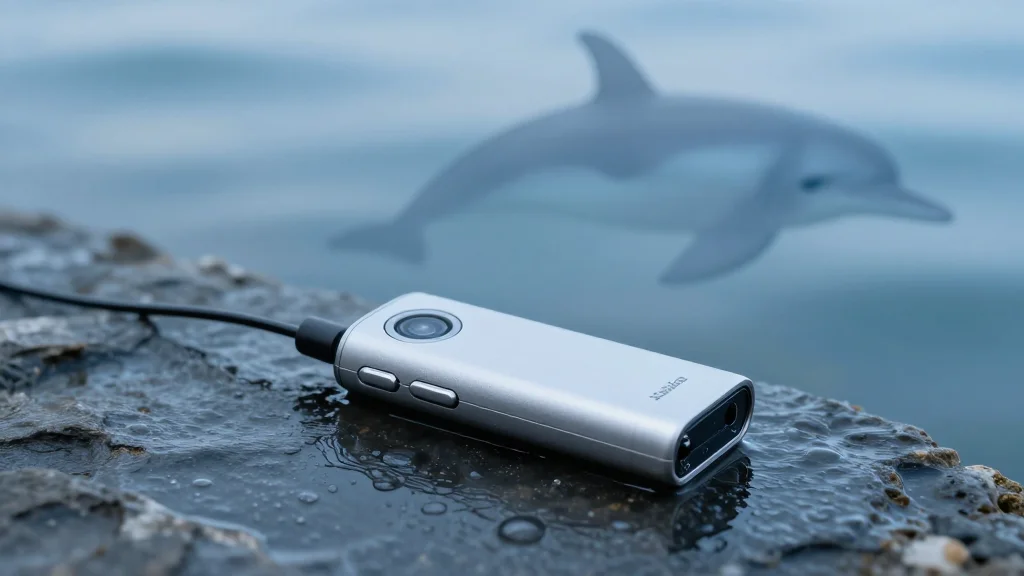
An Acoustic Device Helps Reduce Bycatch of Endangered Black Sea Porpoises
Why It Matters
A 74% drop in by‑catch can dramatically improve survival odds for the critically endangered Black Sea harbor porpoise while keeping fisheries economically viable. The result proves that properly tuned acoustic deterrents are a scalable tool for marine‑conservation policy.
Key Takeaways
- •PAL Wideband pinger cut porpoise by‑catch by ~74% in trials.
- •By‑catch previously killed over 10,000 Black Sea porpoises annually.
- •Earlier pinger models (10 kHz, 70 kHz) showed no reduction effect.
- •Effective mitigation may combine pingers with spatio‑temporal fishery closures.
Pulse Analysis
By‑catch remains the leading human‑induced mortality factor for the Black Sea harbor porpoise, a subspecies already listed as endangered. The turbot fishery, a high‑value bottom‑set gillnet operation, historically accounts for tens of thousands of accidental deaths each year, threatening the genetic integrity of this isolated population. Conservationists have long sought solutions that balance ecological urgency with the economic realities of regional fishers, prompting a surge of research into acoustic deterrents as a non‑lethal mitigation strategy.
The Bulgarian four‑year trial evaluated three pinger designs across 57 hauls, documenting 189 cetacean captures in 61% of trips before the PAL Wideband device was introduced. Unlike earlier models that emitted narrow‑band signals at 10 kHz or 70 kHz, the PAL Wideband emits a broader frequency sweep from 10 kHz to 150 kHz, which appears to better disrupt porpoise echolocation and deter net approaches. Field data showed a 74% reduction in harbor porpoise by‑catch when the PAL device was deployed, confirming that frequency breadth, rather than mere presence of sound, drives effectiveness.
These findings have immediate policy relevance. Regulators can incorporate the PAL Wideband pinger into mandatory gear standards for Black Sea gillnet fisheries, pairing it with spatio‑temporal closures in hotspots to further lower risk. Financing mechanisms—such as EU conservation grants or cost‑share programs—can offset device costs, ensuring adoption without compromising fisher profitability. Moreover, the study underscores the importance of rigorous, region‑specific testing before scaling acoustic solutions, offering a blueprint for similar by‑catch challenges in other marine ecosystems.
An acoustic device helps reduce bycatch of endangered Black Sea porpoises
Comments
Want to join the conversation?
Loading comments...