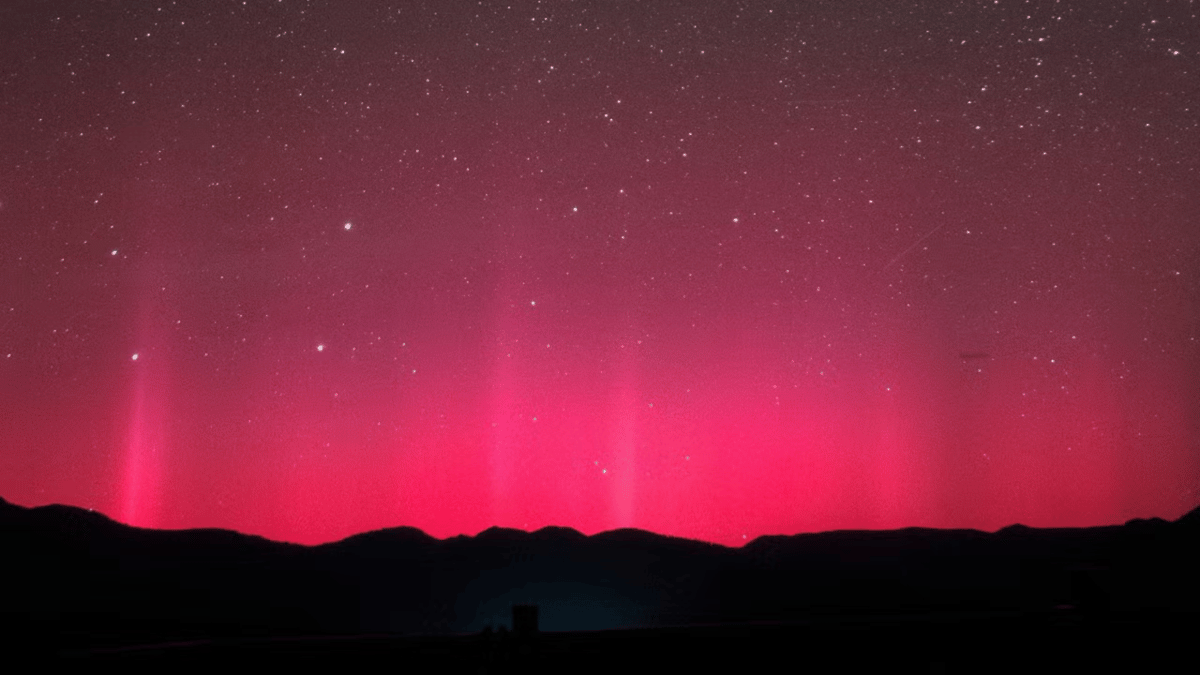
An Ancient Solar Storm Left Clues in Tree Rings and a Famous Poet's Diary: 'Red Lights in the Northern Sky'
Why It Matters
Understanding past sub‑extreme SPEs improves models of solar behavior and helps forecast space‑weather risks that threaten satellites, power grids, and crewed missions. The discovery reshapes our view of medieval solar activity, showing it could rival or exceed modern peaks.
Key Takeaways
- •Tree rings show carbon‑14 spike from 1200‑1201 solar proton event
- •Fujiwara no Teika diary notes red aurora at 35°N in Feb 1204
- •Researchers reconstructed 7‑8 year solar cycles in early 13th century
- •Sub‑extreme SPEs are 10‑30% as energetic as extreme events
- •New dendrochronology method detects hidden sub‑extreme solar storms
Pulse Analysis
Historical clues from a 13th‑century Japanese poet’s diary and ancient tree rings are reshaping our understanding of solar activity. In February 1204, Fujiwara no Teika recorded a vivid red aurora over Kyoto, a latitude far south of typical auroral zones. Parallel Chinese observations and a carbon‑14 anomaly in asunaro tree rings pinpoint a solar proton event that bombarded Earth between winter 1200 and spring 1201. By cross‑referencing these cultural and natural archives, researchers have reconstructed a period when the Sun’s magnetic cycles were unusually brief, lasting only seven to eight years.
The OIST team leveraged dendroclimatology to isolate a “sub‑extreme” SPE—an event delivering 10‑30% of the energy of the most powerful known storms. While not as dramatic as the Carrington Event of 1859, such storms can still endanger spacecraft, disrupt communications, and increase radiation exposure for astronauts. Detecting these less‑intense events required high‑precision carbon‑14 dating, revealing that sub‑extreme SPEs were more common than previously thought. This methodological breakthrough opens the door to cataloguing hidden solar storms throughout millennia, filling gaps in the long‑term solar activity record.
For modern space‑weather forecasting, the study offers a cautionary tale: intense solar disturbances can arise even when the Sun appears to be winding down toward a cycle minimum. As satellite constellations and lunar missions expand, anticipating both extreme and sub‑extreme SPEs becomes critical for protecting infrastructure and crew health. The medieval solar episode underscores the need for robust monitoring of solar cycles, which may deviate from the familiar 11‑year rhythm. Future research will likely integrate tree‑ring data with ice‑core isotopes to refine predictive models, ensuring that lessons from the past enhance resilience against tomorrow’s solar threats.
An ancient solar storm left clues in tree rings and a famous poet's diary: 'Red lights in the northern sky'
Comments
Want to join the conversation?
Loading comments...