An Aquaglyceroporin Governs Cellular Water and CO2 Conductance Relevant for Vesicular Mineral Formation in a Marine Calcifier
Why It Matters
spAQP9 links water removal and carbon delivery, a dual function essential for efficient skeletal formation in marine calcifiers, offering new insight into biomineralization and potential bio‑inspired applications.
Key Takeaways
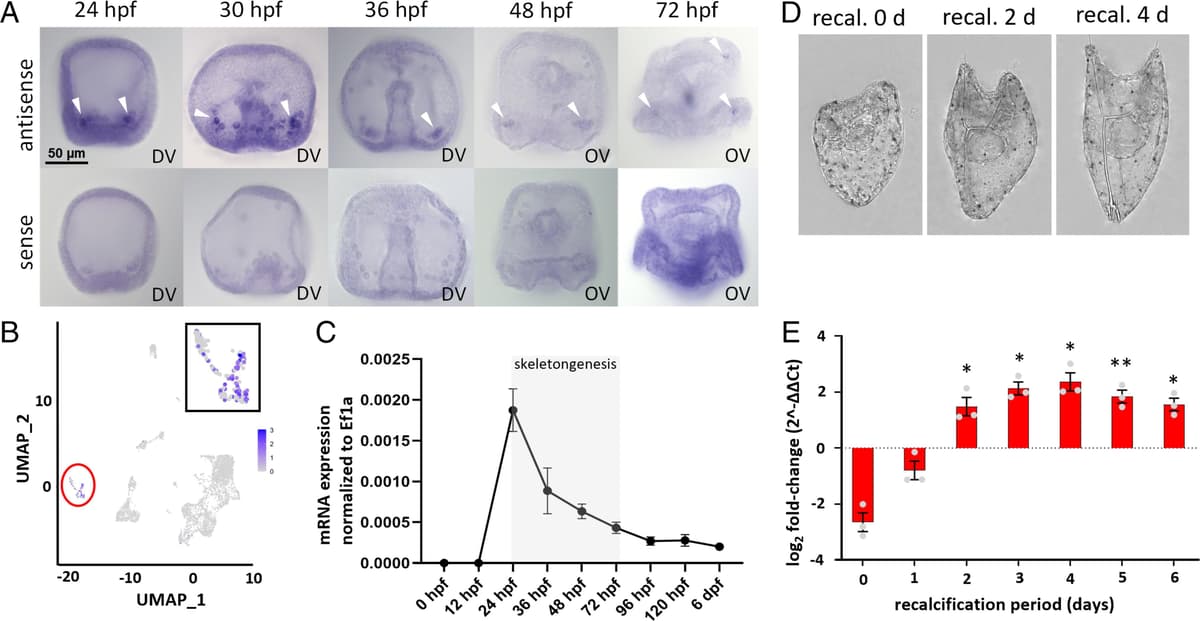
- •spAQP9 localized exclusively in sea urchin calcifying cells.
- •Channel conducts water and CO₂, sensitive to phloretin (IC50 ~38 µM).
- •Phloretin treatment or spAQP9 knock‑down blocks larval skeleton formation.
- •Vesicles show high water permeability, aiding ion concentration for mineral precursor.
- •Dual water/CO₂ transport links carbon concentration to biomineralization.
Pulse Analysis
Biomineralization in marine calcifiers hinges on the ability to concentrate calcium and carbonate ions within intracellular vesicles that originate from seawater uptake. Removing excess water from these vesicles is essential to raise supersaturation and trigger precipitation of amorphous calcium carbonate, the precursor to shells and spicules. While ion pumps and carbonic anhydrases have been studied extensively, the mechanisms that actively extrude water have remained obscure. Recent work on aquaporin family members in vertebrates suggests that specialized water channels can also facilitate gas exchange, hinting at a broader physiological role that may extend to marine embryos.
The new study identifies spAQP9, an aquaglyceroporin expressed solely in the primary mesenchyme cells of sea urchin larvae, as a key player in this process. Heterologous expression in Xenopus oocytes demonstrated that spAQP9 conducts both water and carbon dioxide, with a phloretin‑sensitive water permeability (IC₅₀ ≈ 38 µM). Pharmacological blockade or morpholino‑mediated knock‑down of spAQP9 markedly reduced skeletal rod extension, confirming its functional relevance. In vivo assays further revealed that calcium‑rich vesicles possess high intrinsic water permeability, supporting the notion that spAQP9‑mediated fluxes enable rapid dehydration and carbon delivery to the mineralizing compartment.
These findings reshape our understanding of how marine organisms regulate the chemistry of their calcifying microenvironments. By coupling water removal with CO₂ transport, spAQP9 may create localized carbon concentration gradients that favor carbonate precipitation without relying solely on external carbonic anhydrase activity. This dual‑function mechanism could be a conserved strategy among other calcifiers, offering new targets for manipulating biomineralization in aquaculture or for designing bio‑inspired materials that mimic nature’s efficient mineral formation. Moreover, elucidating aquaporin‑mediated carbon fluxes adds a novel dimension to marine carbon cycling models, linking cellular physiology to ecosystem‑scale processes.
An aquaglyceroporin governs cellular water and CO2 conductance relevant for vesicular mineral formation in a marine calcifier
Comments
Want to join the conversation?
Loading comments...