Why It Matters
The comet’s dramatic display offers a low‑cost platform for public engagement and scientific data collection, boosting interest in amateur astronomy and supporting outreach programs.
Key Takeaways
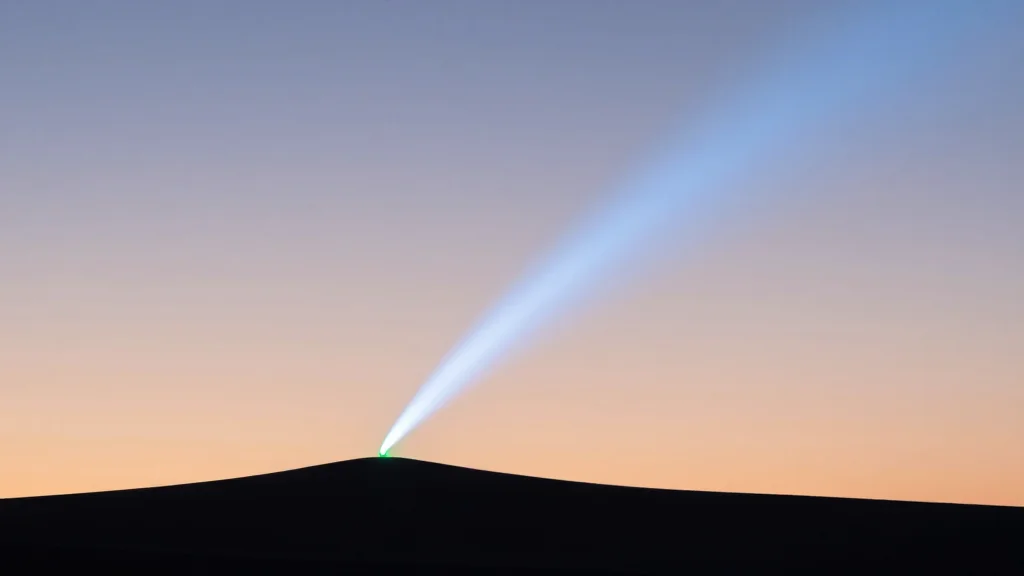
- •Comet C/2025 R3 visible over Pegasus on April 9, 2026.
- •Emerald-green coma and >10° blue ion tail captured at dawn.
- •Photographer used 135 mm f/2 lens, one‑shot color camera, 28‑minute exposure.
- •Image shows inexpensive gear can record deep‑sky phenomena.
- •Visibility creates outreach chances for planetariums and sky‑watch apps.
Pulse Analysis
The arrival of comet C/2025 R3 (PanSTARRS) marks one of the most visually striking celestial events of the year. Discovered in September 2025 by the Pan‑STARRS survey, the comet’s nucleus contains volatile compounds that release green‑tinged dust when heated, creating the emerald coma that captured headlines. Its ion tail, ionized by solar wind, stretches more than ten degrees—roughly twenty‑two times the width of the full Moon—offering a rare laboratory for studying cometary chemistry and solar‑wind interactions. Astronomers worldwide have logged the object for spectroscopic follow‑up.
Chris Schur’s image demonstrates how consumer‑grade equipment can rival professional observatories for certain deep‑sky targets. Using a modest 135 mm f/2 lens paired with a one‑shot color sensor, he stacked 28 minutes of exposure to reveal fine structural detail without sacrificing horizon context. This low‑cost workflow fuels a growing market for high‑sensitivity cameras, lightweight mounts, and stacking software aimed at hobbyists and educational institutions. Manufacturers that streamline these tools stand to capture a segment of the $1.2 billion astrophotography market, which is expanding as social media amplifies night‑sky content.
The public visibility of C/2025 R3 creates immediate commercial opportunities for planetariums, sky‑watching apps, and travel operators promoting “comet tourism.” Real‑time alerts and augmented‑reality overlays can monetize user engagement, while data contributed by amateurs enriches scientific databases at minimal cost. As more people experience the comet’s emerald glow, demand for educational kits and guided viewing events is likely to rise, encouraging partnerships between tech firms and cultural institutions. Continued monitoring will determine whether the comet survives perihelion, a factor that could extend its market relevance well into the next season.
An emerald eye
Comments
Want to join the conversation?
Loading comments...