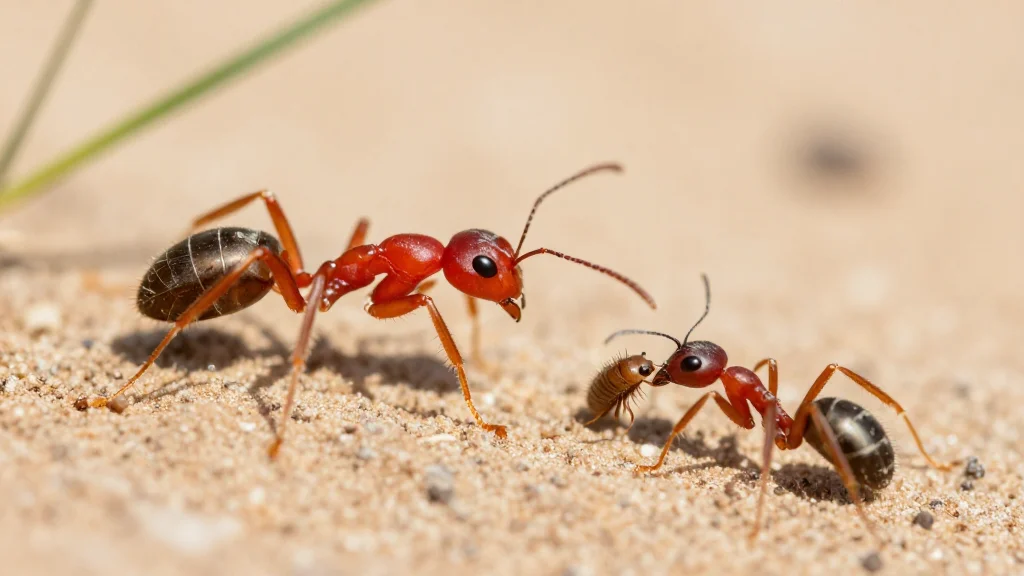
An Interspecies Grooming Ritual May Have Been Spotted in Desert Ants
Why It Matters
This discovery reveals a previously unknown pathway for disease control and microbial management in ant colonies, with potential ripple effects for understanding ecosystem health and the evolution of mutualistic strategies.
Key Takeaways
- •Red harvester ants host Dorymyrmex ants for parasite removal
- •Mutualism may enhance colony health by reducing bacterial load
- •Observation recorded over five days at multiple Arizona nests
- •Study suggests surface‑microbe exchange as possible benefit
Pulse Analysis
Cleaning mutualisms—where a smaller organism removes parasites from a larger host—are well documented in marine and terrestrial vertebrates, from cleaner fish to oxpeckers on rhinos. Yet among insects, especially ants, such cooperative grooming has been virtually absent from the literature. The recent documentation of a cleaning interaction between Pogonomyrmex barbatus and Dorymyrmex species therefore fills a conspicuous gap, suggesting that ant societies may have evolved subtle, low‑risk strategies to manage disease pressure without resorting to aggression.
Mark Moffett first noticed the behavior in 2006 while studying red harvester ant foraging near an Arizona mountain research station. Over five consecutive days he filmed multiple instances where up to five Dorymyrmex workers, roughly one‑third the size of the 7‑mm harvester, climbed onto the larger ants, lingered for about a minute, and repeatedly licked the hosts’ exoskeletons, even inserting their mandibles between the harvester’s spread jaws. The ants were not carrying food, and the hosts appeared passive, indicating a possible cost‑free exchange. Researchers hypothesize that the tiny ants are scraping off bacterial films or ectoparasites that the larger ants cannot reach, and may also be depositing beneficial microbes.
If confirmed, this interspecies grooming could reshape our understanding of ant colony health management and the role of microbial symbionts in social insects. It suggests that ant microbiomes might be actively curated through partner species, a concept that aligns with emerging evidence of microbial exchange in other animal mutualisms. Future work will likely focus on microscopic analysis of the cleaned surfaces, genetic profiling of transferred microbes, and experimental tests of fitness benefits. Such insights could inform broader ecological models of disease control and may even inspire bio‑inspired strategies for managing pests or pathogens in agriculture.
An interspecies grooming ritual may have been spotted in desert ants
Comments
Want to join the conversation?
Loading comments...