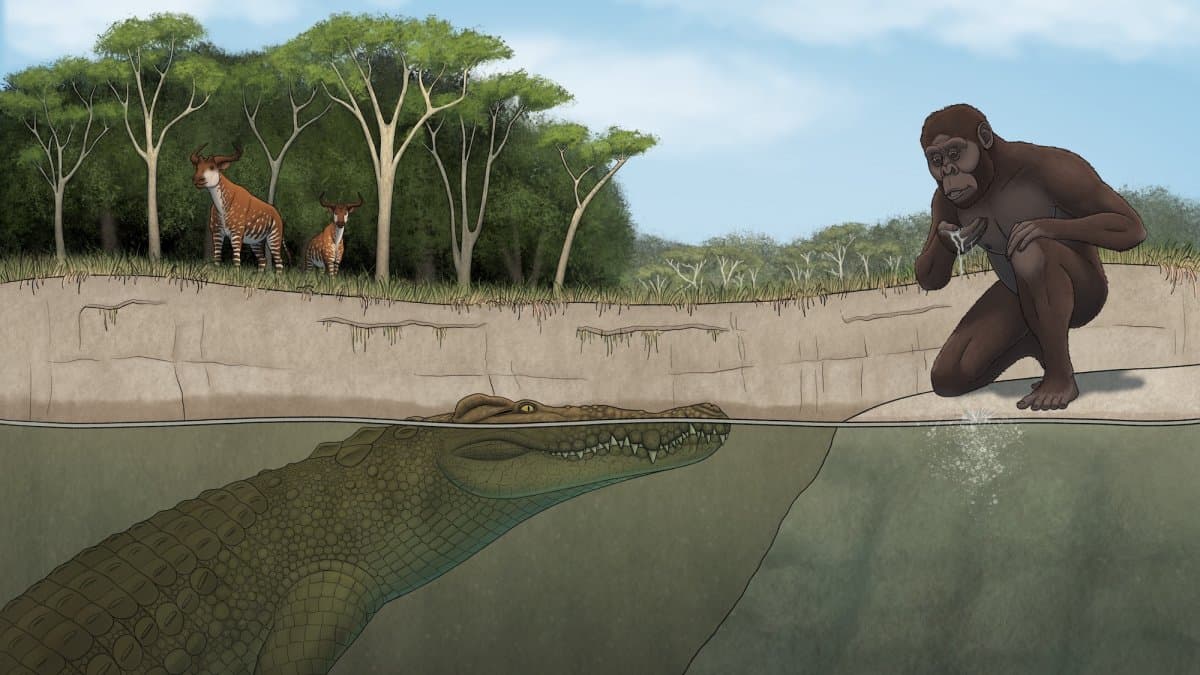
An Odd-Nosed Crocodile Ate Our Prehistoric Ancestors
•March 12, 2026
0
Why It Matters
Understanding C. lucivenator’s size and behavior reshapes how we view predator‑prey dynamics that early humans faced, informing models of hominin evolution and survival strategies.
Key Takeaways
- •Crocodylus lucivenator lived 3.4–3 million years ago
- •Reached 15 feet length, 1,300‑pound weight, apex predator
- •Distinctive snout hump likely used in male courtship displays
- •Coexisted with early hominin Australopithecus afarensis in Ethiopia
- •No direct fossil evidence of crocodile attacks on Lucy
Pulse Analysis
The discovery of Crocodylus lucivenator adds a dramatic new chapter to the story of Pliocene ecosystems in the Afar region. Measuring up to 15 feet and weighing over a ton, this crocodile dwarfed contemporary predators and sported a pronounced nasal hump—an anatomical trait linked to modern courtship rituals. Its morphology mirrors that of today’s American crocodile, suggesting a long‑standing evolutionary blueprint that has persisted for millions of years, even as climate and habitats shifted dramatically.
Paleoanthropologists are especially intrigued by the temporal overlap between C. lucivenator and Australopithecus afarensis, the species that produced the iconic Lucy fossil. While no bite marks have been found on hominin bones, the sheer size and ambush hunting style of this crocodile imply a high likelihood of predation pressure on early bipedal ancestors. Such pressure could have influenced hominin behavior, prompting river‑crossing strategies, group vigilance, and perhaps even early tool use for defense. The study underscores how apex predators shape evolutionary pathways, a factor often overlooked in discussions of human origins.
Beyond its immediate ecological implications, the find reinforces the resilience of crocodilian lineages. Crocodylians have survived mass extinctions with relatively little morphological change, and C. lucivenator exemplifies this stability while also showcasing unique adaptations. For modern conservationists, the species serves as a reminder that ancient predator‑prey dynamics continue to echo in today’s ecosystems, informing both scientific inquiry and public awareness about the enduring legacy of these ancient reptiles.
An odd-nosed crocodile ate our prehistoric ancestors
0
Comments
Want to join the conversation?
Loading comments...