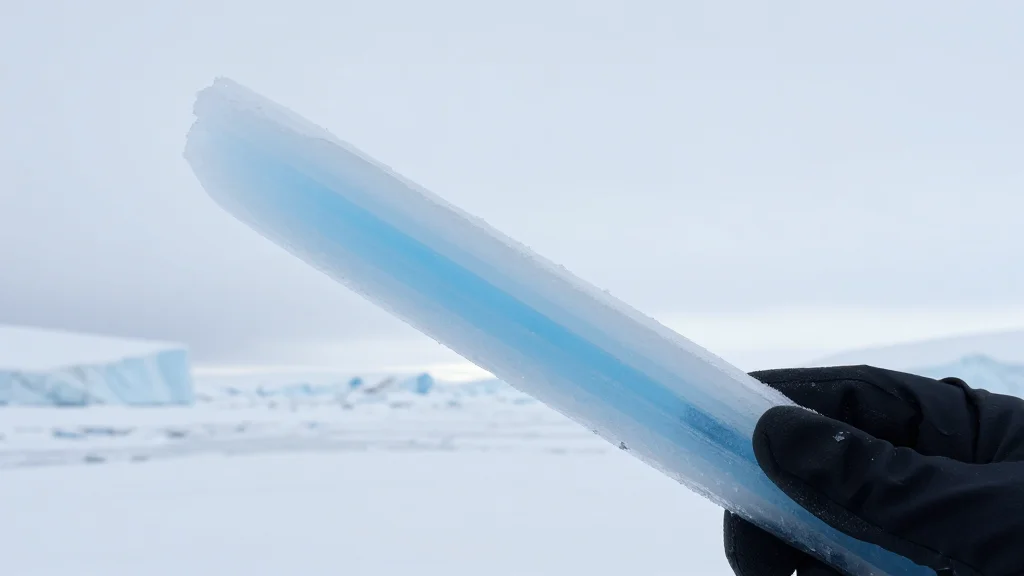
Ancient Antarctic Ice Reveals 3‑Million‑Year Climate Cooling with Minimal Greenhouse Gas Drop

Why It Matters
Understanding why Earth cooled while greenhouse gases remained relatively stable reshapes the narrative of past climate drivers, offering a more nuanced view of natural climate variability. This insight is critical for improving long‑term climate projections, which inform policy decisions on mitigation and adaptation. The ability to extend ice‑core records beyond the traditional 800,000‑year window provides a new temporal lens for evaluating the interplay between ice sheets, ocean circulation, and atmospheric composition. Such deep‑time perspectives are essential for testing the robustness of Earth‑system models that underpin international climate assessments.
Key Takeaways
- •Scientists from OSU, Princeton, and Woods Hole analyzed Antarctic ice from Allan Hills.
- •Ocean temperatures dropped 2‑2.5 °C over the past 3 million years.
- •CO₂ and methane levels declined only slightly during the same period.
- •Noble‑gas measurements offered a global view of deep‑ocean cooling.
- •Findings challenge the view that greenhouse‑gas reductions alone drove Pliocene cooling.
Pulse Analysis
The Allan Hills ice cores represent a paradigm shift in paleoclimate research, demonstrating that Antarctic ice can preserve climate signals far older than the classic Vostok and EPICA records. By capturing noble‑gas signatures, the COLDEX team bypasses the spatial limitations of marine sediment cores, delivering a truly global temperature proxy. This methodological advance could spark a wave of similar “snapshot” projects in other deformed ice regions, potentially unlocking climate archives that stretch back several million years.
From a modeling standpoint, the decoupling of temperature and greenhouse‑gas trends forces a reassessment of feedback mechanisms in Earth‑system models. Historically, models have calibrated climate sensitivity using the last glacial cycle, where CO₂ and temperature changes are tightly linked. The new data suggest that ice‑sheet albedo shifts and oceanic heat redistribution can exert comparable, if not greater, influence on global climate. Incorporating these processes may lower projected climate sensitivity, altering risk assessments for future warming.
Looking ahead, the synergy between ice‑core and deep‑sea sediment records promises a more integrated reconstruction of the Pliocene‑Pleistocene transition. As the upcoming IODP expedition retrieves Southern Ocean sediments, researchers will be able to cross‑validate ocean temperature trends and test hypotheses about the timing and magnitude of circulation changes. This multi‑proxy approach could finally resolve the lingering debate over the relative importance of atmospheric versus oceanic drivers in ancient climate change, providing a clearer template for anticipating Earth’s response to anthropogenic forcing.
Ancient Antarctic Ice Reveals 3‑Million‑Year Climate Cooling with Minimal Greenhouse Gas Drop
Comments
Want to join the conversation?
Loading comments...