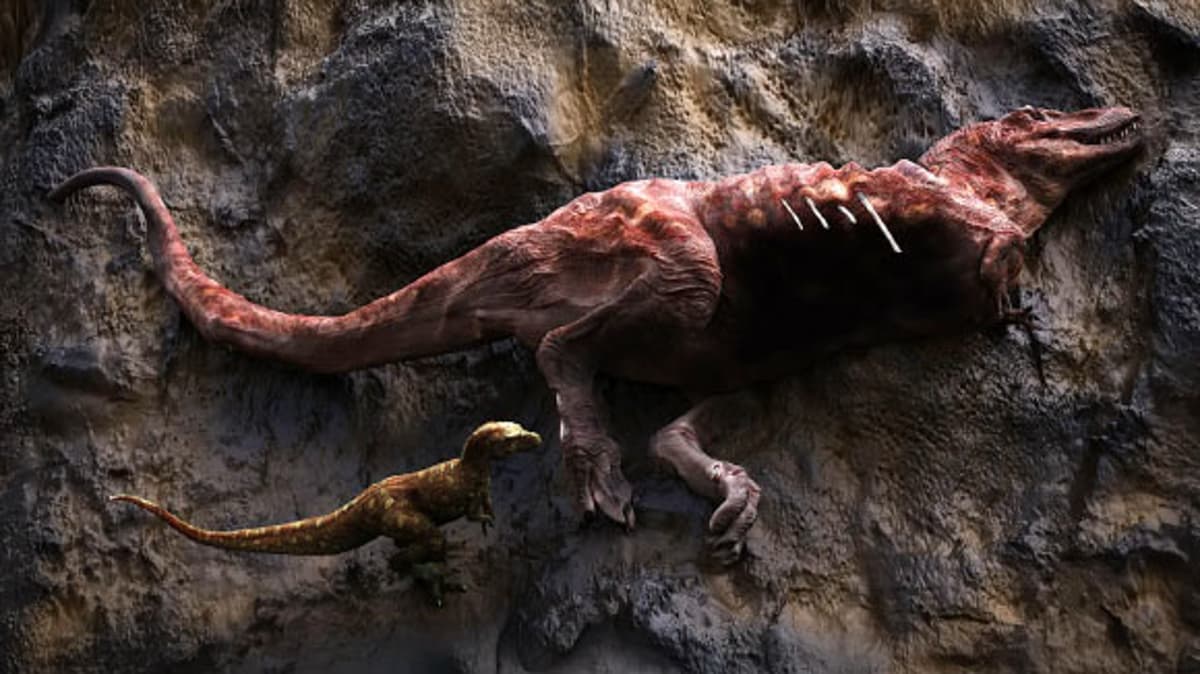
Ancient Bite Marks Suggest Tyrannosaurs Were Not Just Hunters
Why It Matters
The findings rewrite assumptions about dinosaur food webs, showing that even top predators engaged in scavenging. This reshapes how paleontologists model Cretaceous ecosystems and predator‑prey dynamics.
Key Takeaways
- •16 bite marks on tyrannosaur foot bone identified via 3‑D scanning
- •Smaller tyrannosaur scavenged larger relative, feeding on foot bone
- •Marks show no healing, indicating post‑mortem consumption
- •Study demonstrates tyrannosaurs acted as both predators and scavengers
- •Digital 3‑D models enabled precise analysis without original fossil
Pulse Analysis
The classic image of tyrannosaurs as relentless hunters has dominated popular and scientific narratives for decades. Recent work from Aarhus University, however, reveals a more nuanced picture: a smaller tyrannosaur was feeding on the foot bone of a much larger conspecific, suggesting that scavenging was a regular part of their diet. This evidence aligns with earlier clues such as bone‑filled coprolites, but the direct bite‑mark record provides the first concrete proof that these giants cleaned up carcasses rather than solely relying on active kills.
The breakthrough stems from cutting‑edge digital techniques. Researchers created a high‑resolution 3‑D scan of a 10‑centimeter metatarsal recovered from Montana’s Judith River Formation, then printed a replica for close inspection. By measuring depth, angle, and placement of each impression, they could attribute the marks to a smaller tyrannosaur’s teeth with confidence. This methodological advance demonstrates how virtual paleontology can extract behavioral data from fragments that would otherwise be inaccessible, setting a new standard for fossil analysis.
Beyond the specifics of tyrannosaur feeding, the study reshapes our understanding of Late Cretaceous ecosystems. Recognizing that apex predators also acted as scavengers implies more efficient energy transfer and less waste than previously thought, influencing models of population dynamics and competition. As more fossils undergo digital scrutiny, researchers anticipate uncovering additional instances of size‑asymmetric feeding, refining the ecological narrative of the age of dinosaurs and informing modern analogues in predator‑scavenger relationships.
Ancient Bite Marks Suggest Tyrannosaurs Were Not Just Hunters
Comments
Want to join the conversation?
Loading comments...