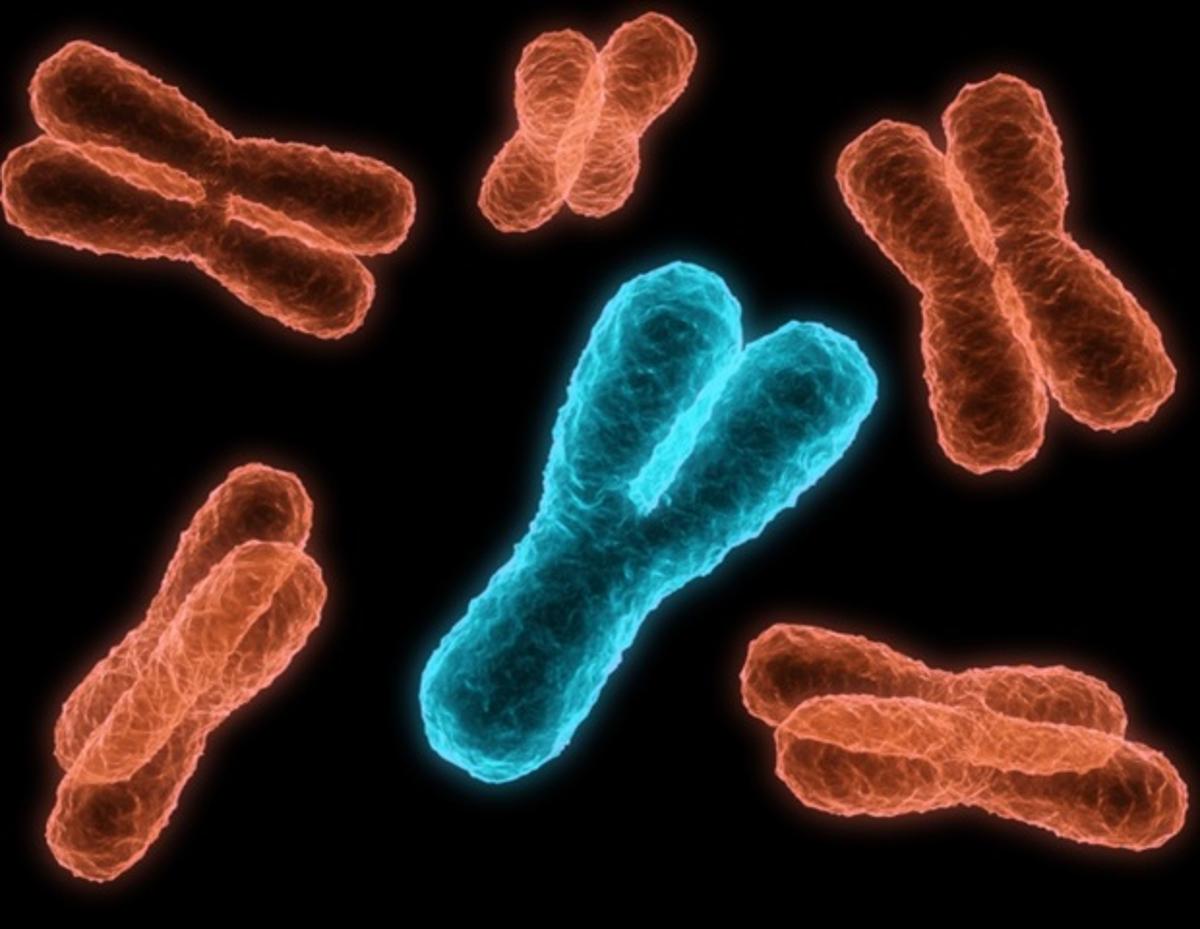
Ancient Y Chromosome Gene UTY Retains Regulatory Function in Humans
Why It Matters
UTY’s residual activity challenges the view of the Y chromosome as largely inert, highlighting potential functional contributions to stem‑cell biology and evolutionary genetics. This insight could inform studies of sex‑linked developmental disorders and epigenetic regulation.
Key Takeaways
- •UTY co‑occupies active regulatory elements with X‑linked UTX
- •UTY's genomic binding is weaker than UTX but still functional
- •Dual‑CRISPR tagging enabled high‑resolution mapping of low‑expressed UTY
- •Disrupting UTY and UTX destabilizes pluripotency without major H3K27me3 changes
Pulse Analysis
The human Y chromosome has shed most of its ancestral gene repertoire over millions of years, leaving only a handful of survivors such as UTY. While UTY is expressed at low levels and lacks robust enzymatic activity, its persistence has puzzled chromosome biologists. By placing a 3×FLAG‑HA tag directly onto the endogenous UTY locus in human embryonic stem cells, the study overcame antibody limitations and delivered the first high‑resolution map of UTY’s genomic occupancy, revealing that the gene still engages with active enhancers during the earliest stages of development.
Using CRISPR‑Cas9 genome editing and a dual‑crosslinking ChIP‑seq workflow, the researchers showed that UTY frequently shares binding sites with its X‑chromosome homolog UTX, a well‑characterized H3K27 demethylase. Although UTY’s signal is consistently weaker, its presence appears to assist the proper positioning of core pluripotency factors OCT4 and SOX2. Notably, simultaneous loss of UTY and UTX disrupts transcription‑factor localization and compromises stem‑cell identity, yet it does not produce sweeping changes in the repressive H3K27me3 landscape, suggesting that UTY’s role is largely structural rather than catalytic.
These findings reshape our understanding of Y‑chromosome biology, positioning UTY as a vestigial yet functional regulator rather than a silent relic. The partial retention of regulatory capacity may reflect an evolutionary transition where certain Y‑linked genes are being phased out while still contributing to essential cellular programs. This nuance has implications for sex‑specific disease mechanisms, especially those linked to epigenetic dysregulation, and opens avenues for exploring how other low‑expression Y genes might influence human development and disease. Future work will likely probe UTY’s interaction network and assess whether its residual activity can be leveraged in regenerative medicine or targeted therapies.
Ancient Y chromosome gene UTY retains regulatory function in humans
Comments
Want to join the conversation?
Loading comments...