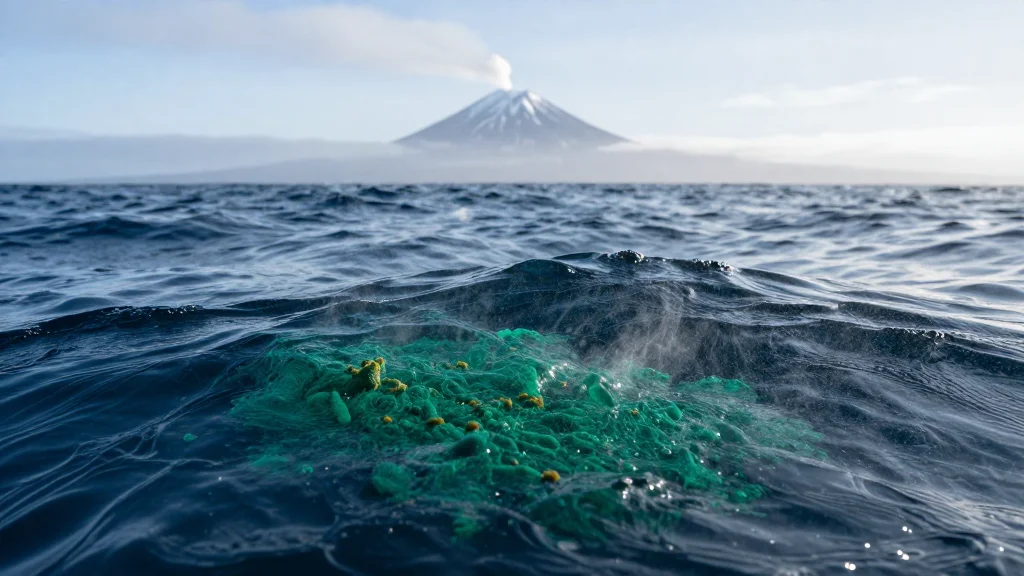
Andean Volcanic Surge 7‑5.4 Mya Linked to Global Cooling via Ocean Fertilization

Why It Matters
Understanding how large volcanic eruptions can trigger ocean fertilization and carbon drawdown reshapes our view of natural climate regulators. The study provides a concrete mechanism linking tectonic activity to rapid cooling, offering a missing piece in reconstructions of past climate variability. For modern climate science, these insights highlight the importance of incorporating biogeochemical feedbacks into models, potentially revealing new levers for mitigating anthropogenic warming. Moreover, the research bridges geology, oceanography and climate science, demonstrating the value of interdisciplinary approaches. By establishing a clear cause‑and‑effect chain—from ash deposition to diatom blooms to CO₂ reduction—scientists gain a template for investigating other enigmatic climate events, such as the Younger Dryas or the Paleocene‑Eocene Thermal Maximum.
Key Takeaways
- •Study led by Mark Clementz (University of Wyoming) links 7‑5.4 Mya Andes eruptions to cooling
- •Volcanic ash supplied iron, phosphorus, silicon to Southern Ocean, boosting diatom growth
- •Diaton blooms removed 10‑15 ppm CO₂, initiating measurable global cooling
- •Fossil record shows concurrent shifts in marine vertebrate populations
- •Implications for climate models: need to include nutrient‑driven carbon sequestration
Pulse Analysis
The new Miocene findings arrive at a time when climate scientists are wrestling with how to accurately represent natural carbon sinks in predictive models. Historically, volcanic forcing has been treated primarily as a short‑lived aerosol cooling agent, a perspective rooted in the well‑documented 1991 Pinatubo eruption. Clementz’s work forces a re‑examination of that paradigm by demonstrating that the biogeochemical aftermath of large eruptions can persist for hundreds of thousands of years, fundamentally altering oceanic carbon uptake.
From a historical standpoint, the study fills a gap between the well‑known Cretaceous Oceanic Anoxic Events—where massive volcanic outgassing drove warming—and the more recent, shorter‑term cooling episodes tied to volcanic aerosols. By quantifying a nutrient‑driven drawdown, the research suggests that Earth’s climate system possesses built‑in, albeit episodic, negative feedbacks that can counterbalance greenhouse forcing. This nuance could explain why some past warming periods were followed by abrupt coolings without a clear external trigger.
Looking forward, the implications for climate policy are indirect but profound. If natural processes can sequester carbon on geological timescales, engineered analogs—such as iron fertilization—might be revisited with a more rigorous understanding of potential side effects and efficacy. However, the transient nature of the cooling, tied to the finite supply of volcanic nutrients, also serves as a cautionary tale: any geo‑engineering effort must account for the longevity and ecological impact of the intervention. As climate models evolve, integrating these complex Earth system interactions will be essential for producing robust, long‑range forecasts.
Andean Volcanic Surge 7‑5.4 Mya Linked to Global Cooling via Ocean Fertilization
Comments
Want to join the conversation?
Loading comments...