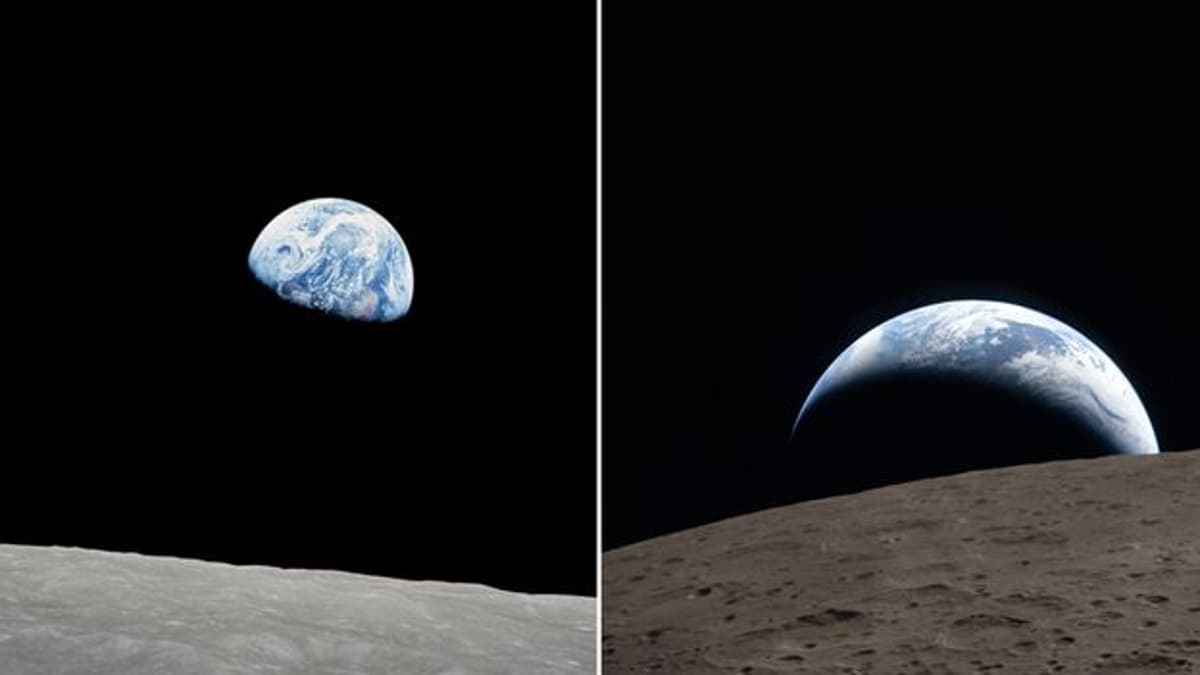
Apollo v Artemis: How Earth Changed in 58 Years
Companies Mentioned

Why It Matters
The comparison underscores how human‑framed space photography can powerfully convey climate change, reinforcing public urgency and policy focus. It also reaffirms NASA’s role in linking exploration with Earth stewardship.
Key Takeaways
- •Artemis II captured “Earthset” during a 7‑hour lunar flyby on April 6, 2024
- •Earthrise inspired Earth Day; Earthset offers fresh visual evidence of climate change
- •Antarctic ice‑shelf loss of 28,000 km evident between the two photos
- •Human‑framed space images add emotional weight beyond satellite data
Pulse Analysis
The 1968 Apollo 8 “Earthrise” photograph became a cultural touchstone, catalyzing the modern environmental movement and the first Earth Day in 1970. By juxtaposing a blue planet against the barren Moon, it gave the public a visceral sense of planetary fragility, a narrative that still resonates in climate discourse today. Decades of satellite monitoring have built on that visual legacy, delivering daily data on oceans, ice, and land use, yet the human eye behind a camera lens still carries a unique emotive power.
Fast‑forward 58 years, Artemis II astronauts recorded “Earthset” from the Orion capsule, showing Earth’s illuminated Oceania region and the Moon’s cratered horizon. Experts point to stark differences: Antarctic ice shelves have receded by roughly 28,000 km, the Aral Sea shrank to under 10 % of its 1960s size, and urban sprawl now dominates previously dark landscapes. These visual cues complement quantitative metrics—CO₂ levels up a third, global temperatures up 1 °C—offering a compelling, accessible illustration of how human activity reshapes the planet’s surface.
The renewed human perspective carries strategic implications. Policymakers and NGOs can leverage such imagery to galvanize climate action, echoing the Earthrise’s legacy of turning awe into advocacy. Moreover, NASA’s deliberate effort to capture another iconic shot signals an integrated approach: pairing scientific observation with storytelling to sustain public engagement. As lunar missions expand, each human‑taken view may become a benchmark for tracking Earth’s health, reinforcing the message that protecting our home is inseparable from exploring the cosmos.
Apollo v Artemis: How Earth changed in 58 years
Comments
Want to join the conversation?
Loading comments...