Why It Matters
Huygens’ discoveries laid the foundation for planetary science and precision timekeeping, essential pillars of today’s aerospace and navigation industries.
Key Takeaways
- •Huygens identified Saturn’s rings as a solid structure
- •Discovered Titan, Saturn’s largest moon, in 1655
- •Developed wave theory of light before Maxwell
- •Invented pendulum clock, improving time precision
- •Designed superior two‑lens eyepiece for refracting telescopes
Pulse Analysis
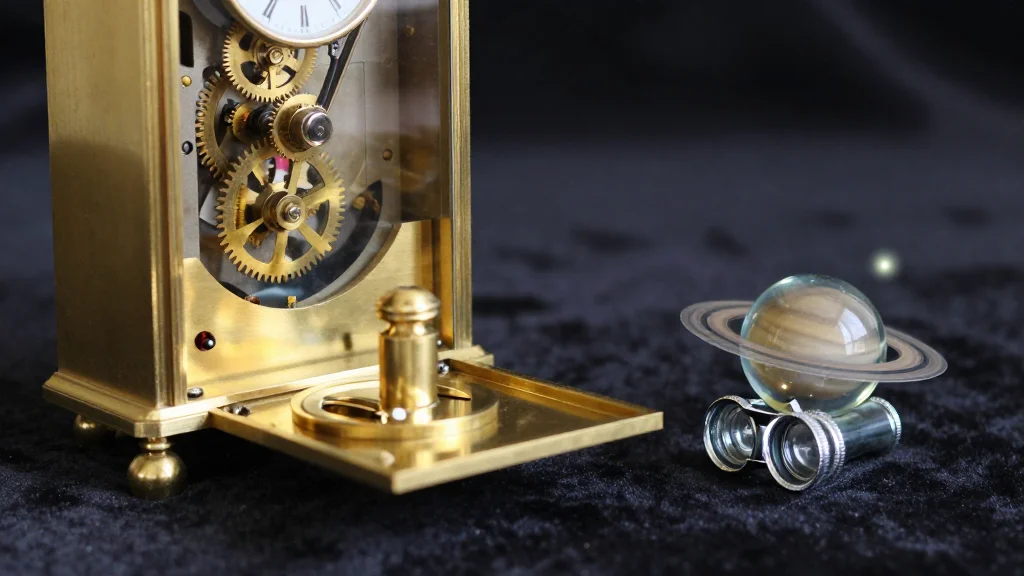
Christiaan Huygens emerged from the Dutch Golden Age as a visionary who reshaped humanity’s view of the cosmos. By interpreting Saturn’s enigmatic “lobes” as a continuous ring, he resolved a centuries‑old astronomical puzzle and set a precedent for systematic planetary observation. His 1655 discovery of Titan not only added a new moon to the Solar System roster but also sparked centuries of curiosity that culminated in the Cassini‑Huygens mission, which delivered unprecedented data on Titan’s atmosphere and surface.
Beyond celestial mechanics, Huygens revolutionized scientific instrumentation. His two‑lens eyepiece dramatically sharpened refracting telescopes, enabling clearer planetary sketches and more accurate measurements. In physics, he championed the wave nature of light, a concept later refined by Huygens’ principle and ultimately integrated into Maxwell’s electromagnetic theory. Perhaps his most enduring practical invention, the pendulum clock, reduced timekeeping error from minutes to seconds, laying the groundwork for modern chronometry, railway scheduling, and later, global positioning systems.
The ripple effects of Huygens’ work are evident across contemporary science and industry. Modern ring dynamics models, used to predict exoplanetary ring systems, trace their lineage to his initial ring hypothesis. Titan remains a focal point for astrobiology, with missions building on Huygens’ legacy to explore habitability. Meanwhile, precision timing, rooted in the pendulum clock, underpins financial markets, telecommunications, and autonomous vehicle navigation. Huygens’ blend of theoretical insight and engineering prowess exemplifies the interdisciplinary innovation that drives today’s technological frontier.
April 14, 1629: The birth of Christaan Huygens
Comments
Want to join the conversation?
Loading comments...