Why It Matters
The Great Debate crystallized two competing cosmological models, driving observations that ultimately defined modern extragalactic astronomy and reshaped our view of the universe’s scale.
Key Takeaways
- •Shapley claimed Milky Way was ~300,000 light‑years across
- •Curtis advocated spiral nebulae as separate galaxies beyond the Milky Way
- •Debate highlighted uncertainty about galaxy size and solar system’s position
- •Hubble’s Cepheid observations later confirmed Curtis’s island‑universe view
- •The event shaped public interest in astrophysics and scientific discourse
Pulse Analysis
The 1920 Great Debate unfolded at a time when astronomers grappled with limited data and conflicting distance scales. Shapley leveraged Cepheid variable stars in globular clusters to argue for a vastly larger Milky Way, positioning the Sun far from its center. Curtis, drawing on observations of novae in spiral nebulae, championed the idea that these nebulae were independent galaxies, a view that challenged the prevailing notion of a single, all‑encompassing cosmos. Their public exchange captured the imagination of both scientists and laypeople, turning a technical dispute into a cultural event.
Scientifically, the debate forced the community to refine measurement techniques and confront fundamental assumptions about cosmic structure. Shapley's scale, though overstated, expanded the perceived size of our galaxy, prompting more precise parallax and variable‑star studies. Curtis’s insistence on external galaxies spurred searches for definitive distance indicators, culminating in Edwin Hubble’s 1923 discovery of Cepheid variables in the Andromeda Nebula. Hubble’s work validated the island‑universe concept, effectively ending the controversy and establishing the field of extragalactic astronomy. The episode illustrates how competing hypotheses can accelerate methodological breakthroughs.
Today, the Great Debate is taught as a pivotal moment in the history of science, exemplifying how public discourse and rigorous observation together reshape understanding. Its legacy endures in modern cosmology, where the scale of the observable universe and the distribution of galaxies remain central research themes. Moreover, the debate’s format—two leading experts presenting opposing views before a broad audience—continues to inspire science communication, reminding us that transparent, evidence‑driven dialogue is essential for progress.
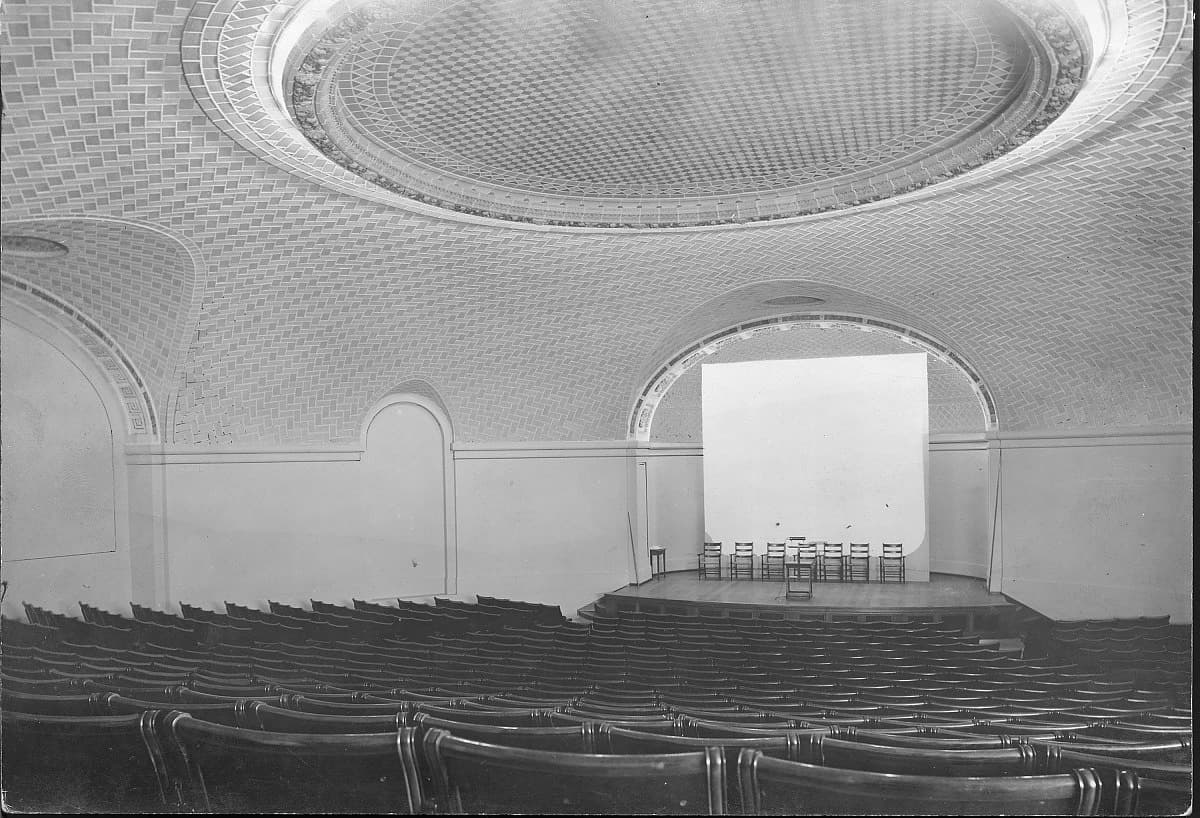
April 26, 1920: The Great Debate
Comments
Want to join the conversation?
Loading comments...