Why It Matters
Project Ozma proved that dedicated, instrument‑driven searches for extraterrestrial signals could be conducted reliably, spurring decades of funding and research in the SETI community.
Key Takeaways
- •Drake's Ozma targeted Tau Ceti and Epsilon Eridani.
- •First dedicated scientific SETI experiment launched in 1960.
- •Detected false alarm from high‑altitude aircraft.
- •Demonstrated feasibility of interstellar signal searches.
- •Inspired subsequent SETI projects and funding.
Pulse Analysis
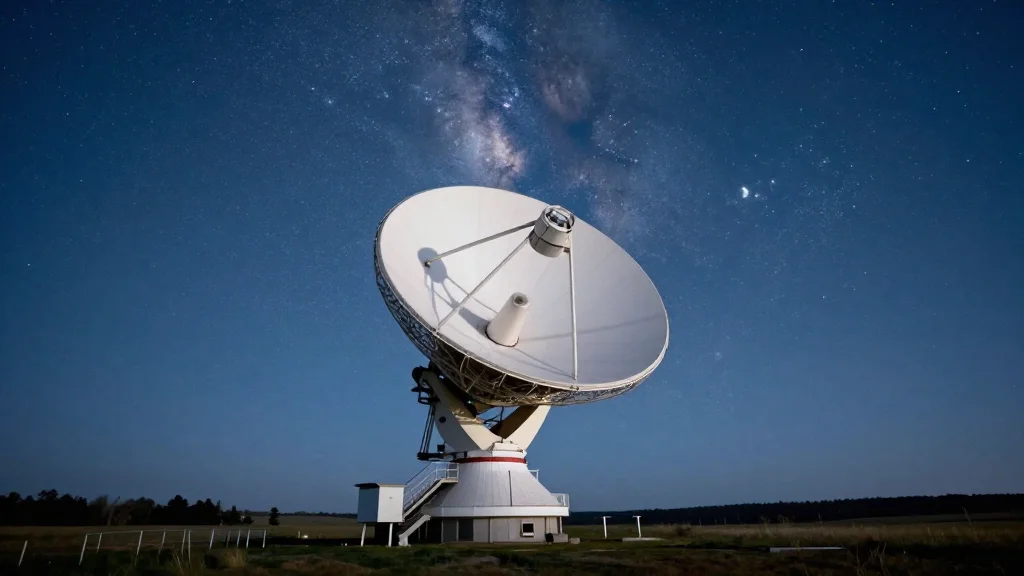
The launch of Project Ozma in 1960 marked a pivotal moment for the nascent field of the Search for Extraterrestrial Intelligence (SETI). While earlier speculation about alien life was largely confined to speculative essays and UFO folklore, Drake’s approach applied rigorous radio‑astronomy techniques to a well‑defined scientific question. By selecting two of the Sun’s nearest stellar neighbors—Tau Ceti and Epsilon Eridani—he leveraged the 300‑Foot Telescope’s sensitivity to probe a narrow band of frequencies where artificial transmissions would be most detectable. This methodological shift transformed SETI from a fringe curiosity into a credible research discipline.
Ozma’s technical design reflected the constraints and ingenuity of early radio astronomy. The team employed a narrow‑band receiver tuned to the 1.42 GHz hydrogen line, a frequency hypothesized to be a universal beacon for advanced civilizations. Although the experiment’s only signal turned out to be a high‑altitude aircraft, the episode underscored the importance of robust signal verification protocols that modern SETI projects still follow. Moreover, the false alarm highlighted the need for continuous monitoring and the development of automated algorithms to differentiate terrestrial interference from potential extraterrestrial messages.
The legacy of Project Ozma reverberates through contemporary SETI initiatives such as Breakthrough Listen and the Allen Telescope Array. Drake’s proof‑of‑concept attracted governmental and private funding, establishing a pipeline of research that now scans millions of stars across multiple wavelengths. By demonstrating that systematic, data‑driven searches are both possible and scientifically valuable, Ozma helped embed SETI within the broader astrophysical community, ensuring that the quest for cosmic companions remains a vibrant, well‑funded endeavor.
April 8, 1960: Frank Drake begins Project Ozma
Comments
Want to join the conversation?
Loading comments...