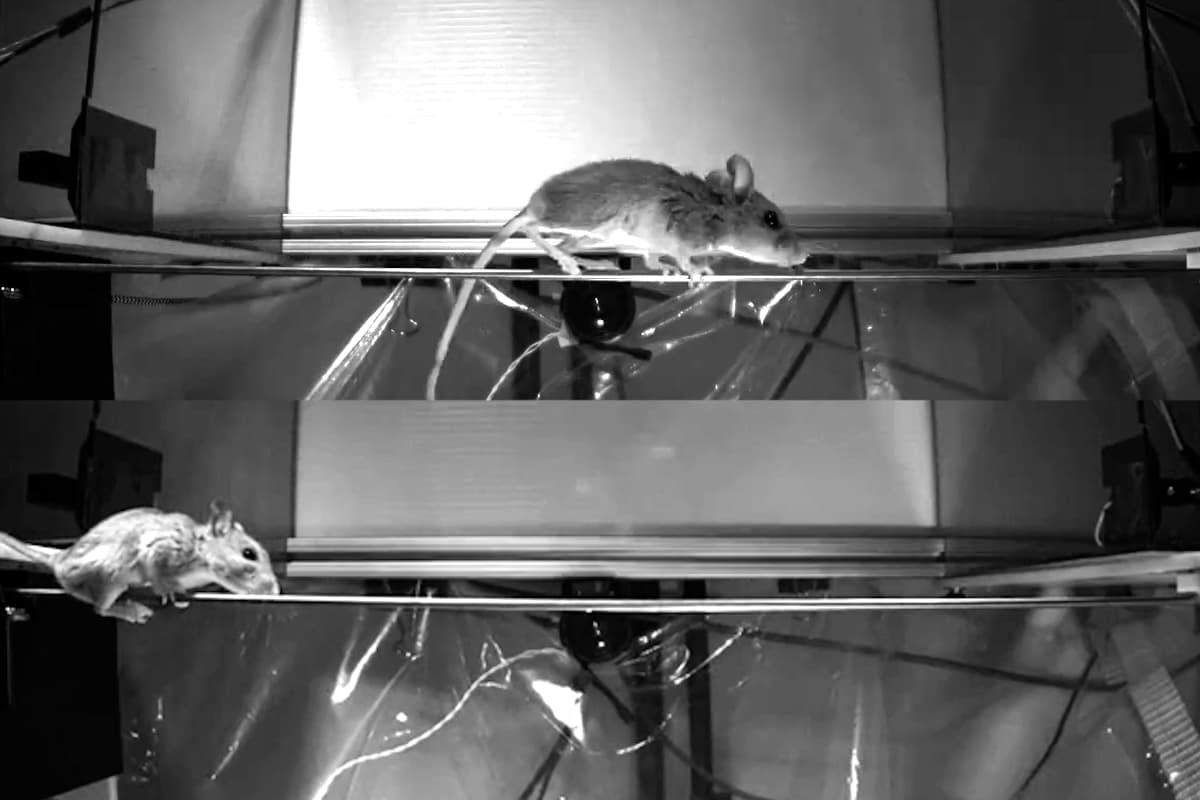
Arboreal Deer Mice Reveal Neural Roots of Dexterity
Why It Matters
The findings provide a rare causal link between corticospinal tract architecture and fine motor skill, informing both evolutionary neuroscience and potential therapeutic strategies for motor impairments.
Key Takeaways
- •Forest deer mice have double corticospinal axons
- •Increased axons correlate with superior pellet-grabbing dexterity
- •Hybrid mice link tract size to climbing speed
- •Study leverages natural subspecies variation for neural insight
- •Findings suggest multiple cortical pathways to dexterity
Pulse Analysis
Understanding how the brain generates fine motor control has long been a challenge, especially because most laboratory rodents lack the natural dexterity seen in arboreal species. In primates, direct corticospinal connections to spinal motor neurons underpin precise hand movements, while rodents typically rely on indirect pathways through interneurons. Recent work on juvenile mice showed that preserving these direct connections can boost skill acquisition, but establishing causality in adult animals remained elusive. The deer mouse model bridges this gap by pairing a naturally dexterous phenotype with accessible genetic tools.
The University of North Carolina and Harvard teams compared two subspecies of Peromyscus maniculatus—forest dwellers and prairie residents—using light‑sheet microscopy and selective axon staining. Forest mice displayed roughly twice the number of corticospinal axons in the cervical region, originating from secondary motor and somatosensory cortices. After six days of pellet‑retrieval training, these mice grasped food more efficiently and employed a broader repertoire of reaching motions than prairie mice, which resorted to scooping when objects were nearby. Second‑generation hybrids further revealed that tract size, rather than tail length or foot dimensions, predicts climbing speed.
By linking a naturally evolved increase in corticospinal fibers to measurable motor advantages, the study offers a template for dissecting the neural basis of skilled behavior across species. This approach could accelerate research into neurorehabilitation, where enhancing corticospinal output may restore hand function after stroke or spinal injury. Moreover, the findings encourage neuroscientists to examine behavior in ecologically relevant contexts rather than relying solely on artificial lab tasks. Future work that integrates biomechanics, circuit mapping, and gene editing promises to clarify how cortical signals translate into the nuanced grip and climbing abilities observed in the wild.
Arboreal deer mice reveal neural roots of dexterity
Comments
Want to join the conversation?
Loading comments...