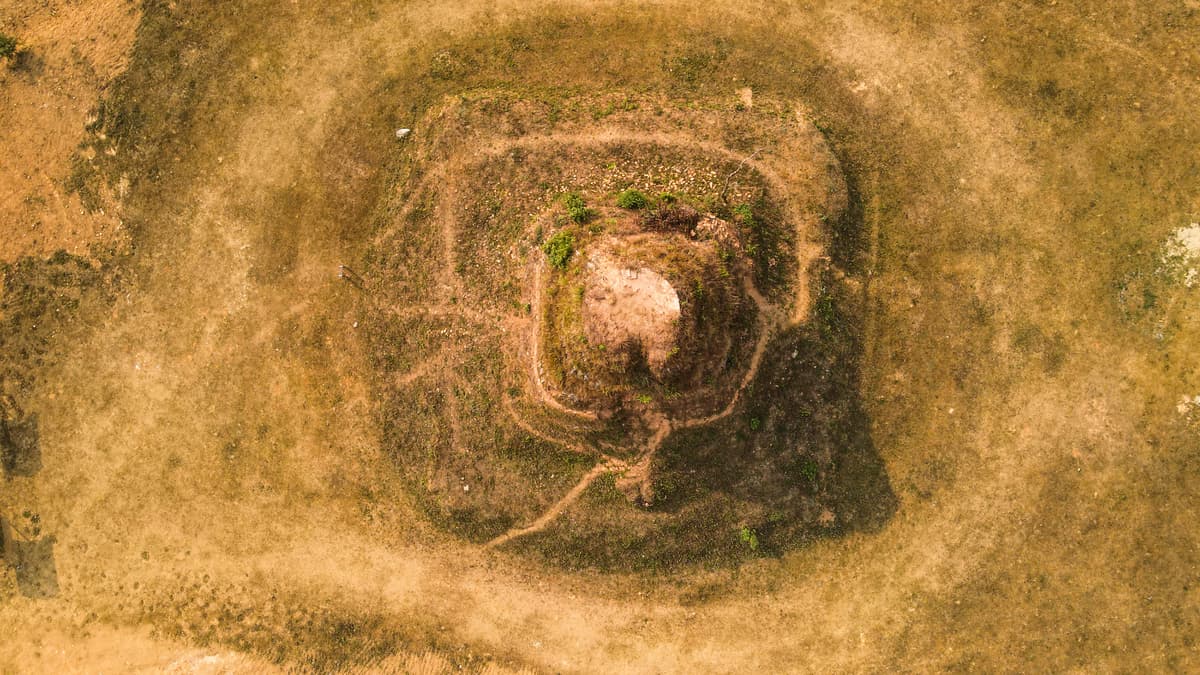
Archaeologists Unearthed a 6,200-Year-Old Megastructure. Its Purpose Is Still a Mystery.
Why It Matters
The discovery shows that even modest Cucuteni‑Trypillia communities built large communal edifices, suggesting complex social hierarchies and shared ceremonial spaces far earlier than previously documented. It provides a rare window into the governance and ritual practices of Neolithic Europe.
Key Takeaways
- •Sixth known Cucuteni‑Trypillia megastructure uncovered in Romania
- •Building spans 350 m², three‑to‑five times larger than local houses
- •Artifacts include carved bull head, painted ladle, and psychotropic henbane seeds
- •Researchers suggest communal, ritual, or elite meeting functions, not storage
Pulse Analysis
The Cucuteni‑Trypillia culture, spanning modern Romania, Moldova and Ukraine, is renowned for its intricate pottery and expansive settlements. Yet megastructures—large communal buildings—have been rare finds, with only five previously documented. The newly excavated Stăuceni‑Holm edifice, dating to roughly 4000 B.C.E., pushes the timeline of such constructions further back and demonstrates that even smaller villages invested resources in monumental architecture, hinting at a shared cultural blueprint across the region.
Inside the 350‑square‑meter rectangle, archaeologists uncovered a suite of artifacts that blend daily life with possible ceremonial use. A carved bull’s‑head attached to a bowl, a painted ladle, and a conical idol point to symbolic expression, while the presence of henbane seeds—known for their psychoactive properties—suggests ritual consumption. The building’s placement between defensive ditches and a palisade, coupled with its size relative to surrounding homes, supports theories of a communal decision‑making hall or elite gathering space, rather than a simple storage facility.
The partial excavation leaves much of the site untouched, promising further revelations about Neolithic social structures. Future geophysical surveys and deeper digs could clarify whether upper‑floor terraces existed, how space was allocated among activities, and what governance mechanisms underpinned these early societies. By illuminating the architectural and symbolic investments of prehistoric Europeans, the Stăuceni‑Holm megastructure enriches scholarly narratives about the emergence of complex societies well before the Bronze Age.
Archaeologists Unearthed a 6,200-Year-Old Megastructure. Its Purpose Is Still a Mystery.
Comments
Want to join the conversation?
Loading comments...