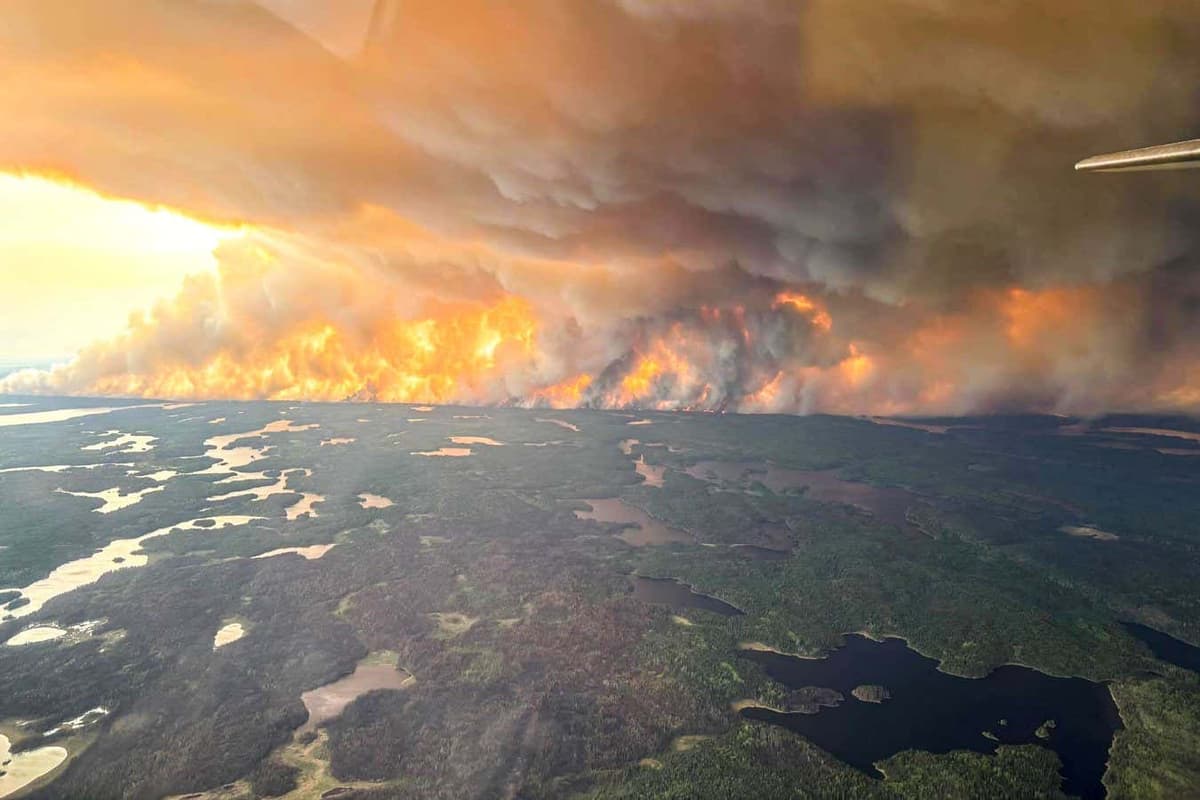
Arctic Fires Are Releasing Carbon Stored for Thousands of Years
Why It Matters
The discovery adds a previously unquantified greenhouse‑gas source, potentially accelerating global warming and forcing a reassessment of climate‑policy targets. Accurate accounting of ancient carbon release is essential for reliable climate forecasts.
Key Takeaways
- •Arctic wildfires ignite peat storing up to 5,000‑year‑old carbon.
- •Smoldering soils release both CO₂ and black carbon emissions.
- •Current climate models omit ancient carbon release from permafrost fires.
- •Larger, more frequent fires turn carbon sinks into carbon sources.
- •Findings suggest revising global warming projections for high‑latitude regions.
Pulse Analysis
The Arctic’s frozen soils have long been viewed as a stable carbon reservoir, with peat layers accumulating plant debris over millennia. However, a warming climate is lengthening the fire season and intensifying blaze intensity, turning these once‑inert deposits into combustible fuel. Researchers from the Finnish Meteorological Institute collected soil cores from recently burned sites across the circumpolar north, uncovering layers of carbon that predate modern human activity. When surface vegetation ignites, heat penetrates deeper, causing slow smoldering that liberates both carbon dioxide and fine black‑carbon particles, which have a disproportionate warming effect.
These findings expose a blind spot in most Earth‑system models, which typically assume that only recent biomass contributes to fire emissions. By neglecting the release of millennia‑old carbon, projections may underestimate the total radiative forcing from high‑latitude fires. The study quantifies the magnitude of this hidden source, suggesting that each large Arctic fire could emit up to several gigatons of CO₂ equivalent when accounting for peat combustion. This additional flux not only raises atmospheric greenhouse‑gas concentrations but also deposits black carbon on snow and ice, reducing albedo and accelerating melt.
Policymakers and climate scientists must now grapple with a feedback loop that turns a natural carbon sink into a potent emitter. Integrating ancient carbon release into climate models will refine risk assessments for the Paris Agreement targets and inform land‑management strategies in boreal regions. Moreover, the research underscores the urgency of limiting fire‑driven disturbances through emissions reductions and adaptive fire‑suppression tactics, as the Arctic’s role in the global carbon budget becomes increasingly precarious.
Arctic fires are releasing carbon stored for thousands of years
Comments
Want to join the conversation?
Loading comments...