Why It Matters
The failure to replicate classic memory‑transfer results highlights the need for rigorous standards in neuroscience and may redirect research toward more tractable model organisms.
Key Takeaways
- •James McConnell claimed planarian memory transferred via cannibalism in 1960s
- •Harvard team failed to condition any planarian strain in 2025‑26
- •Reproducibility issues highlight bias and scoring inconsistencies in old studies
- •Modern RNA‑based memory transfer succeeds in Aplysia and C. elegans
- •Planarian regenerative biology may render associative learning evolutionarily unnecessary
Pulse Analysis
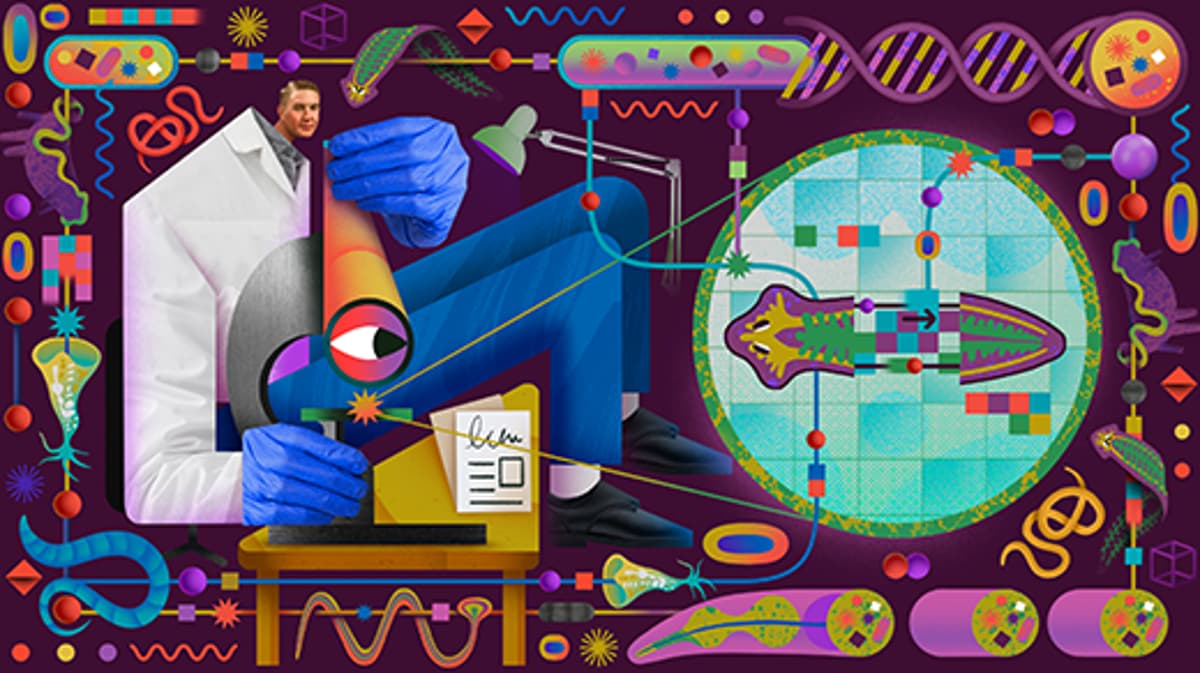
The saga of planarian memory‑transfer began in the 1950s when psychologist James McConnell reported that flatworms could learn a light‑shock association and that the memory survived head removal, tissue grafts, and even cannibalistic feeding. His sensational claims captured public imagination, earning him media appearances and a cult‑favorite journal, *The Worm Runner’s Digest*. At the time, the notion that memories might be encoded in RNA or other molecular substrates seemed plausible, aligning with the recent discovery of DNA’s structure.
Fast forward to 2025‑26, when Sam Gershman’s Harvard lab meticulously recreated McConnell’s protocol using wild‑caught planarians from the Great Lakes and Pacific Northwest. Despite employing modern video analysis and machine‑learning pipelines, the worms never exhibited the characteristic scrunch response to light. The team suspects a mix of factors: divergent worm strains, subtle environmental changes, and, critically, the original studies’ subjective scoring methods that may have misidentified normal movements as learned responses. Their bioRxiv preprint underscores a broader reproducibility crisis, reminding scientists that charismatic historical anecdotes must survive contemporary scrutiny.
While planarians appear to have lost any observable associative learning, the broader concept of molecular memory transfer is experiencing a renaissance. In 2018, David Glanzman demonstrated RNA‑mediated memory transplants in sea slugs, and recent work by Coleen Murphy’s group showed *C. elegans* can inherit learned avoidance via retrotransposons and extracellular vesicles. These findings revive interest in non‑synaptic memory storage mechanisms and suggest that McConnell’s intuition about RNA may have been ahead of its time—just applied to the wrong organism. Future research will likely focus on genetically tractable models, leveraging CRISPR and single‑cell sequencing to map the molecular footprints of memory.
Are Memories Transferable — or Edible?
Comments
Want to join the conversation?
Loading comments...