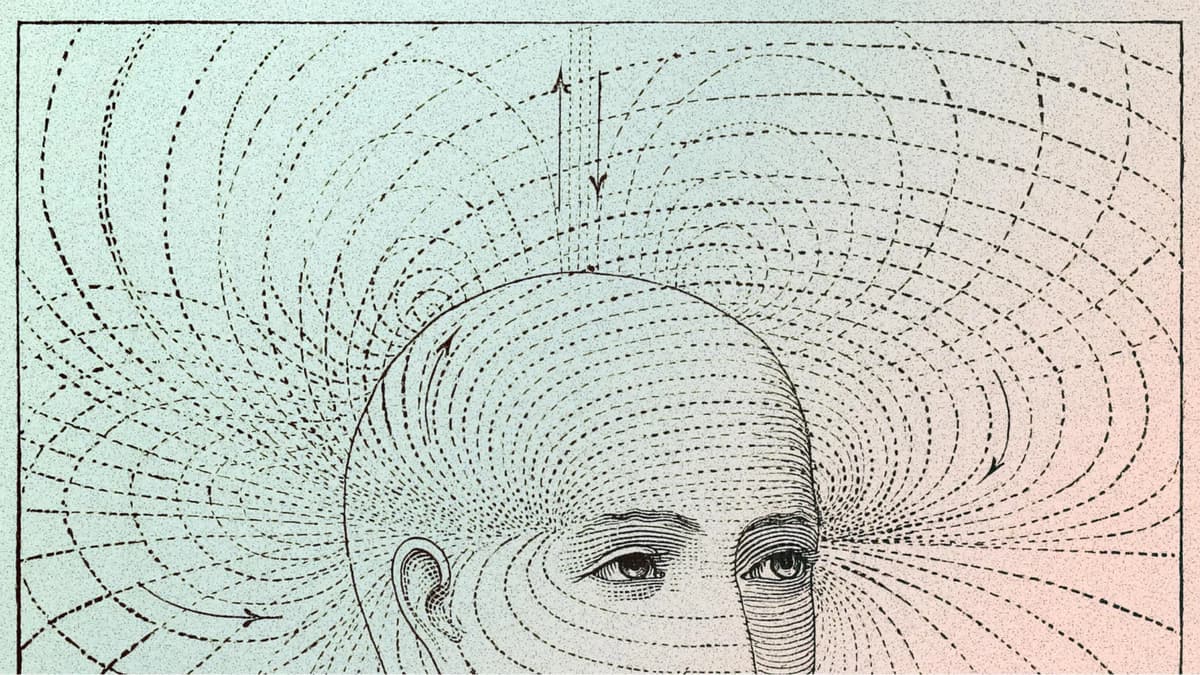
Are Your Memories Real? Physicists Revisit the Boltzmann Brain Paradox
Why It Matters
If our memories could be random fluctuations rather than records of a real past, the foundations of statistical mechanics and cosmology require re‑examination, affecting how scientists model the universe’s evolution.
Key Takeaways
- •Boltzmann brain hypothesis questions reliability of observed memories.
- •Study separates physical laws from time‑direction assumptions.
- •Authors identify circular reasoning in entropy‑memory arguments.
- •Past hypothesis and low‑entropy Big Bang remain interpretive choices.
- •Formal framework highlights role of fixed‑time points in analysis.
Pulse Analysis
The Boltzmann brain paradox sits at the intersection of thermodynamics, cosmology and philosophy. It stems from Boltzmann’s H theorem, which mathematically describes entropy increase yet is time‑symmetric. This symmetry allows a statistical argument that random fluctuations could spontaneously generate a brain with false memories, challenging the notion that our observations reflect a genuine past. The paradox forces physicists to confront how the second law of thermodynamics is interpreted when the universe’s initial conditions are uncertain.
Wolpert, Rovelli and Scharnhorst address this tension by constructing a formal framework that makes explicit which temporal assumptions are being applied. They distinguish between analyses that treat the current cosmic state as a given and those that anchor calculations to a low‑entropy Big Bang, known as the past hypothesis. By labeling these choices, the authors expose a hidden circularity: arguments that assume reliable memory to justify entropy’s arrow then use that arrow to validate the memory assumption. Their "entropy conjecture" clarifies that without an independent justification for the past hypothesis, the Boltzmann brain scenario cannot be definitively ruled out.
The implications extend beyond academic curiosity. If the reliability of memory is not guaranteed by physical law, it raises questions about the epistemic basis of scientific inference and the predictive power of cosmological models. Future research may focus on identifying observational signatures that break the symmetry or on developing new principles that select a preferred temporal direction without invoking circular reasoning. By disentangling law from assumption, the study offers a roadmap for more rigorous debates about time, entropy, and the nature of reality.
Are your memories real? Physicists revisit the Boltzmann brain paradox
Comments
Want to join the conversation?
Loading comments...