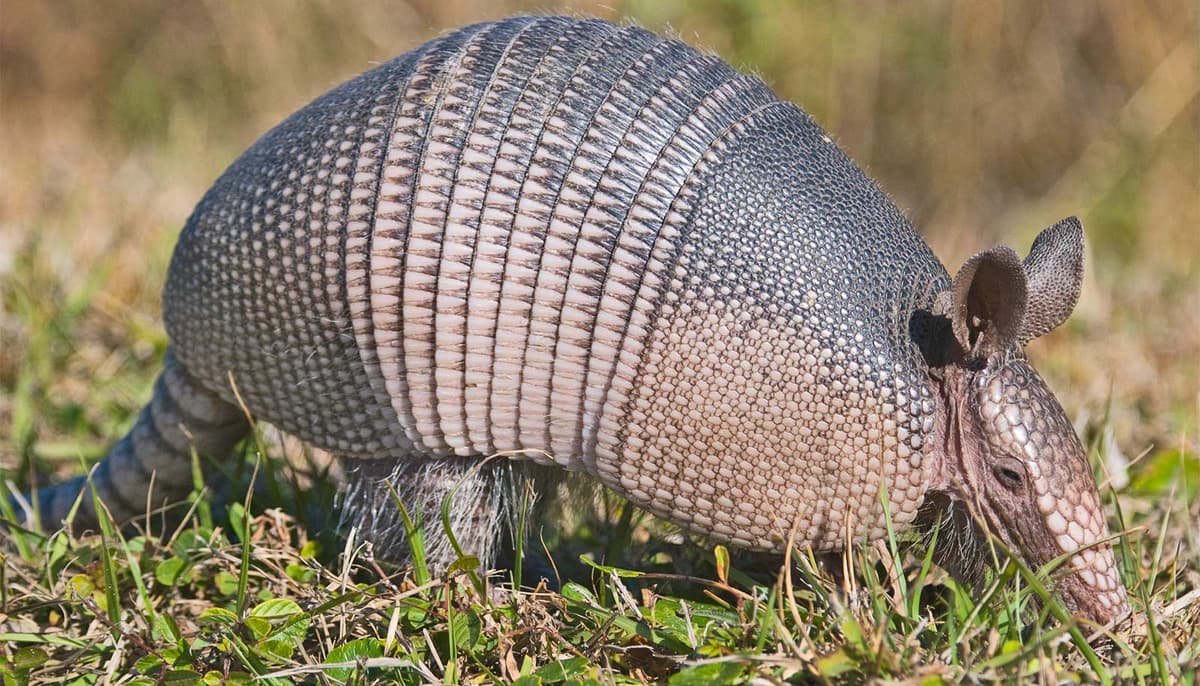
Armadillos Inspire New Tech to Protect Soft Machines
Why It Matters
The MIPM offers a scalable way to safeguard fragile soft‑robotic and flexible‑electronic systems, addressing a key vulnerability that limits commercial adoption. Its low‑weight, on‑demand rigidity could accelerate deployment in defense, wearables, and autonomous devices.
Key Takeaways
- •MIPM curls into rigid ball when strain detected
- •10 segmental scales resist ~10 newtons force
- •Layers include 3D‑printed resin exoskeleton and LCE actuator
- •Heater layer powers liquid‑crystal elastomer contraction
- •Potential uses in soft robotics and flexible electronics protection
Pulse Analysis
Soft robotics and flexible electronics have surged in capability, yet their pliability makes them prone to damage from everyday handling or sudden impacts. Engineers are turning to nature for solutions, and the armadillo’s defensive roll provides a compelling blueprint. By translating the animal’s segmented armor into a layered, 3‑D‑printed structure, the NC State team created a device that stays supple during normal operation but can instantaneously become a rigid shell when needed, bridging a long‑standing gap between flexibility and durability.
The morpho‑interlocking protective module (MIPM) integrates three functional layers. An outer exoskeleton of curved resin scales provides the protective skin, while a middle sensing‑actuation tier combines a strain sensor embedded with silver nanowires, a liquid‑crystal elastomer that contracts on heating, a kapton tape that expands, and a conductive fabric heater. Upon detecting strain, the sensor triggers the heater, causing the elastomer to contract and the tape to expand, which folds the structure into a circle. Inside, a paper‑based endoskeleton with rigid polymer segmental scales interlocks, delivering up to 10 newtons of impact resistance with just ten scales—a notable strength‑to‑weight ratio for soft devices.
The implications extend beyond academic curiosity. Defense contractors, wearable manufacturers, and autonomous vehicle developers all grapple with protecting delicate components without sacrificing form factor. A lightweight, self‑activating shield like the MIPM could enable longer field deployments for drones, safer consumer wearables, and more resilient medical sensors. With NSF and Department of Defense backing, the researchers are inviting collaborations to refine scaling, power efficiency, and integration pathways, signaling a potential shift toward bio‑inspired, on‑demand protection across multiple high‑tech sectors.
Armadillos inspire new tech to protect soft machines
Comments
Want to join the conversation?
Loading comments...