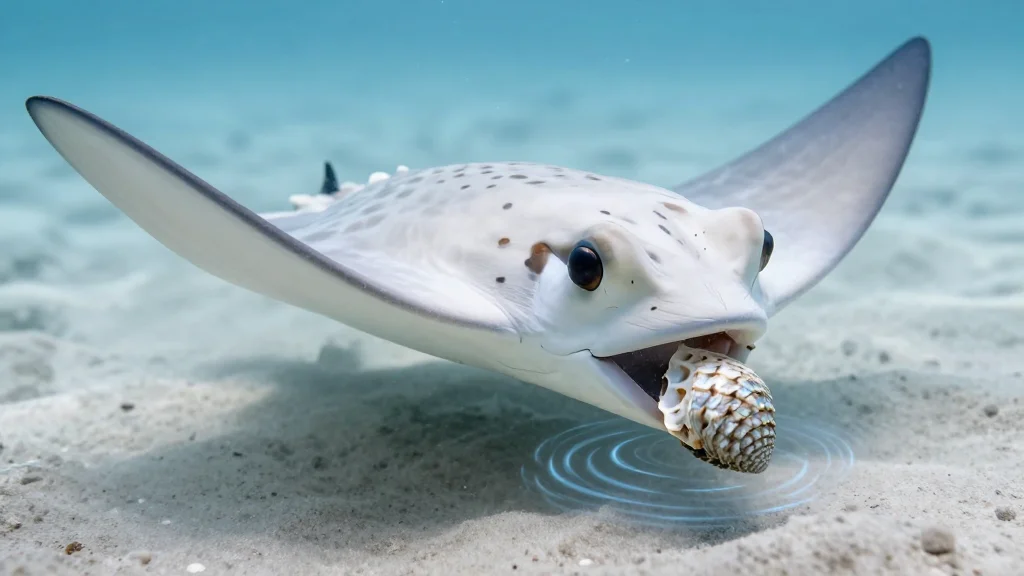
Armed with AI, Study Identifies Prey From Predator Crunching Sounds
Why It Matters
Accurate, low‑power acoustic monitoring gives scientists a scalable way to quantify predator pressure on coastal shellfish, informing conservation, fisheries management, and aquaculture decisions.
Key Takeaways
- •AI detects predator feeding sounds in noisy underwater recordings
- •Simple gammatone features match deep‑learning accuracy, saving power
- •System classifies prey type, handling strategy from acoustic signatures
- •Works in tanks and real‑world deployments with acoustic tags
- •Enables scalable, real‑time monitoring of coastal mollusk predation
Pulse Analysis
Underwater ecosystems have long been a blind spot for ecologists because visual observation is limited to shallow, clear waters. Recent advances in passive acoustic monitoring, however, let researchers "listen" to the hidden drama of predator‑prey interactions. By capturing the sharp, millisecond‑long clicks generated when a ray cracks a clam, scientists can now generate continuous, high‑resolution data streams that reveal when, where, and how often these events occur. The FAU team’s AI pipeline transforms raw audio into actionable insights, turning what was once background noise into a rich ecological signal.
The study’s technical breakthrough lies in its layered machine‑learning architecture. An initial scan uses acoustic pattern matching to flag candidate events, while a second classifier—ranging from random forests to long short‑term memory networks—filters out false positives. Surprisingly, the researchers found that models built on gammatone‑based features, a computationally cheap signal‑processing technique, matched the detection rates of heavyweight convolutional neural networks. This efficiency means the system can run on battery‑limited autonomous recorders, extending monitoring durations from days to months without sacrificing accuracy.
For coastal managers and shellfish growers, the ability to remotely quantify predation pressure is a game changer. Real‑time alerts could guide adaptive harvest limits, protect vulnerable reef habitats, and inform restoration projects aimed at stabilizing shorelines. Moreover, the acoustic signatures also encode information about prey size and handling tactics, opening the door to even finer‑grained behavioral studies. As ocean acidification intensifies and predator populations shift, scalable acoustic AI tools will become essential for safeguarding the biodiversity and economic value of marine mollusk resources.
Armed with AI, study identifies prey from predator crunching sounds
Comments
Want to join the conversation?
Loading comments...