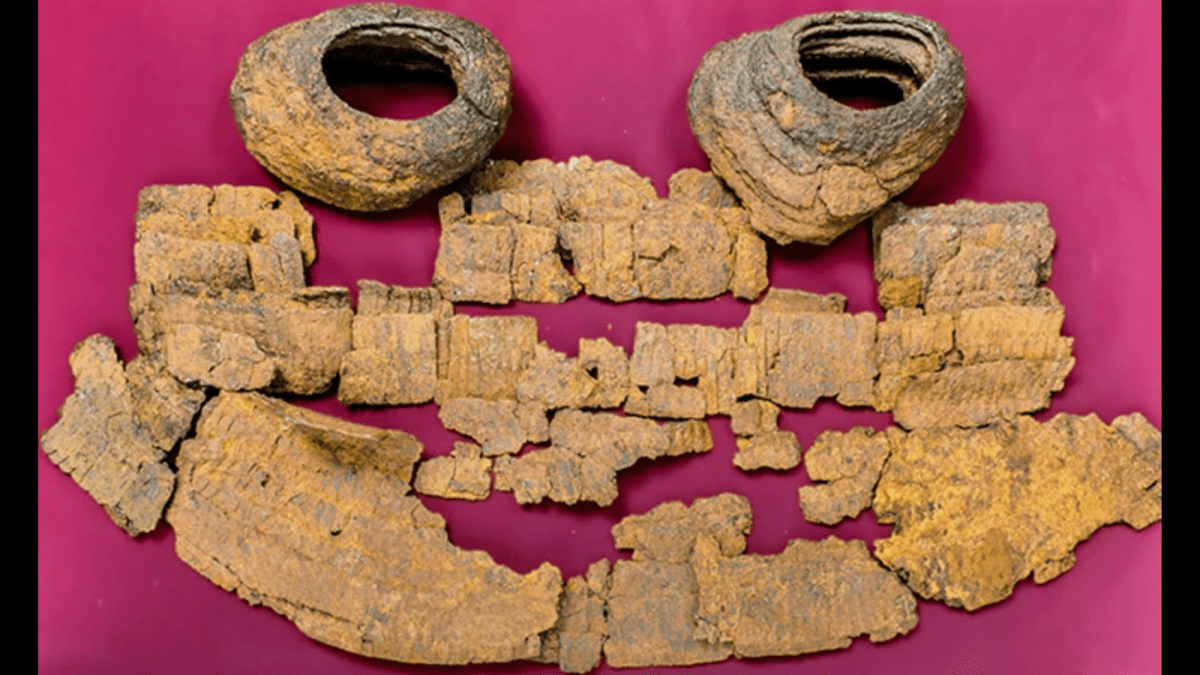
Armor Buried Under Japanese Temple Linked to Ancient Korean Kingdom
Why It Matters
The proof of Korean armor technology in early Japan highlights the depth of Baekje’s cultural and technological impact on Japanese state formation, reshaping narratives of East Asian interaction.
Key Takeaways
- •1957 excavation uncovered armor fragments beneath Asuka‑dera pagoda.
- •2015 X‑ray and 3D imaging confirmed Baekje lamellar construction.
- •Gongsanseong fortress armor dated 645 CE matches Asuka‑dera pieces.
- •Baekje artisans likely traveled with Buddhist monks to Japan.
- •Findings reshape understanding of 7th‑century Japan‑Korea cultural ties.
Pulse Analysis
The Asuka‑dera armor saga illustrates how modern imaging can revive decades‑old archaeological puzzles. When the Nara National Research Institute first uncovered fragmented iron plates beneath a pagoda foundation in 1957, the lack of precise analytical tools left the artifact’s origins ambiguous. Advances in X‑ray computed tomography and high‑resolution 3D reconstruction in 2015 allowed researchers to map the interlaced iron scales and cord bindings, confirming a lamellar technique that matches known Baekje armor. This technological leap not only authenticated the Korean provenance but also set a new standard for studying fragile, buried metalwork.
Baekje’s influence on early Japan extends beyond religious transmission; it also encompassed material culture such as military equipment. Historical chronicles like the Nihon Shoki already credit Baekje craftsmen with assisting in the construction of Asuka‑dera, Japan’s first full‑scale Buddhist temple. The armor’s design—single‑shirt lamellar plates offering flexibility and protection—mirrored the elite keiko armor later adopted by Japanese warriors. By aligning the dating of the Japanese find with contemporaneous Baekje pieces from Gongsanseong Fortress, scholars now have concrete evidence that Korean artisans traveled across the Sea of Japan, likely accompanying Buddhist emissaries, to disseminate both spiritual and technological knowledge.
The broader implications reverberate through East Asian historiography and heritage management. Confirming a direct material link between Baekje and early Japanese states challenges the view of Japan’s early development as an isolated trajectory, emphasizing a dynamic, bidirectional flow of ideas and craft. Future excavations at temple sites and fortifications can leverage the imaging protocols proven here, potentially uncovering further cross‑cultural artifacts. As scholars piece together these connections, a richer, more integrated picture of 7th‑century East Asia emerges, informing both academic discourse and public appreciation of shared heritage.
Armor buried under Japanese temple linked to ancient Korean kingdom
Comments
Want to join the conversation?
Loading comments...