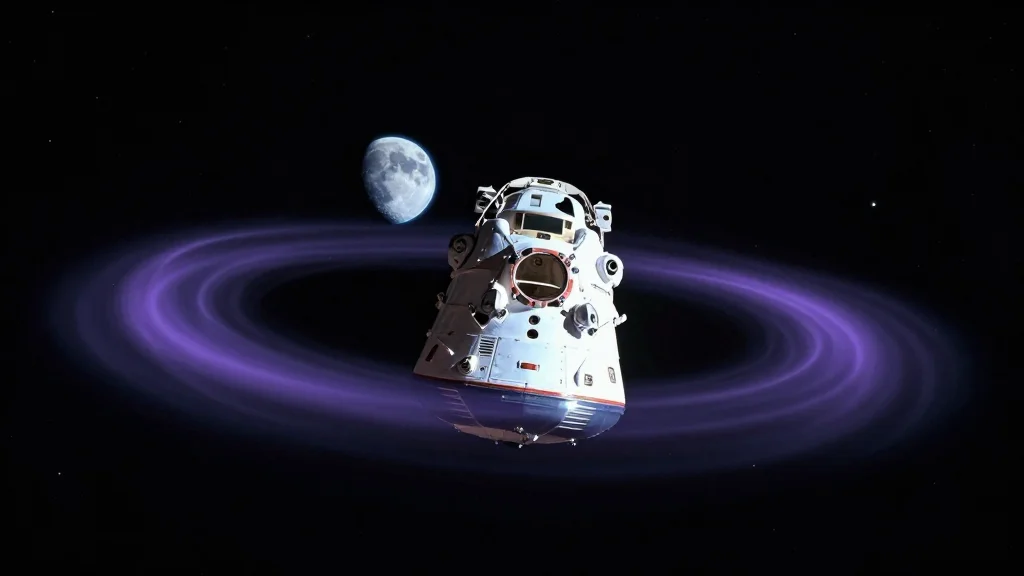
Artemis Astronauts to Shed Light on Space Health Risks
Why It Matters
Understanding radiation and psychological risks is critical for safe, long‑duration habitation on the Moon and Mars, directly shaping NASA’s crew‑health standards and investment decisions.
Key Takeaways
- •Artemis II reached deep‑space radiation levels 1,000× ISS distance
- •Orion carried sensors, blood, saliva, and bone‑marrow chip for monitoring
- •Study compares galactic cosmic rays versus solar particle radiation effects
- •Data will guide health safeguards for lunar bases and Mars missions
- •Mental‑health stress from confined capsules identified as major risk
Pulse Analysis
The Artemis II flight marked the first crewed journey that ventured far beyond the protective cocoon of low‑Earth orbit, looping around the Moon and exposing its four astronauts to the harsh radiation environment of deep space. Unlike the International Space Station, which benefits from Earth’s magnetosphere, the Orion capsule traversed a region where galactic cosmic rays and solar particle events strike unfiltered. This exposure provides a rare data set for NASA, whose long‑term goal of establishing a sustainable lunar outpost—and eventually sending humans to Mars—depends on quantifying those risks.
To capture the physiological impact, NASA outfitted Orion with an array of dosimeters, collected pre‑flight and post‑flight blood draws, and harvested saliva samples throughout the ten‑day mission. A novel bio‑mimetic chip, engineered to emulate bone‑marrow activity, continuously reported cellular stress markers, offering a proxy for blood‑cell production under radiation stress. By contrasting the radiation spectrum measured in lunar flyby with the well‑characterized ISS environment, researchers can differentiate the relative contributions of galactic cosmic rays versus solar particle events, refining shielding models and medical countermeasure strategies for future deep‑space crews.
Beyond the physical hazards, Artemis II underscored the psychological strain of operating in a cramped capsule far from home. Crew members wore smartwatches that logged sleep patterns, heart‑rate variability, and stress indicators, data that will feed into mental‑health protocols for longer missions. The stark contrast between the spacious ISS and Orion’s “camper‑van” interior highlights the need for habitat design that mitigates isolation and confinement. As commercial partners eye lunar tourism and NASA plans a permanent presence on the Moon, these health insights will shape everything from astronaut selection to habitat architecture and insurance underwriting.
Artemis astronauts to shed light on space health risks
Comments
Want to join the conversation?
Loading comments...