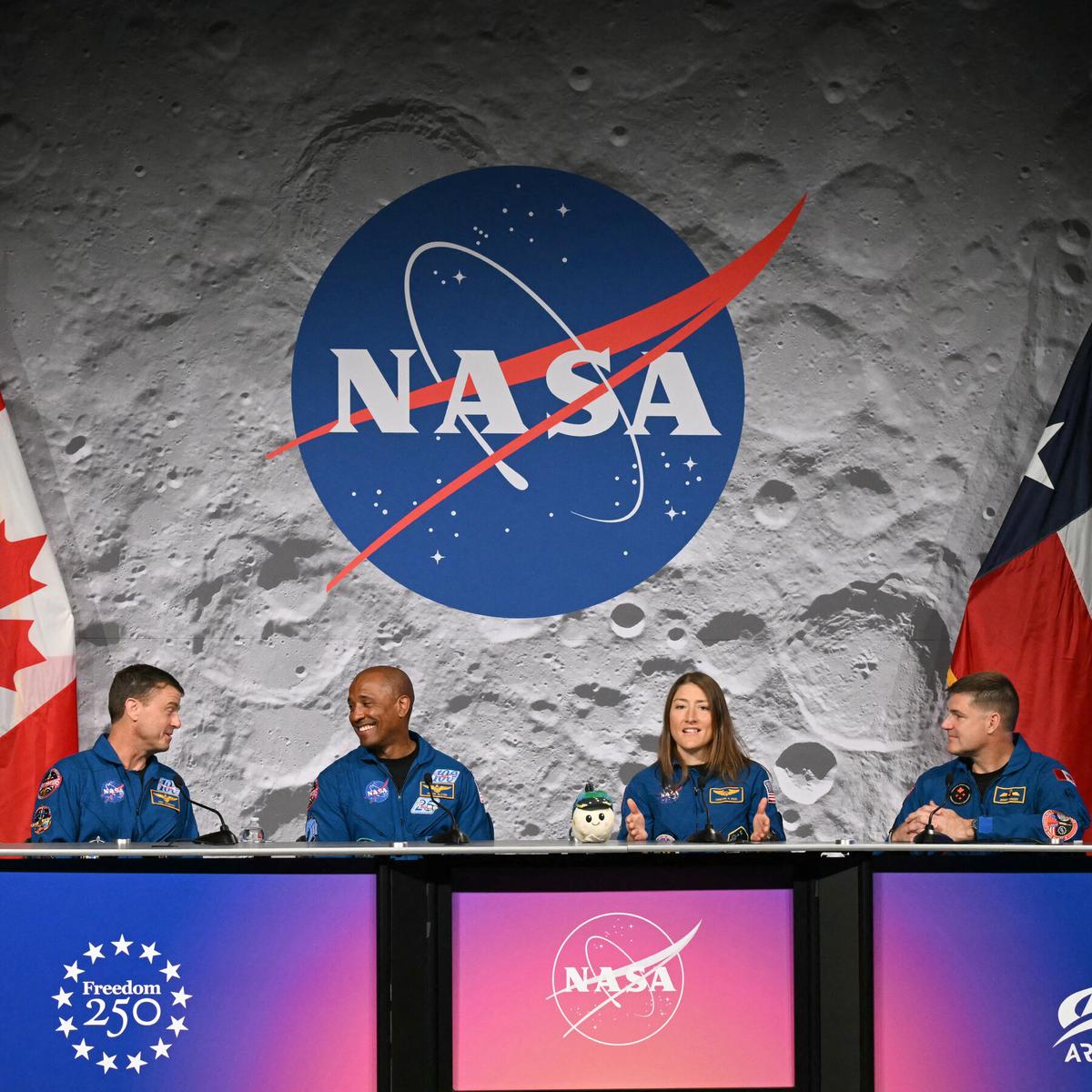
Artemis II Crew Discusses NASA Moon Mission and Next Steps
Why It Matters
The crew’s confidence accelerates NASA’s timeline for returning humans to the Moon, reinforcing the Artemis program’s role in revitalizing lunar exploration and spurring commercial and international investment.
Key Takeaways
- •Artemis II crew returned safely after six‑day lunar flyby.
- •Commander Wiseman urges inclusion of a lander on next mission.
- •Astronauts stress technical challenges but deem moon landing soon achievable.
- •NASA and CSA collaboration highlights international role in Artemis program.
Pulse Analysis
Artemis II marked the first crewed flight of NASA’s deep‑space exploration architecture, completing a six‑day lunar flyby before safely returning to Earth. The mission validated the Orion spacecraft’s life‑support systems, re‑entry heat shield, and deep‑space navigation, providing a data trove that will inform the design of subsequent Artemis flights. By showcasing a flawless return, the crew has set a performance benchmark that commercial partners and international agencies will use to align their own lunar ambitions.
During a press briefing, Commander Reid Wiseman argued that the next logical step is to integrate a lander into the flight manifest, effectively turning Artemis III into a lunar‑surface mission. While acknowledging the “extremely technically challenging” nature of such an endeavor, Wiseman stressed that the engineering hurdles are surmountable and that the team’s daily discipline makes a near‑term landing feasible. This sentiment reflects NASA’s broader strategy of incremental risk reduction, leveraging lessons from Artemis II to accelerate development of the Human Landing System and surface habitats.
The implications extend beyond NASA’s internal roadmap. A successful crewed landing will unlock new markets for private aerospace firms developing lunar landers, propulsion, and in‑situ resource utilization technologies. Moreover, the involvement of Canadian astronaut Jeremy Hansen underscores the growing international footprint of Artemis, encouraging other spacefaring nations to contribute capabilities and share costs. As the lunar economy matures, investors and policymakers will watch closely, recognizing the Moon as a stepping stone to deeper solar‑system exploration and a catalyst for high‑tech job creation on Earth.
Artemis II Crew Discusses NASA Moon Mission and Next Steps
Comments
Want to join the conversation?
Loading comments...