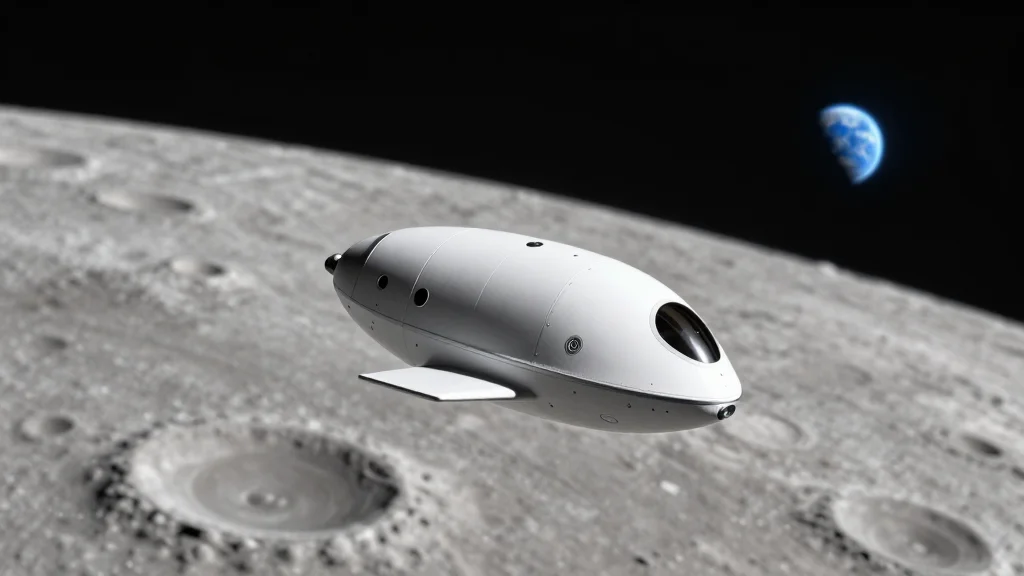
Artemis II Crew Enters Lunar Sphere of Influence, First Since Apollo 17

Why It Matters
The Artemis II crossing confirms that NASA’s modern navigation and propulsion systems can reliably operate in the complex gravitational environment of the Earth‑Moon system. This validation is essential for Artemis III, which will attempt the first crewed lunar landing since 1972, and for the broader goal of establishing a sustainable presence on the Moon. Accurate gravity modeling also reduces fuel margins, lowering launch costs and enabling more frequent missions. Beyond NASA, the milestone signals to commercial partners and international collaborators that the United States is regaining operational expertise in deep‑space flight. The data will feed into commercial lunar lander designs, inform future crew‑safety protocols, and provide a benchmark for private ventures planning their own lunar or Mars missions.
Key Takeaways
- •Artemis II crew entered the lunar sphere of influence at 12:41 a.m. ET Monday
- •First crewed entry into the moon’s gravitational zone since Apollo 17 in 1972
- •NASA flight director Rick Henfling called the crossing a "significant milestone"
- •Crew performed suit checks and a 14‑second correction burn, confirming Orion’s trajectory
- •Data will inform navigation and safety for upcoming Artemis III lunar landing
Pulse Analysis
Artemis II’s entry into the lunar sphere of influence is more than a symbolic checkpoint; it is a technical validation of the integrated navigation stack that underpins the entire Artemis architecture. The mission’s ability to maintain a pinpoint trajectory without early correction burns suggests that the flight‑software upgrades—particularly the autonomous navigation algorithms refined after Artemis I—are delivering the expected performance gains. This reduces propellant reserves needed for mid‑course adjustments, a cost‑saving that could free up mass for additional scientific payloads on future flights.
Historically, the Apollo program relied on ground‑based tracking for most trajectory decisions, a model that is no longer viable for the higher cadence and commercial involvement envisioned for Artemis. The successful autonomous burn on Artemis II demonstrates a shift toward a more self‑reliant flight profile, aligning with NASA’s goal of a sustainable lunar economy where private partners can operate with minimal ground intervention. The gravity‑gradient data collected will also improve the fidelity of lunar orbit models, which have been a source of uncertainty for decades. This refinement will benefit not only NASA’s crewed missions but also commercial lunar landers that must dock with orbiting platforms.
Looking ahead, the real test will be how this validated capability translates into the Artemis III landing. The lunar South Pole presents a more challenging terrain and lighting environment than the equatorial sites of Apollo. The confidence gained from Artemis II’s precise navigation and suit survivability tests will be crucial when crews transition from orbital operations to surface EVA activities. If NASA can leverage these data points to reduce risk and cost, the Artemis program could accelerate its timeline for establishing a permanent lunar outpost, reshaping the geopolitical balance of space exploration and opening new commercial opportunities.
Artemis II Crew Enters Lunar Sphere of Influence, First Since Apollo 17
Comments
Want to join the conversation?
Loading comments...