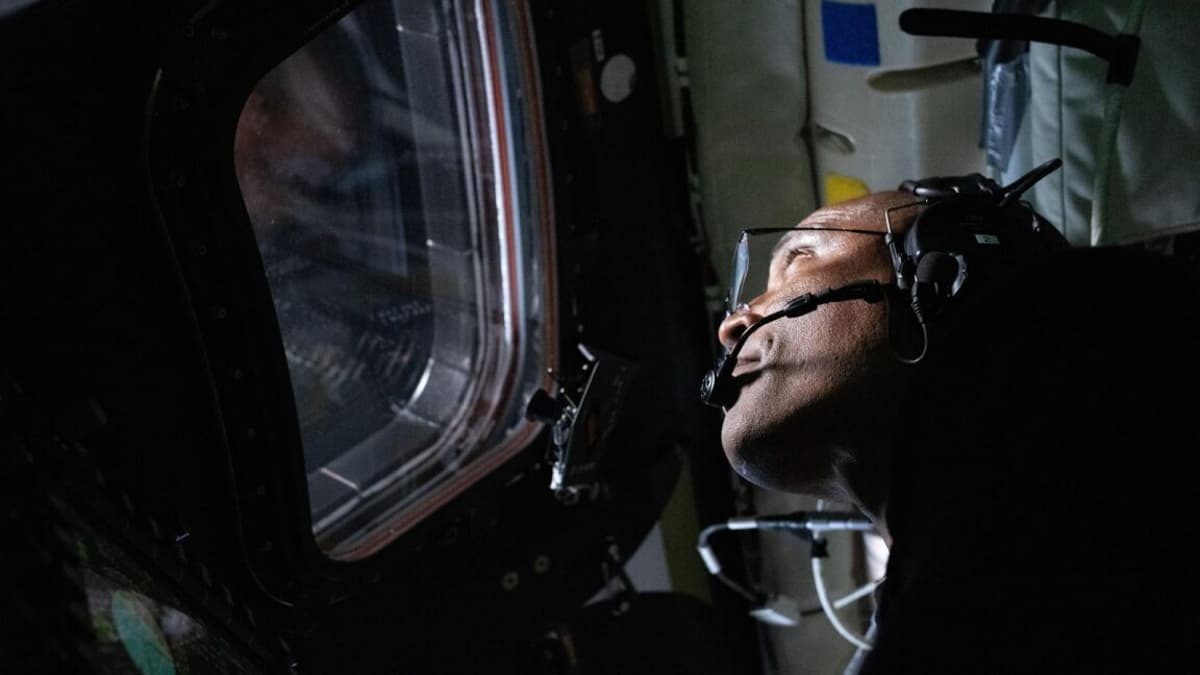
Artemis II Pilot Talks About What It Was Really Like to Fly and Land in Orion
Why It Matters
Glover’s firsthand validation of Orion’s controls and heat‑shield performance de‑risks critical systems for the next crewed lunar landings, boosting confidence across NASA and its commercial partners.
Key Takeaways
- •Orion's hand controller felt more responsive than simulated stick
- •Real Orion thrusters produced rumble, not the simulated whine
- •Glover says Orion's reentry was intense, parachutes performed flawlessly
- •Success validates docking and proximity ops for Artemis III/IV
- •Stick‑and‑throttle control lets pilots keep eyes on horizon
Pulse Analysis
The Artemis II flight marked the first crewed test of NASA’s Orion capsule, and Victor Glover’s candid interview offers rare insight into how the spacecraft performed beyond simulations. While SpaceX’s Crew Dragon relies heavily on touchscreen interfaces, Orion’s traditional hand‑controller gave Glover tactile feedback that proved essential during high‑speed maneuvers and lunar‑orbit operations. This distinction matters for mission safety: pilots can maintain visual focus on the horizon and external cues without diverting attention to a screen, a factor that could become decisive during complex rendezvous or emergency aborts.
Reentry remains the most unforgiving phase of any crewed mission, and Glover’s description of Orion’s 13‑minute descent underscores both progress and lingering challenges. The capsule’s heat‑shield held up under intense thermal loads, yet the crew experienced unmodeled vibrations and a brief free‑fall interval between drogue and main parachute deployment—phenomena that were absent in Dragon’s descent profile. These observations will feed directly into the next design iteration, ensuring that Orion’s parachute sequencing and structural damping are refined before Artemis III attempts a lunar landing.
Looking ahead, the pilot’s endorsement of Orion’s handling and the mission’s overall success provide a confidence boost for NASA’s broader Artemis roadmap. Commercial partners such as SpaceX and Boeing are watching closely, as the data validates the viability of mixed‑crew operations, proximity‑operations, and autonomous docking procedures. By confirming that Orion can be manually piloted with precision while still supporting automated systems, Artemis II sets a solid foundation for the upcoming crewed landings that aim to establish a sustainable lunar presence and eventually serve as a springboard for Mars exploration.
Artemis II pilot talks about what it was really like to fly and land in Orion
Comments
Want to join the conversation?
Loading comments...