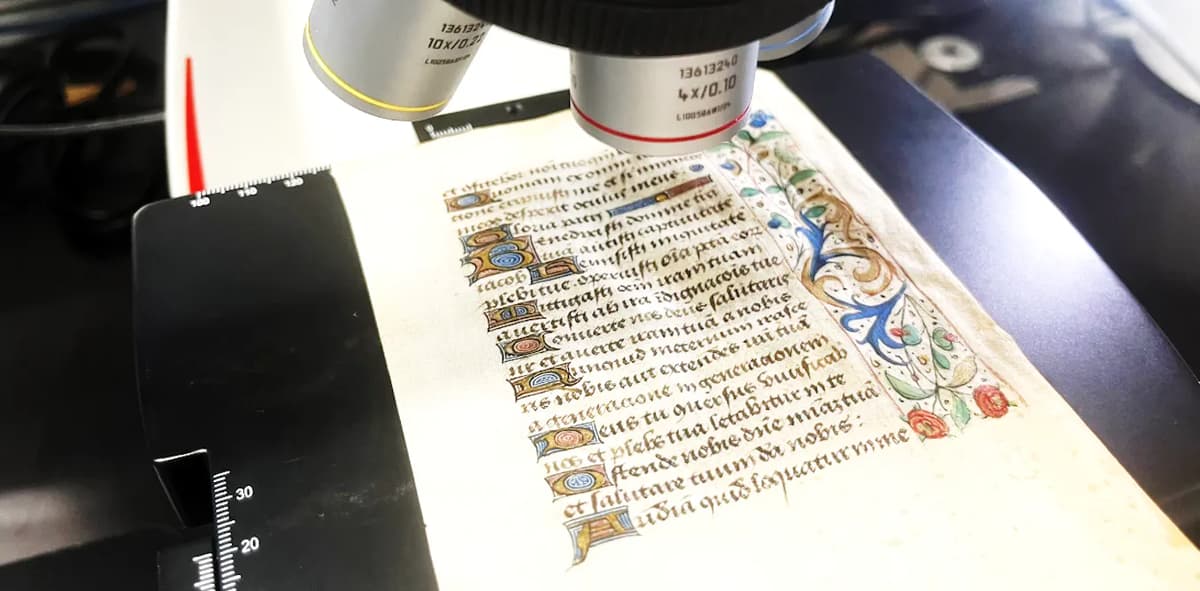
As a ‘Book Scientist’ I Work with Microscopes, Imaging Technologies and AI to Preserve Ancient Texts
Why It Matters
These innovations safeguard irreplaceable knowledge, ensuring that historical, linguistic and material insights survive for scholars and the public despite environmental and geopolitical risks. They also create new research pathways and commercial opportunities in heritage tech.
Key Takeaways
- •Multispectral imaging revives unreadable medieval manuscripts
- •Microscopic collagen analysis predicts parchment deterioration
- •AI transcription bridges gaps in endangered languages
- •Scientific methods counter climate‑induced collection damage
- •Heritage tech market expands with preservation innovations
Pulse Analysis
The accelerating loss of cultural assets—whether from armed conflict, wildfires in California or the thawing of archives under extreme humidity—has forced institutions to look beyond traditional conservation. In response, a new discipline known as book science merges materials research with cutting‑edge imaging, offering a proactive shield for at‑risk texts. By treating manuscripts as biological objects, scientists can map the condition of parchment collagen, spotting micro‑cracks and gelatinization before they become visible, and adjust storage environments to mitigate climate‑driven decay.
Multispectral imaging stands out as a transformative tool, capturing pages across ultraviolet, infrared and dozens of intermediate wavelengths. The recent restoration of a 13th‑century Jewish manuscript at the University of Toronto, where 16 distinct light bands revealed water‑damaged ink, illustrates how hidden narratives can re‑emerge without physical intervention. Coupled with high‑resolution microscopy, these techniques also decode the material composition of inks and pigments, shedding light on historic trade routes and production methods. Meanwhile, artificial intelligence models trained on scripts such as Geʽez accelerate transcription, turning labor‑intensive paleography into scalable digital workflows and democratizing access for scholars and descendant communities.
The ripple effects extend beyond academia. Libraries and museums are investing in preservation labs, creating new revenue streams for imaging equipment manufacturers and AI developers. Digitally restored texts enrich online collections, attracting global audiences and supporting educational initiatives. As climate variability intensifies, the ability to monitor and intervene early will become a core metric of institutional resilience, positioning book science at the forefront of cultural heritage strategy. This convergence of science, technology and stewardship promises to keep humanity’s written legacy alive for generations to come.
As a ‘book scientist’ I work with microscopes, imaging technologies and AI to preserve ancient texts
Comments
Want to join the conversation?
Loading comments...