Why It Matters
The potential loss of New Orleans as a fisheries hub threatens billions in seafood revenue and forces a massive workforce transition, making early reskilling and policy action critical for regional economic stability.
Key Takeaways
- •Paper predicts 3‑7 m sea‑level rise, 100 km shoreline retreat
- •Louisiana is the U.S.’s second‑largest seafood producer
- •Managed retreat could disrupt fisheries, endangering 1 million residents
- •Reskilling and early planning essential for climate‑driven migration
Pulse Analysis
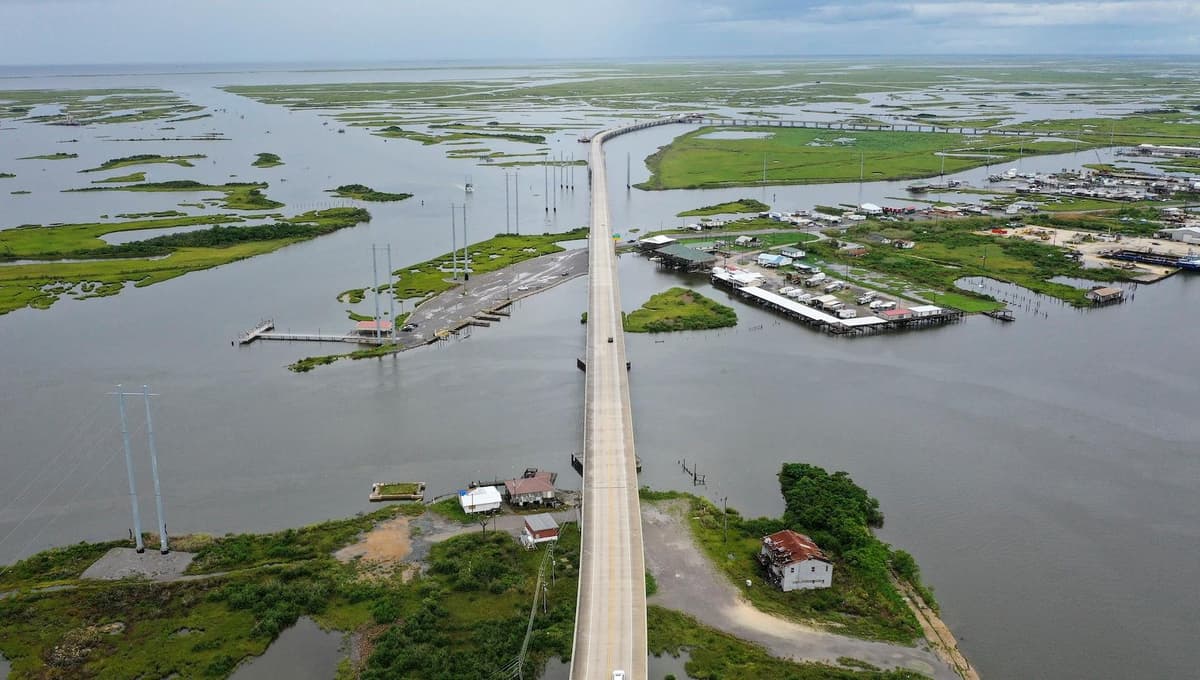
The recent Nature Sustainability study places Louisiana at the front line of climate‑induced sea‑level rise, estimating up to seven meters of water gain by 2100. Such a scenario would push the coastline inland by roughly 100 kilometers, effectively turning New Orleans into a modern Venice. Researchers argue that the region has already crossed a “point of no return,” urging policymakers to consider managed retreat rather than waiting for irreversible damage. Critics, however, dismiss relocation as politically infeasible, highlighting the cultural and emotional ties residents have to the city.
Louisiana’s seafood sector, the nation’s second‑largest after Alaska, relies heavily on New Orleans’ ports, processing facilities, and market demand. Shrimp, crab, oysters, crawfish and other products generate billions of dollars annually and support thousands of jobs. Yet the industry already wrestles with aging fleets, hurricane‑damaged infrastructure, and rising insurance costs. A forced retreat would dismantle critical supply chains, jeopardize livelihoods, and accelerate the “graying of the fleet” as younger workers abandon an increasingly precarious profession.
The broader implication is a pressing need for proactive workforce development and relocation strategies. Lessons from the Jean Charles Choctaw Nation’s $50 million federal relocation illustrate the social and economic complexities of moving entire communities. Policymakers must prioritize early reskilling programs, affordable housing in safer inland areas, and investment in new maritime hubs to preserve the state’s seafood legacy. As climate migration becomes a national reality, Louisiana’s experience could serve as a blueprint for balancing environmental adaptation with economic continuity.
As seas rise, where will Louisiana’s fishers go?
Comments
Want to join the conversation?
Loading comments...