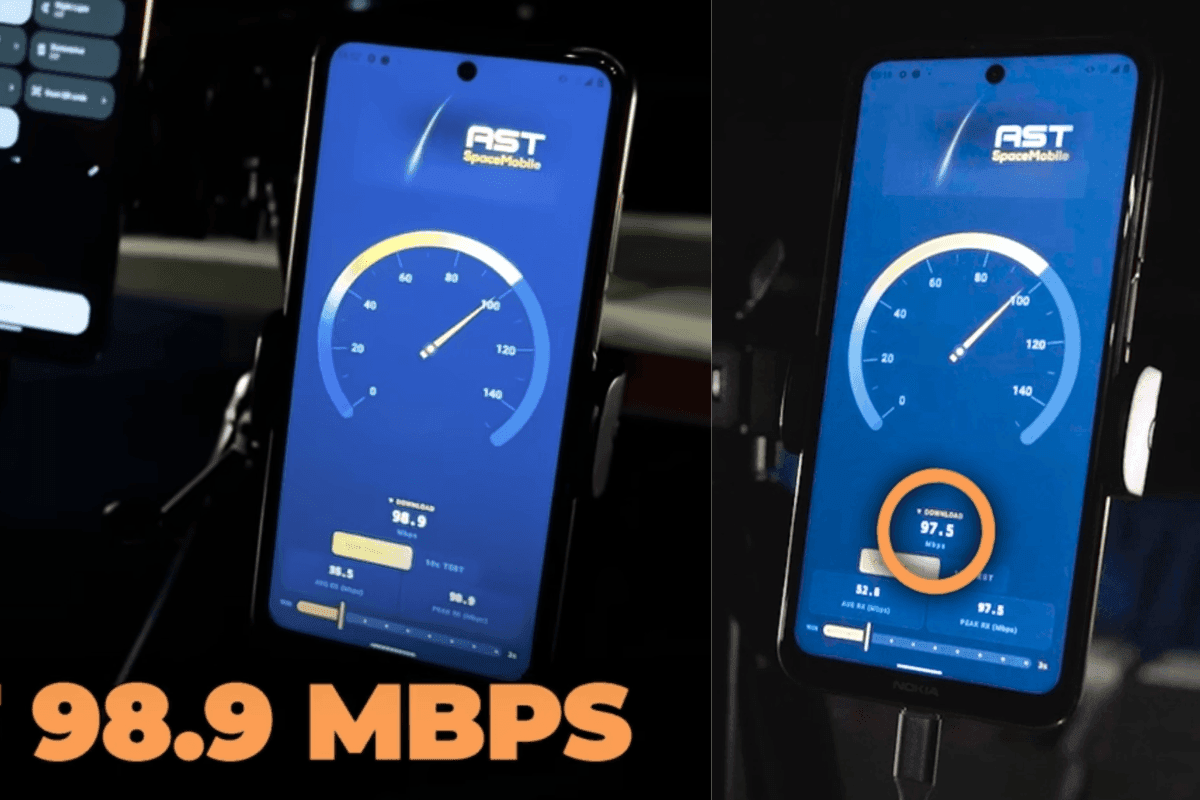
AST SpaceMobile Shows Near-100 Mbps Broadband From Space on a Standard Phone
Why It Matters
Near‑100 Mbps satellite broadband on standard phones could reshape connectivity for remote and disaster‑prone areas, giving operators a new, cost‑effective coverage layer. The India partnership signals a major market entry that could accelerate global adoption.
Key Takeaways
- •AST SpaceMobile hit 98.9 Mbps download to a regular smartphone
- •Test used Block 1 BlueBird satellites over the Bahamas, no phone modifications
- •Partnership with Vodafone Idea aims to bring direct‑to‑phone service to India
- •Next‑gen satellites expected to double speeds, enabling broader consumer use
- •Direct‑to‑device satellite broadband could supplement towers in remote or disaster zones
Pulse Analysis
Satellite broadband has long been associated with bulky dishes and low‑bandwidth emergency links, but AST SpaceMobile’s recent 98.9 Mbps download to a standard handset challenges that narrative. By leveraging its Block 1 BlueBird constellation, the company delivers cellular‑grade speeds from low‑Earth orbit without requiring any handset modifications. This technical milestone demonstrates that space‑based networks can meet consumer expectations for streaming, video calls, and cloud access, narrowing the performance gap with terrestrial 4G/5G services. The breakthrough also validates the company’s business model of selling connectivity as a layer rather than a replacement for existing infrastructure.
For telecom operators, the technology opens a strategic avenue to extend coverage into hard‑to‑reach locales. The partnership with Vodafone Idea (Vi) illustrates how a carrier can blend its ground network with satellite capacity to serve India’s remote villages, islands, and border regions where tower deployment is costly or logistically impossible. By integrating satellite links directly into existing mobile cores, operators can offer seamless handoffs, preserve device simplicity, and reduce capital expenditures on new sites. This approach is especially compelling for markets with sprawling geographies and uneven population density, where a satellite overlay can boost service reliability and open new revenue streams.
Commercializing direct‑to‑device satellite broadband, however, still faces hurdles. Scaling the service will require robust spectrum coordination, latency management, and pricing structures that appeal to both consumers and enterprises. Regulatory approvals and device certification across multiple manufacturers add further complexity. Yet AST’s roadmap—promising next‑generation satellites that could double current speeds—suggests a trajectory toward mainstream adoption. As the technology matures, investors and operators will watch closely to see whether satellite broadband can become a true complement to fiber, 5G, and future wireless standards, delivering ubiquitous connectivity wherever the ground network falters.
AST SpaceMobile Shows Near-100 Mbps Broadband From Space on a Standard Phone
Comments
Want to join the conversation?
Loading comments...