
Why It Matters
The safe passage of asteroid 2026JH2 illustrates how modern sky surveys can quickly identify and track potentially hazardous objects, reducing uncertainty and public anxiety. Each successful detection validates the planetary‑defense framework that relies on early warning, precise orbit determination, and international data sharing. Moreover, the event serves as a reminder that while small asteroids frequently brush past Earth, the growing catalog of near‑Earth objects improves our ability to assess and mitigate genuine impact threats. Beyond immediate safety, the flyby highlights gaps in our knowledge of small‑body populations. Size estimates remain uncertain without radar or infrared data, limiting our understanding of impact energy and mitigation strategies. Continued investment in complementary observation platforms—such as NASA’s NEOWISE mission and upcoming ground‑based radar upgrades—will be essential to close these knowledge gaps.
Key Takeaways
- •Asteroid 2026JH2 discovered on May 10 by Mount Lemmon Survey
- •Estimated size: 1–2 school buses (≈10–20 meters)
- •Closest approach: 91,593 km (56,913 miles) on Monday before 6 p.m. ET
- •No collision risk per MIT’s Richard Binzel and NASA’s JPL
- •Flyby underscores advances in near‑Earth object detection
Pulse Analysis
The detection of 2026JH2 reflects a broader shift in planetary‑defense capabilities. A decade ago, an object of this size might have gone unnoticed until it was within a few lunar distances, leaving little time for any meaningful response. Today, the Mount Lemmon Survey’s rapid identification and the subsequent orbit refinement by JPL demonstrate a mature, layered system that can flag and track small bodies within days.
Historically, the United Nations’ 2015 Space Safety Guidelines called for a coordinated global network to monitor near‑Earth objects larger than 140 meters. While that threshold remains the focus for impact mitigation planning, the frequency of sub‑140 meter flybys like 2026JH2 suggests that expanding detection thresholds could yield disproportionate safety benefits. Smaller asteroids, though less likely to cause global catastrophes, can still generate regional damage—as the 2013 Chelyabinsk event showed.
Looking forward, the upcoming launch of the NEO Surveyor infrared space telescope promises to fill observational blind spots, especially for dark, low‑albedo asteroids that optical surveys miss. Coupled with ground‑based radar upgrades, the next generation of detection assets will sharpen size estimates and improve impact probability calculations. For policymakers, the 2026JH2 flyby offers a concrete case study: early detection, transparent communication, and scientific context can keep public concern in check while reinforcing the value of sustained funding for planetary‑defense programs.
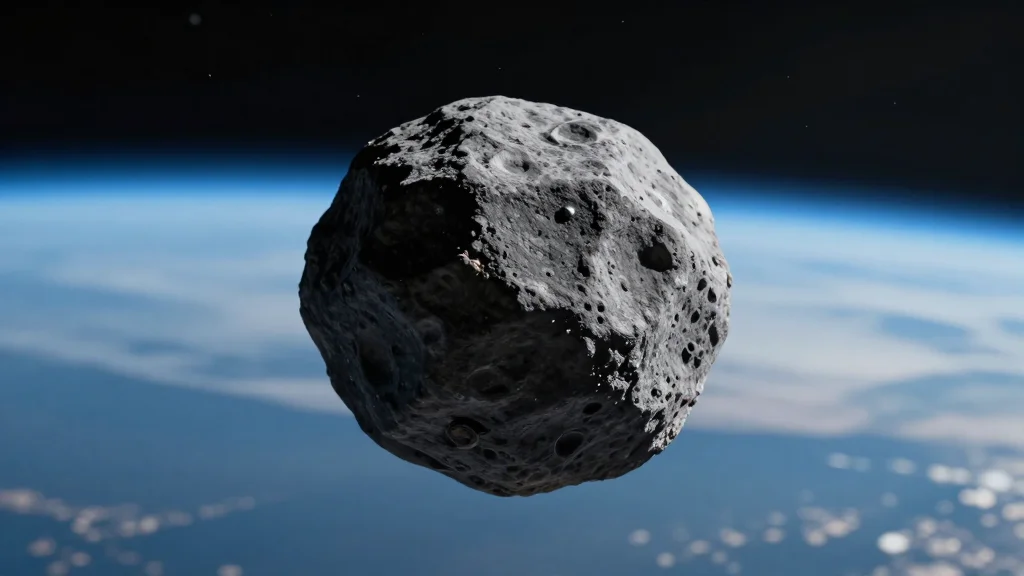
Asteroid 2026JH2 to Miss Earth by 56,913 Miles on Monday
Comments
Want to join the conversation?
Loading comments...