Why It Matters
A close flyby of a city‑destroying asteroid highlights the need for robust planetary‑defense monitoring, and the event offers a rare data set to improve impact prediction models.
Key Takeaways
- •Asteroid 2026JH2 will pass within 90,917 km of Earth.
- •Closest approach equals about 0.25 lunar distance, unprecedented near miss.
- •Size estimates suggest impact could devastate a city-sized area.
- •Scientists will monitor trajectory with radar and optical telescopes.
Pulse Analysis
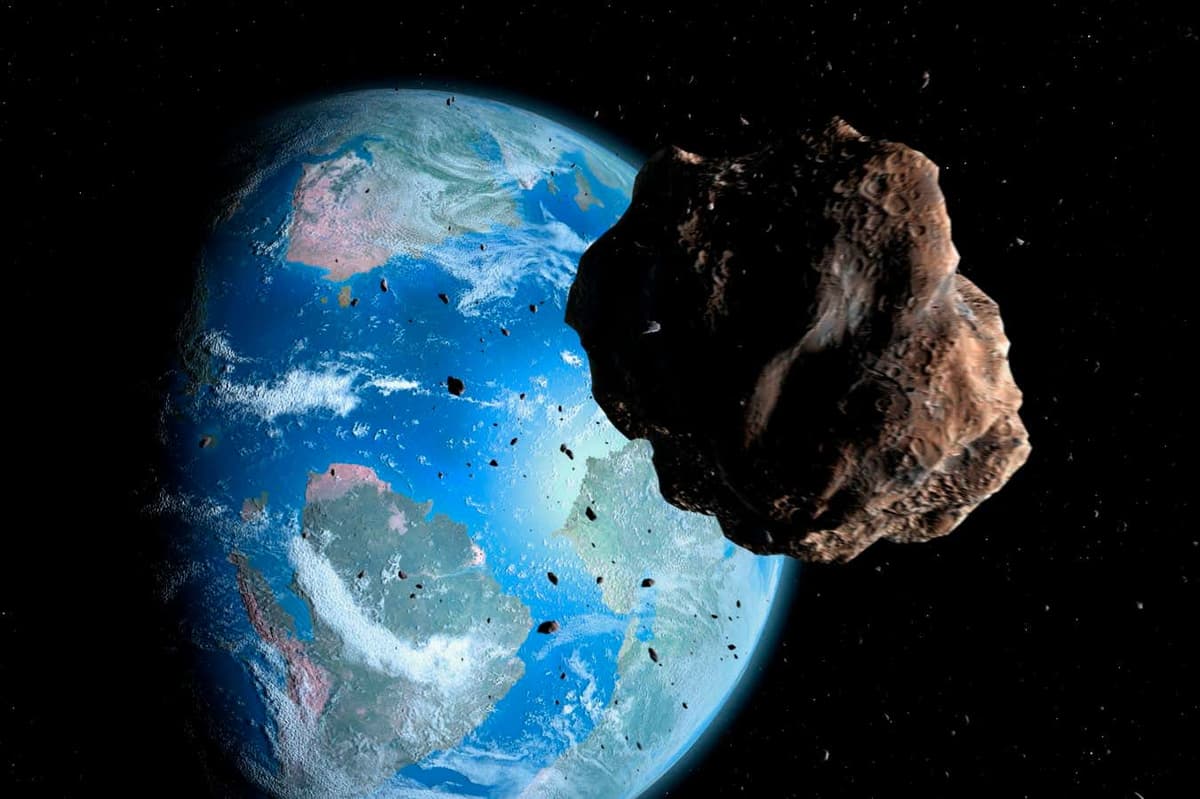
Near‑Earth asteroids (NEAs) regularly cross Earth’s orbital path, but only a handful approach within a few hundred thousand kilometres. 2026JH2, discovered earlier this year, measures several hundred metres across and carries enough kinetic energy to flatten a medium‑sized city if it struck. Its projected miss distance of 90,917 kilometres places it at roughly one‑quarter the lunar distance, a proximity that astronomers describe as “as close as you can get without hitting.” This event underscores how even modest‑sized NEAs can pose significant hazards when trajectories align.
The planetary‑defense community is already mobilising a coordinated observation campaign. Ground‑based radar facilities such as Goldstone and the European Infrasound Network will track the asteroid’s speed and shape, while optical telescopes worldwide refine its orbital parameters. These data streams feed into NASA’s Center for Near‑Earth Object Studies and the European Space Agency’s Space Situational Awareness program, enabling real‑time risk assessments. By tightening the uncertainty envelope around 2026JH2’s path, scientists can determine whether any mitigation measures—like a kinetic impactor mission—might be warranted for future threats.
Beyond the scientific value, the close flyby carries broader implications for policy and public awareness. Governments are increasingly investing in early‑warning systems and international collaboration, recognizing that a single impact event could have economic and humanitarian repercussions. The 2026JH2 encounter offers a tangible case study for emergency planners, insurers, and infrastructure managers to evaluate preparedness scenarios. As the world watches this near miss, the episode may accelerate funding for next‑generation survey telescopes and inspire legislative action to formalise global response protocols.
Asteroid set to fly very close to Earth
Comments
Want to join the conversation?
Loading comments...