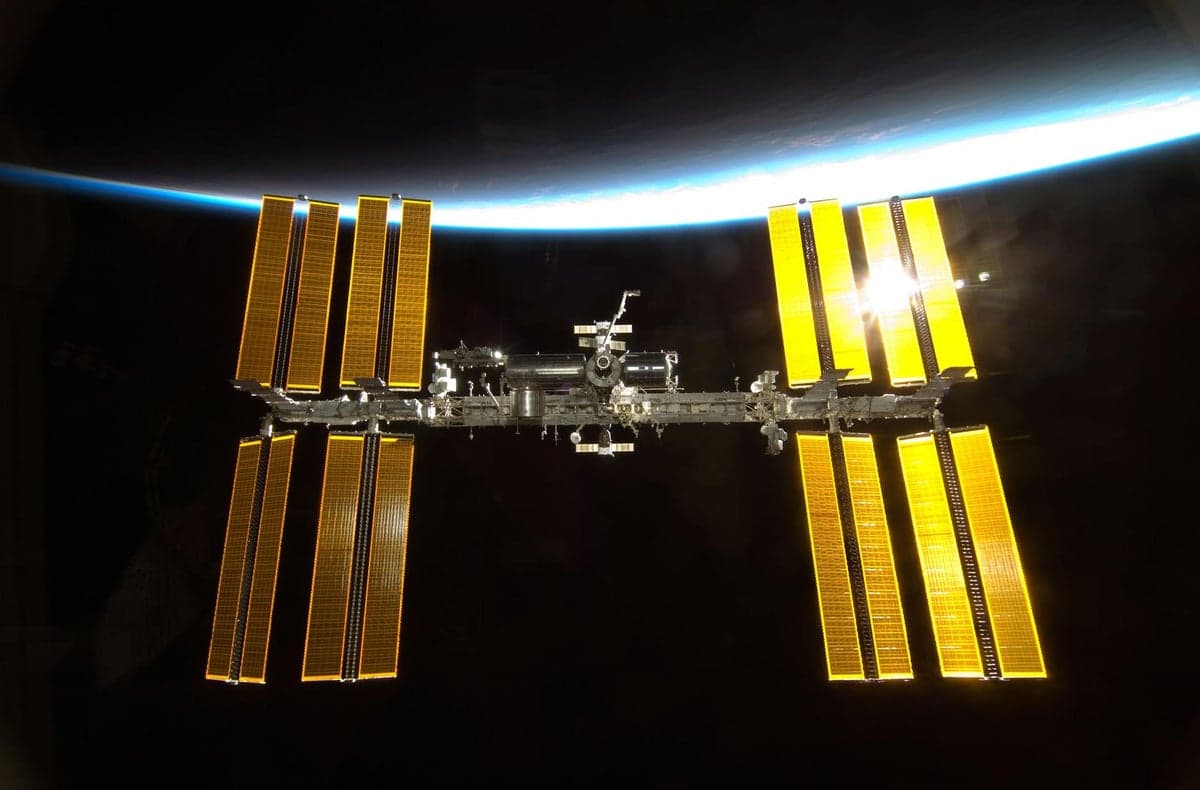
Astronauts’ Brains Don’t Fully Adapt to Life in Microgravity, New Study Finds
Why It Matters
Understanding incomplete brain adaptation to microgravity informs safer spacecraft design and training, directly impacting the success of long‑duration and deep‑space missions.
Key Takeaways
- •Astronauts grip objects 20% tighter in microgravity than on Earth
- •Motor speed slows by ~15% during five‑month ISS missions
- •Grip and rhythm recover within 24 hours after return to Earth
- •Adaptation ceiling suggests limited brain plasticity to weightlessness
- •Findings inform design of tools for Moon and Mars missions
Pulse Analysis
Microgravity has long been known to reshape human physiology, from bone loss to altered vestibular function. The latest study, published in the Journal of Neuroscience, extends that knowledge by quantifying how the brain’s motor commands adjust when astronauts live aboard the International Space Station for five months or more. Researchers measured grip force and movement rhythm in 11 crew members, discovering that participants consistently over‑gripped objects—behaving as if the items retained Earth‑like weight—and slowed their motions by roughly 15 percent. These findings reveal a partial, rather than complete, neural adaptation to weightlessness.
The practical fallout is immediate for spacecraft ergonomics and extravehicular activity (EVA) tool design. Over‑gripping creates unnecessary fatigue and could jeopardize delicate operations, while slower motion may affect time‑critical tasks. Knowing that astronauts retain a safety margin in their grip allows engineers to calibrate handles, restraints, and robotic interfaces to match this innate bias, reducing the risk of accidental release. Moreover, the rapid re‑adaptation observed—grip and rhythm normalize within a day of Earth return—suggests that training protocols can leverage this plasticity, shortening post‑flight rehabilitation.
As agencies set sights on the Moon, Mars and beyond, the study raises questions about how partial‑gravity environments will influence sensorimotor performance. The Moon’s one‑sixth and Mars’s one‑third of Earth’s gravity may produce a hybrid adaptation, where the brain oscillates between Earth‑mode and microgravity‑mode, potentially increasing error rates during surface operations. Ongoing research must map these gradients and develop countermeasures such as haptic feedback suits or adaptive control algorithms. Ultimately, understanding the limits of neural adaptation is essential for ensuring astronaut safety and mission success in the next era of deep‑space exploration.
Astronauts’ brains don’t fully adapt to life in microgravity, new study finds
Comments
Want to join the conversation?
Loading comments...