Astronauts Could Use Lightning-Like Plasma Jets to Kill Germs on the Moon and Mars, Demo Hints
Why It Matters
Effective, water‑free disinfection solves a critical health challenge for closed‑loop habitats, reducing reliance on chemicals and conserving scarce resources on long‑duration missions.
Key Takeaways
- •Plasma jets kill bacteria better than ISS vacuuming and wipes
- •Technique uses electricity, no water, suitable for closed habitats
- •No fabric damage observed after up to five minutes treatment
- •Handheld device could become routine sanitation tool for lunar bases
- •Researchers expanding tests to other spacecraft microbes
Pulse Analysis
Long‑duration missions to the Moon and Mars demand airtight habitats where every gram of water and every breath of air is precious. Traditional disinfectants, such as aerosolized chemicals, pose inhalation risks and leave residues that can accumulate in sealed environments. Consequently, NASA and commercial partners have been searching for a sanitation method that is both effective and resource‑light. Plasma technology, essentially a controlled lightning bolt, offers a promising answer by using only electricity and a carrier gas to generate reactive species that eradicate microbes without liquid waste.
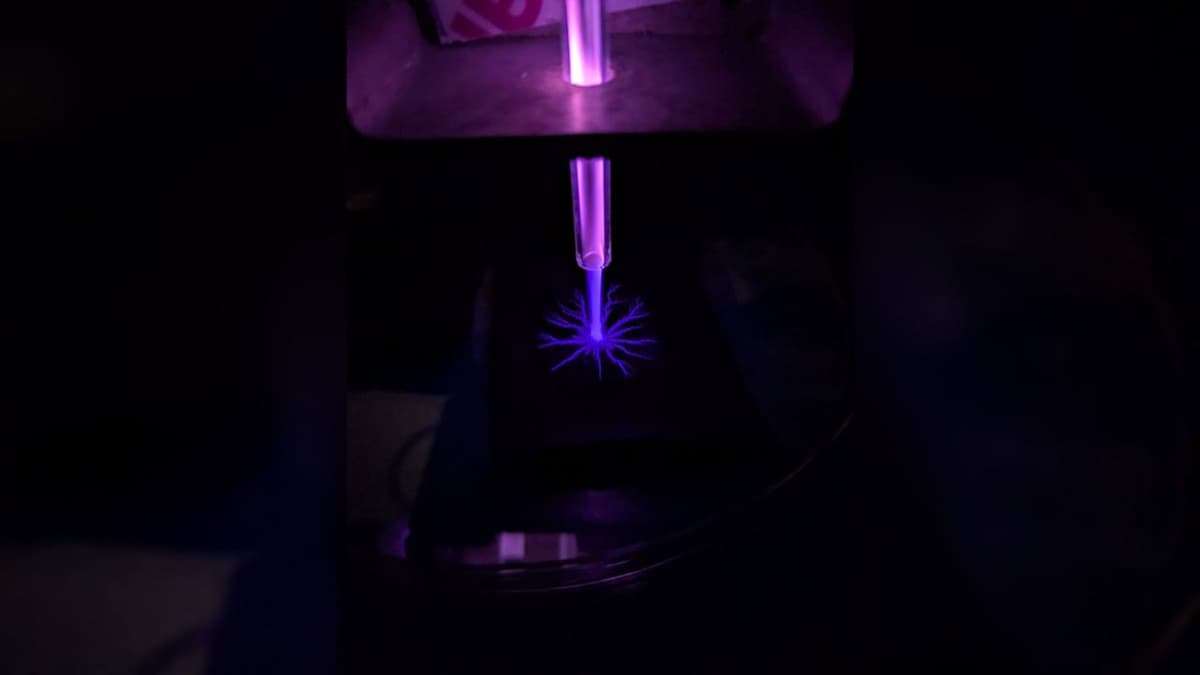
In the laboratory, a cellphone‑sized plasma generator produced a bright‑purple jet that penetrated cotton fibers inoculated with Staphylococcus caprae, a skin bacterium previously found aboard the ISS. Within 30 seconds to five minutes, the plasma eradicated the bacteria more thoroughly than the station’s current dry vacuuming and chemical wipes, while leaving the fabric’s integrity intact. The process works by creating highly reactive oxygen and nitrogen radicals that oxidize cell membranes, a mechanism that does not rely on moisture and therefore sidesteps the challenges of water‑based laundering in microgravity.
Looking ahead, the research team envisions scaling the system into a handheld sanitizer that astronauts could carry for daily use, from cleaning clothing to decontaminating equipment. Ongoing trials will expand the microbial library to include fungi and spore‑forming bacteria that thrive in closed habitats. If successful, plasma‑based sanitation could become a standard component of future habitat design, lowering life‑support costs, enhancing crew health, and supporting planetary‑protection protocols for interplanetary exploration.
Astronauts could use lightning-like plasma jets to kill germs on the moon and Mars, demo hints
Comments
Want to join the conversation?
Loading comments...