Astronomers Complete 3‑D Map of 47 Million Galaxies, Challenging Dark‑Energy Theory

Why It Matters
The DESI map represents a watershed for observational cosmology, delivering a dataset large enough to test subtle departures from the ΛCDM model that were previously beyond reach. By potentially confirming that dark energy evolves over time, the findings could open a new frontier in fundamental physics, prompting theorists to explore dynamic scalar fields, modified gravity, or other exotic mechanisms. Beyond the cosmological stakes, the technological achievements—massive robotic fiber arrays, high‑throughput spectrographs, and advanced data pipelines—set a new benchmark for large‑scale surveys. These innovations will inform the design of next‑generation instruments, ensuring that future missions can extract even finer details from the faintest corners of the universe.
Key Takeaways
- •DESI completed its primary five‑year survey on April 14, delivering a 3‑D map of >47 million galaxies and quasars.
- •The dataset is six times larger than all previous spectroscopic surveys combined.
- •Early analysis hints that dark energy’s influence may be weakening, challenging the constant‑Λ assumption.
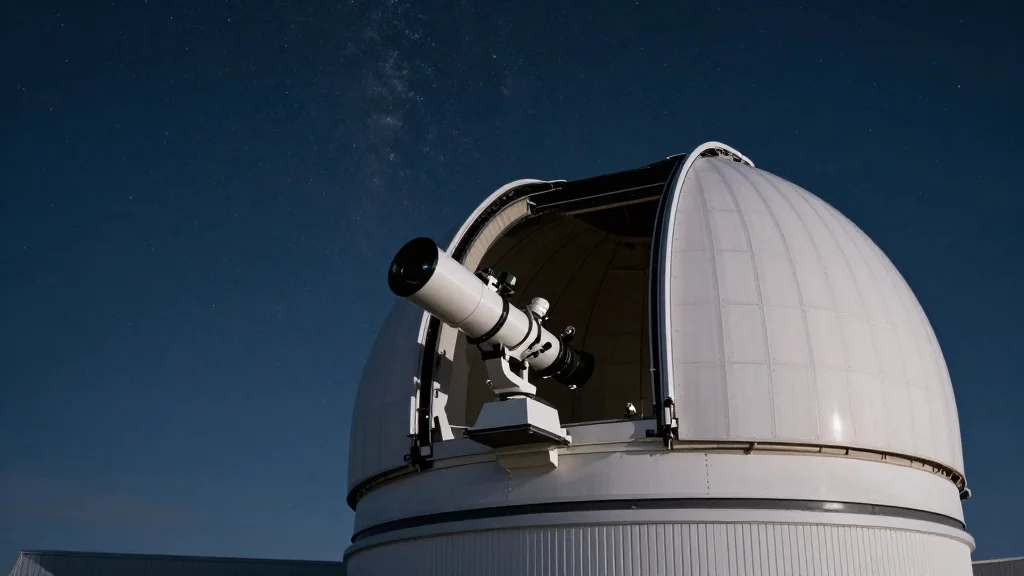
- •Robotic fiber‑optic positioners captured spectra from thousands of objects every 20 minutes on the Mayall Telescope.
- •Future data releases will enable independent tests of dark‑energy models and alternative gravity theories.
Pulse Analysis
The completion of DESI’s primary mission marks a turning point not because of a single discovery, but because it finally provides the statistical muscle needed to interrogate the dark‑energy paradigm. For decades, cosmologists have relied on supernovae and the cosmic microwave background as indirect probes; DESI adds a third, independent pillar by mapping the large‑scale structure across a broad redshift range. This triangulation is essential for breaking degeneracies that have kept the equation‑of‑state parameter w close to –1, the value expected for a true cosmological constant.
Historically, each leap in survey volume has precipitated a paradigm shift—think of the Sloan Digital Sky Survey’s role in establishing the baryon acoustic oscillation standard ruler. DESI’s order‑of‑magnitude increase in galaxy counts could similarly force a re‑evaluation of the underlying physics. If the weakening of dark energy is confirmed, it would lend credence to dynamical dark‑energy models such as quintessence, which predict a time‑varying w. That would ripple into particle physics, where researchers would need to identify a viable field or particle candidate that can drive such evolution without violating other constraints.
From a strategic perspective, the DESI results will shape funding priorities for the next decade. Agencies may allocate more resources to missions that can directly measure the growth of structure, such as the Roman Space Telescope’s high‑latitude survey or the European Euclid mission. Meanwhile, the technical blueprint of DESI—massive robotic fiber arrays and rapid reconfiguration—will likely be replicated in upcoming ground‑based facilities, ensuring that the momentum built by this project translates into even more ambitious explorations of the cosmos.
Astronomers Complete 3‑D Map of 47 Million Galaxies, Challenging Dark‑Energy Theory
Comments
Want to join the conversation?
Loading comments...