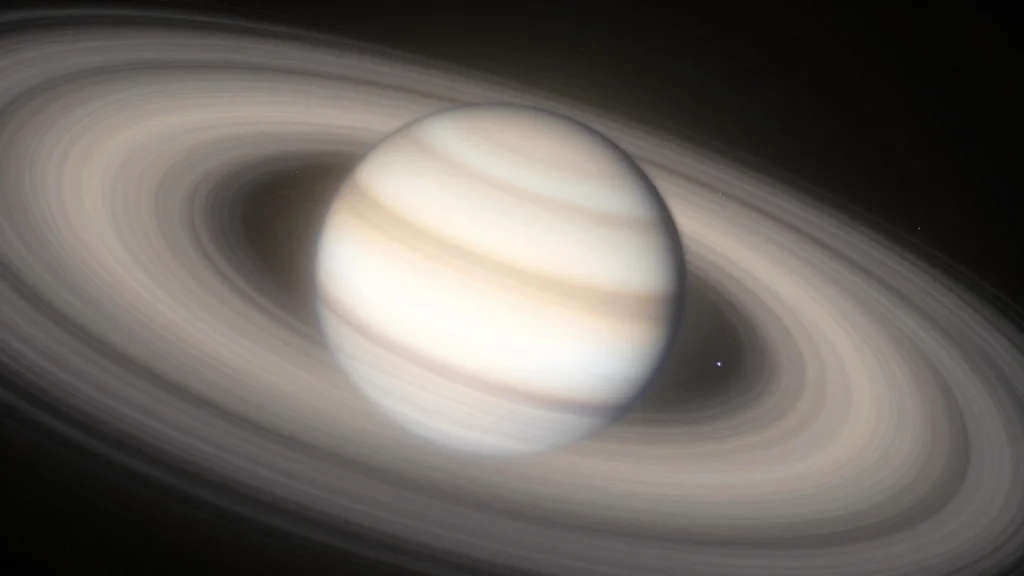
Astronomers Directly Image Rotating Protoplanetary Disk Around AB Aurigae

Why It Matters
Directly imaging the rotation and internal disturbances of a protoplanetary disk provides rare empirical evidence for the mechanisms that build planetary systems. By confirming that giant planets can form and influence their natal disks within the first few million years, the study reshapes timelines used in exoplanet demographics and informs models of solar‑system evolution. Moreover, the ability to track dynamic shadows offers a new diagnostic tool for identifying hidden protoplanets, potentially accelerating the discovery of young worlds still embedded in dust. The breakthrough also validates the capabilities of extreme‑adaptive‑optics instruments like SPHERE, reinforcing their role in bridging the gap between theoretical predictions and observable phenomena. As more facilities adopt similar techniques, the field moves toward a statistically robust picture of planet formation, which could eventually guide the search for habitable worlds.
Key Takeaways
- •First direct measurement of rotation in a protoplanetary disk around AB Aurigae
- •SPHERE instrument captured bright accretion zones and fast‑moving shadows
- •Inner‑disk deviations suggest early formation of gas‑giant planets
- •Four‑year observation series enabled detection of transient disk features
- •Findings challenge smooth‑disk models and support early‑planet formation theories
Pulse Analysis
The AB Aurigae observation marks a turning point for high‑contrast imaging, moving the field from indirect inference to real‑time visualization of planet‑forming processes. Historically, astronomers relied on spectral signatures or dust gaps to infer the presence of protoplanets. This study, however, demonstrates that with sufficient spatial resolution and temporal coverage, we can watch the disk itself respond to nascent planets, effectively turning the disk into a laboratory for testing formation models.
From a competitive standpoint, European facilities such as the VLT are now proving they can rival the upcoming capabilities of the Extremely Large Telescope (ELT) and space‑based platforms. The success of SPHERE underscores the value of investing in adaptive‑optics upgrades and long‑term monitoring programs. As the James Webb Space Telescope begins delivering infrared spectra of similar disks, cross‑validation will become possible, potentially revealing the chemical fingerprints of planet formation that SPHERE alone cannot detect.
Looking forward, the synergy between ground‑based extreme‑AO systems and next‑generation interferometers could enable astronomers to not only map disk dynamics but also directly weigh forming planets. If the shadows observed around AB Aurigae are indeed protoplanets, future observations could track their orbital evolution, offering unprecedented insight into migration pathways that shape planetary system architectures. The AB Aurigae case thus sets a benchmark for what is achievable today and outlines a roadmap for the next decade of planet‑formation research.
Astronomers Directly Image Rotating Protoplanetary Disk Around AB Aurigae
Comments
Want to join the conversation?
Loading comments...