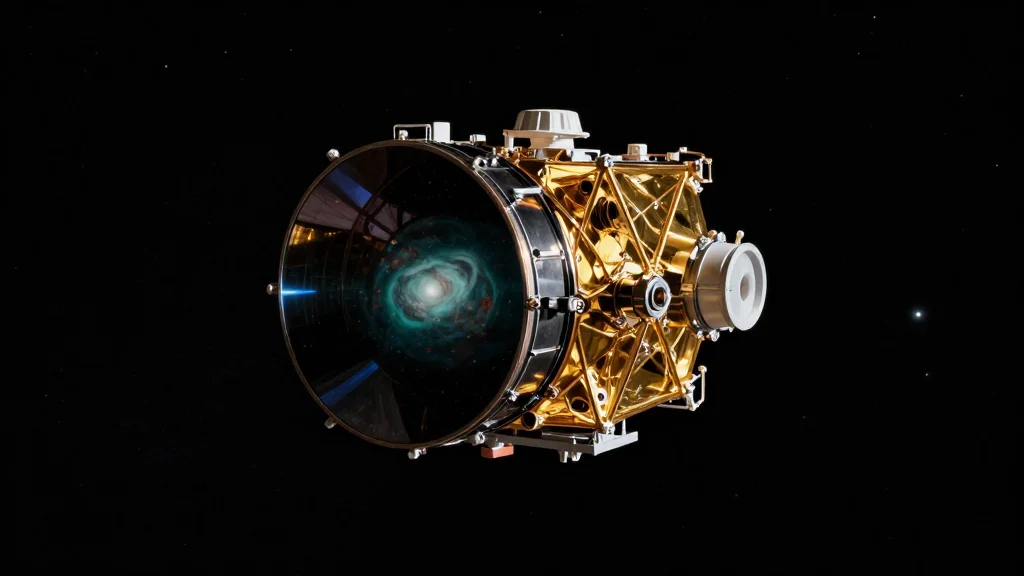
Astronomers Find Most Chemically Primitive Galaxy in Early Universe
Why It Matters
The galaxy’s near‑pristine composition provides a direct window into the first generations of stars and the chemical buildup that powered reionization, helping calibrate cosmological simulations. Its existence challenges current models that predict rapid metal enrichment in early massive systems.
Key Takeaways
- •Galaxy at redshift 7.5, 13 billion light‑years distant
- •Metallicity only 1/1000 of solar, the most primitive known
- •Detected using JWST NIRSpec and Subaru's Hyper Suprime‑Cam
- •Suggests star formation began within 300 million years after Big Bang
- •Provides benchmark for models of early galaxy chemical evolution
Pulse Analysis
The early universe was a crucible where the first stars forged the elements that later seeded galaxies, planets, and life. Finding a galaxy whose gas remains almost untouched by those processes is akin to discovering a fossil that predates the Cambrian explosion. GN‑z7.5’s ultra‑low metallicity—roughly one‑thousandth that of the Sun—means its interstellar medium has experienced only a handful of supernovae, offering astronomers a pristine laboratory to study primordial star formation and the initial phases of cosmic reionization.
The breakthrough came from a coordinated campaign that combined JWST’s Near‑Infrared Spectrograph with deep imaging from Subaru’s Hyper Suprime‑Cam. High‑resolution spectra captured faint emission lines of hydrogen and helium while the expected metal lines were conspicuously absent, allowing researchers to place a tight upper limit on the galaxy’s heavy‑element content. Such measurements were previously impossible at this epoch because the signals are extremely faint and often blended with foreground noise. The new data not only confirm the galaxy’s redshift but also provide a reliable metallicity estimate, setting a new benchmark for observational cosmology.
Beyond its intrinsic scientific intrigue, the discovery forces theorists to revisit models of early galaxy evolution. Simulations that assume rapid metal enrichment in massive halos now must accommodate pockets of near‑pristine gas persisting hundreds of millions of years after the Big Bang. This could reshape our understanding of how the first generations of stars contributed to the ionizing photon budget that ended the cosmic dark ages. Future observations with JWST and upcoming facilities like the Extremely Large Telescope will likely uncover more such relics, refining the timeline of chemical enrichment and informing the next generation of cosmological models.
Astronomers Find Most Chemically Primitive Galaxy in Early Universe
Comments
Want to join the conversation?
Loading comments...