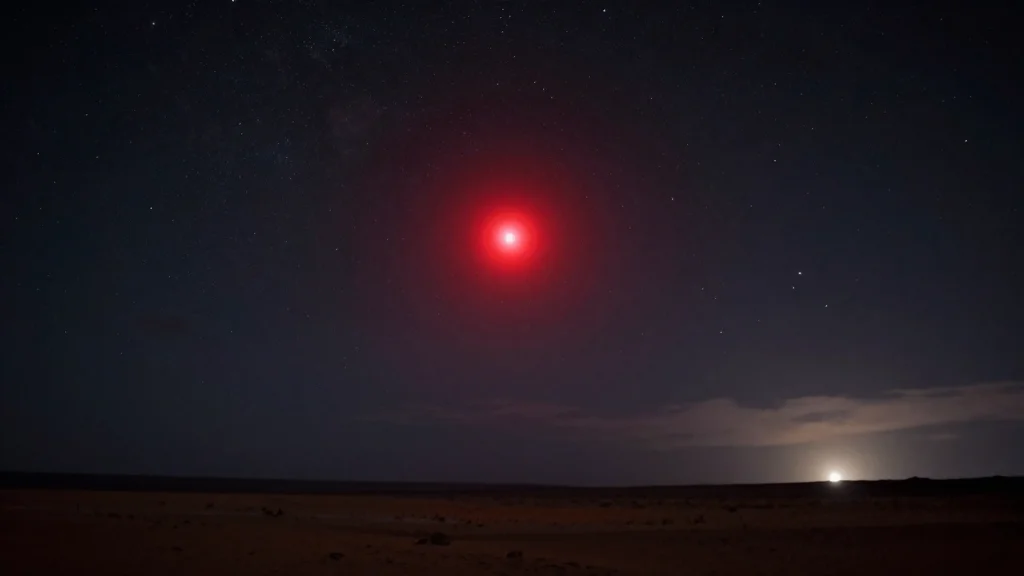
Astronomers Find Ultra‑Metal‑Poor Star SDSS J0715‑7334, Closest Pristine Relic Yet

Why It Matters
The identification of SDSS J0715‑7334 pushes the frontier of observational cosmology by providing a tangible relic of the universe’s formative epochs. Its extreme metal deficiency offers a direct probe of the chemical yields of the first supernovae, helping scientists calibrate models of early nucleosynthesis and the transition from Population III to Population II stars. Beyond astrophysics, the discovery reshapes our understanding of galaxy evolution. If dwarf satellites like the Large Magellanic Cloud indeed host a higher density of ultra‑metal‑poor stars, they become critical laboratories for studying the survival of primordial material in complex gravitational environments. This could influence future survey strategies and the allocation of telescope time toward the outskirts of the Milky Way and its companions.
Key Takeaways
- •SDSS J0715‑7334 has a metallicity of 0.005% that of the Sun, the lowest recorded to date
- •The star is a red giant likely originating from the Large Magellanic Cloud
- •Carbon content is exceptionally low, suggesting dust‑driven cooling in its formation
- •Discovery made via the Sloan Digital Sky Survey and confirmed with follow‑up spectroscopy
- •Researchers plan high‑resolution observations with ELT and JWST to refine elemental abundances
Pulse Analysis
The breakthrough underscores a shift in how astronomers target the oldest stellar populations. Historically, searches focused on the Milky Way’s halo, assuming it retained the bulk of ancient relics. This finding, however, points to satellite galaxies as richer reservoirs of ultra‑metal‑poor stars, prompting a strategic re‑orientation of survey programs toward the Magellanic Clouds and other dwarf companions.
From a theoretical standpoint, the star’s near‑absence of carbon forces a re‑examination of cooling pathways in the early universe. Conventional models prioritize carbon and oxygen line cooling, but the dust‑mediated scenario implied here could reconcile the existence of low‑mass, long‑lived stars with the limited heavy‑element budget of the first generations. If subsequent observations confirm this mechanism, it may necessitate revisions to simulations of Population III star formation, potentially altering predictions of early‑epoch star formation rates and the timeline of reionization.
Looking ahead, the synergy between ground‑based ELT-class telescopes and space‑based JWST will be pivotal. High‑resolution spectra can detect trace elements like lithium and beryllium, offering clues about primordial nucleosynthesis beyond hydrogen and helium. Moreover, a larger sample of such stars could enable statistical studies, turning a singular curiosity into a robust empirical foundation for early‑universe physics. The discovery of SDSS J0715‑7334 thus marks not just a record‑setting measurement but a catalyst for a new wave of observational and theoretical inquiry into the cosmos’s first light.
Astronomers Find Ultra‑Metal‑Poor Star SDSS J0715‑7334, Closest Pristine Relic Yet
Comments
Want to join the conversation?
Loading comments...