Astronomers Measure the Mass of a Dormant Black Hole, Our Solar System's Lost Protoplanet, and More Science Stories
Why It Matters
The black‑hole mass measurement refines models of supermassive black‑hole growth, while the protoplanet evidence reshapes theories of early planetary formation in our solar system.
Key Takeaways
- •JWST measured mass of dormant black hole 10 billion ly away
- •Black hole in galaxy MRG‑M0138 is farthest dormant measured
- •Gravitational lensing enabled direct mass estimate of early‑universe black hole
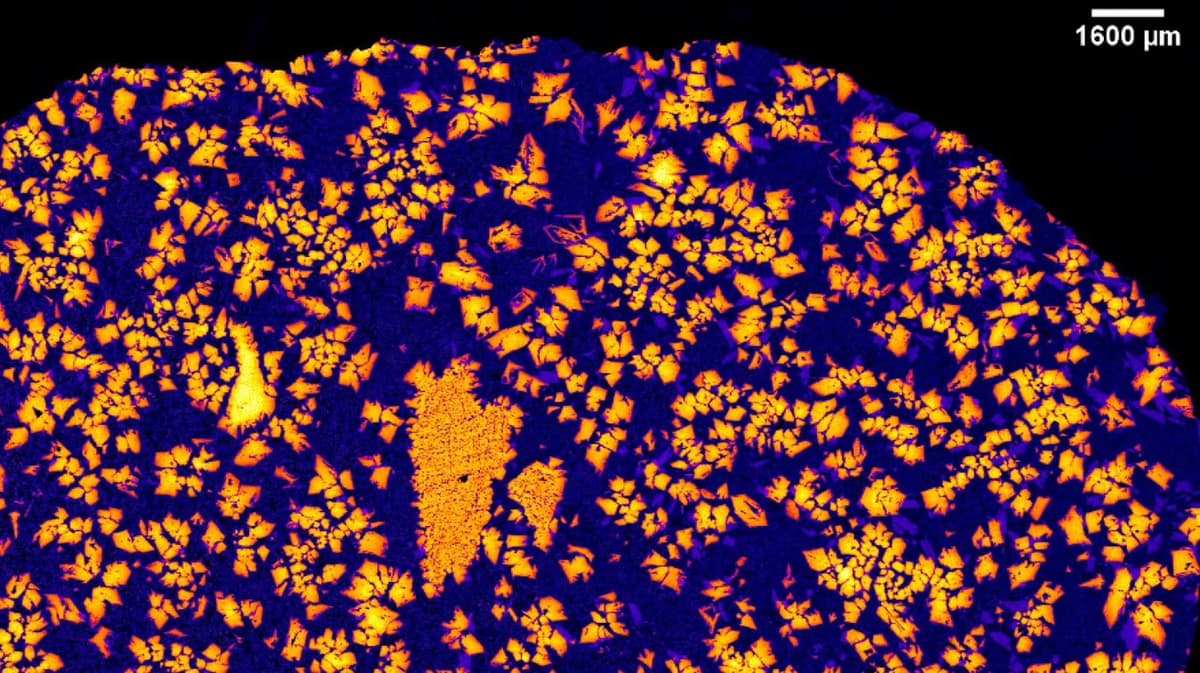
- •Angrite meteorite NWA 12774 reveals protoplanet ~1,118 mile radius
- •Findings suggest early solar system hosted Moon‑sized bodies
Pulse Analysis
The James Webb Space Telescope’s unprecedented resolution is now extending beyond exoplanet studies into the realm of black‑hole astrophysics. By pairing JWST’s infrared imaging with natural magnification from gravitational lensing, researchers could trace the orbital speeds of stars near a dormant black hole, delivering a direct mass estimate that pushes the frontier of observable black‑hole evolution back to the universe’s first few billion years. This methodological breakthrough not only validates lensing as a precise tool for weighing invisible objects but also provides a benchmark for simulations of early galaxy formation.
Dormant black holes, unlike their actively accreting counterparts, emit little radiation, making them elusive targets. The successful measurement of the MRG‑M0138 black hole demonstrates that even quiescent giants can be quantified when their gravitational imprint is amplified by intervening mass. Such data are crucial for calibrating theories that link black‑hole mass to host‑galaxy properties, offering clues about how the most massive black holes attained their size so quickly after the Big Bang.
Meanwhile, the discovery of high‑pressure clinopyroxene crystals in the angrite meteorite NWA 12774 points to a once‑existing protoplanet with a radius exceeding 1,100 miles—comparable to the Moon. This challenges the conventional view that early solar system bodies were limited to small asteroids, suggesting that sizable planetary embryos formed and were later shattered. Understanding these lost worlds informs models of planetary accretion, migration, and the chemical diversity that ultimately shaped Earth’s environment.
Astronomers measure the mass of a dormant black hole, our solar system's lost protoplanet, and more science stories
Comments
Want to join the conversation?
Loading comments...