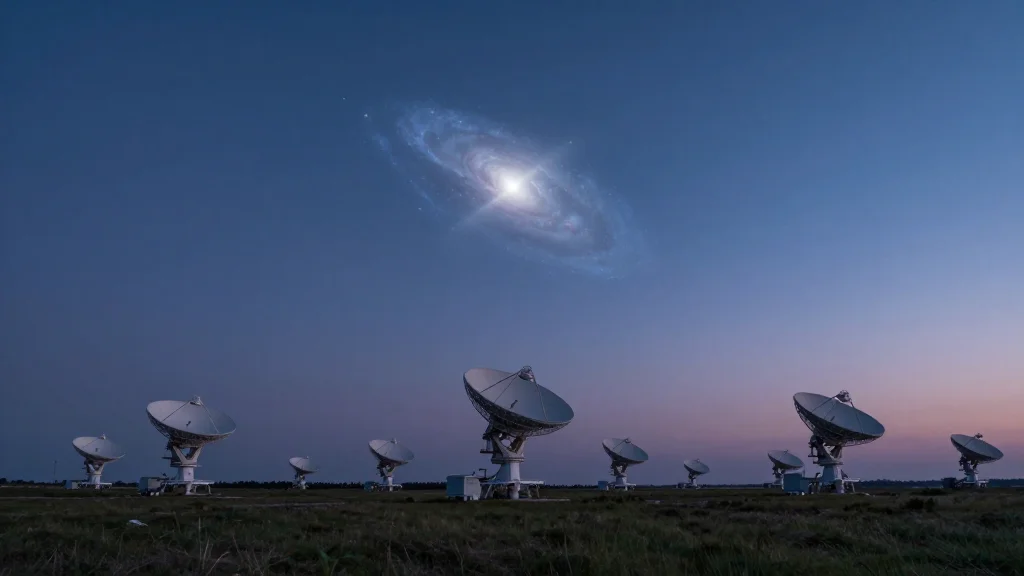
Astronomers Uncover over 1,000 Radio Galaxies with 'Wings,' Expanding a Rare Cosmic Class
Why It Matters
The enlarged sample transforms a niche phenomenon into a sizable population, allowing astronomers to test competing theories about jet reorientation and black‑hole mergers. It also enriches the pool of giant radio galaxies for studies of large‑scale cosmic environments.
Key Takeaways
- •Over 1,000 winged radio galaxies identified in LoTSS DR2.
- •382 X-shaped and 239 Z-shaped confirmed among 621 sources.
- •16% of winged galaxies qualify as giant radio galaxies (>0.7 Mpc).
- •Study expands rare subclass, enabling statistical tests of formation theories.
- •Visual inspection of 204,789 candidates yielded 1,024 winged candidates.
Pulse Analysis
Winged radio galaxies—objects whose radio lobes form distinctive X or Z patterns—have long intrigued astronomers because they hint at dramatic events such as black‑hole mergers or sudden jet realignments. Prior to this work, only a few dozen were known, limiting the ability to distinguish between competing formation models. By leveraging the unprecedented depth and sky coverage of the LOFAR Two‑meter Sky Survey Data Release 2, researchers have now compiled a catalog that multiplies the known population by an order of magnitude, opening new avenues for statistical analysis.
The team applied a size filter to the 4.3 million sources in LoTSS DR2, narrowing the field to 204,789 candidates that met a minimum angular extent. Each candidate underwent meticulous visual inspection, a labor‑intensive process that identified 1,024 winged prospects, of which 621 were confirmed. Among these, 382 exhibit classic X‑shaped morphology while 239 display Z‑shaped structures, and roughly one‑sixth exceed 0.7 Mpc, classifying them as giant radio galaxies. This systematic approach demonstrates the power of large‑scale radio surveys combined with human expertise to uncover rare astrophysical phenomena.
The expanded catalog has immediate implications for theoretical work. With a statistically robust sample, researchers can correlate winged morphology with host galaxy properties, environment density, and evidence of past mergers, refining models of jet reorientation and backflow dynamics. Moreover, the identification of numerous giant radio galaxies provides valuable laboratories for studying intergalactic medium interactions over megaparsec scales. Future multi‑wavelength follow‑ups—particularly in optical and X‑ray bands—will deepen understanding of the central engines driving these spectacular structures, cementing winged radio galaxies as key probes of galaxy evolution and black‑hole physics.
Astronomers uncover over 1,000 radio galaxies with 'wings,' expanding a rare cosmic class
Comments
Want to join the conversation?
Loading comments...