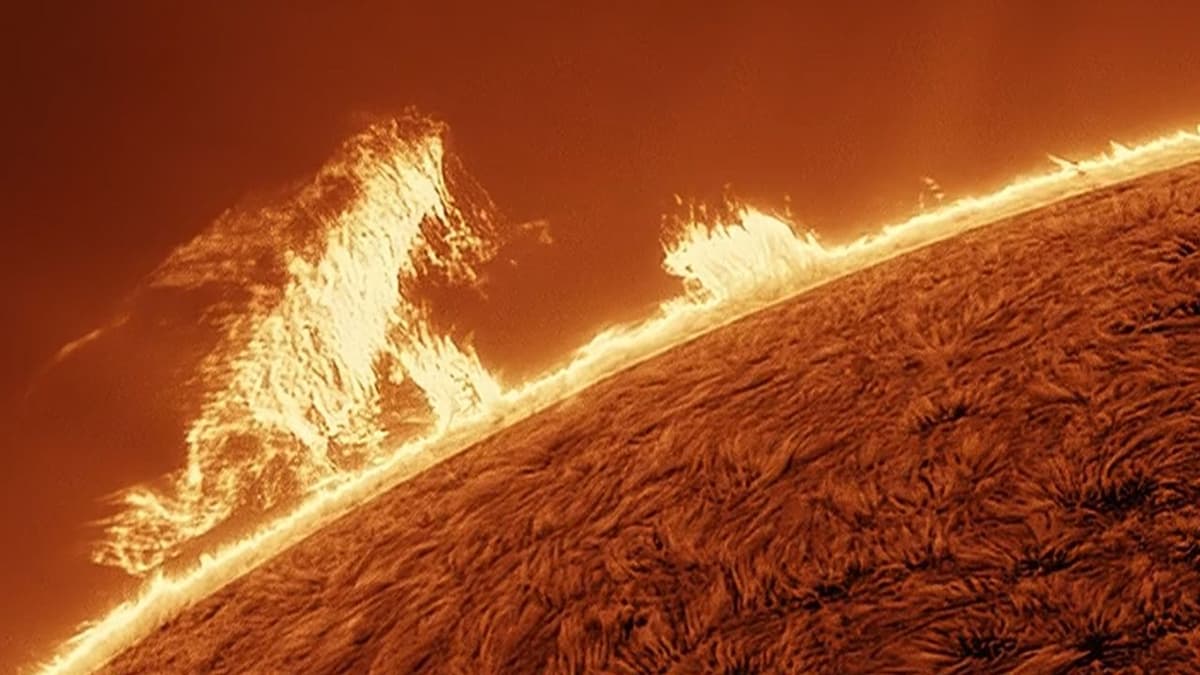
Astrophotographer Captures Colossal 'Godzilla' Plasma Cloud Stalking the Edge of the Sun (Video)
Why It Matters
The visuals provide a rare, high‑resolution look at magnetic structures that influence space weather, while demonstrating how amateur astronomers can contribute valuable data to solar science.
Key Takeaways
- •Mark Johnston captured two solar prominence videos in May 2026.
- •Prominence on May 31 resembled “Godzilla,” spanning solar limb.
- •Images recorded with 160 mm refractor and hydrogen‑alpha filter.
- •Highlights magnetic field dynamics driving plasma motion on Sun.
Pulse Analysis
Solar prominences are colossal arches of ionized hydrogen that hover above the Sun, tethered by intense magnetic fields. When these structures erupt, they can release billions of tons of plasma into space, potentially triggering geomagnetic storms that affect satellite operations and power grids on Earth. By visualizing the plasma’s motion, scientists gain insight into the Sun’s magnetic topology and the mechanisms behind coronal rain, a process where cooled material slides back along field lines. Johnston’s footage, captured during periods of clear Arizona skies, adds a vivid, time‑compressed perspective that complements data from space‑based observatories.
Amateur astrophotographers like Johnston play an increasingly important role in solar monitoring. Using a modest 160 mm refractor paired with a specialized hydrogen‑alpha filter, he isolates the 656.3 nm wavelength emitted by excited hydrogen atoms, revealing details invisible to the naked eye. The resulting timelapse condenses two hours of activity into a 25‑second clip, allowing viewers to perceive rapid magnetic reconfigurations that would otherwise be missed. Such contributions expand the observational network beyond professional telescopes, providing continuous coverage and fostering citizen‑science collaborations.
The public appeal of a “Godzilla‑sized” plasma cloud underscores the educational potential of solar imaging. By showcasing the Sun’s dynamic behavior, these images inspire interest in heliophysics and reinforce safety messages about proper solar viewing equipment. As solar cycle 25 approaches its peak, increased amateur monitoring can help track emerging active regions, offering early warnings for space‑weather events. Johnston’s work exemplifies how hobbyists, equipped with the right tools, can deliver scientifically valuable and visually compelling content that bridges the gap between research and public understanding.
Astrophotographer captures colossal 'Godzilla' plasma cloud stalking the edge of the sun (video)
Comments
Want to join the conversation?
Loading comments...