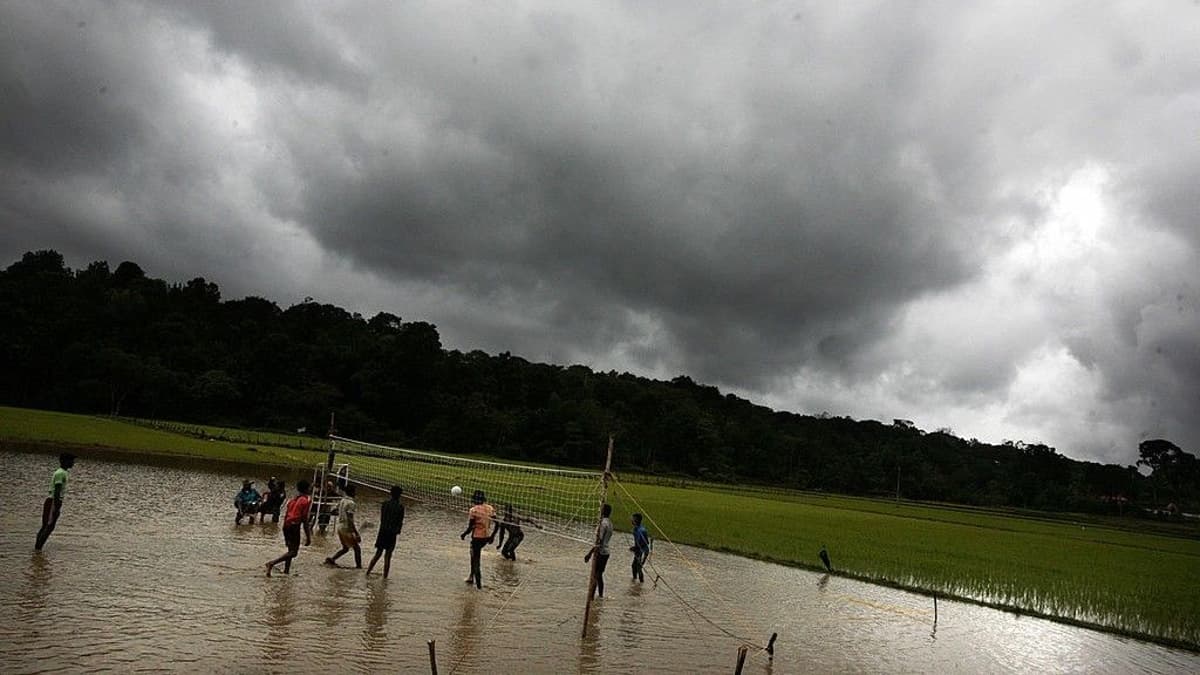
Atlantic 'Cold Blob' Is Responsible for Shifts in the Indian Summer Monsoon that Threaten over 1 Billion People
Why It Matters
The monsoon underpins food security and livelihoods for more than a billion South Asians, so understanding its Atlantic connection can sharpen early‑warning systems and guide adaptation policies.
Key Takeaways
- •Cold Atlantic blob creates stronger temperature gradient, reshaping jet stream
- •Northwest India rainfall up 25%; Indo‑Gangetic Plain rainfall down 4%
- •Models adding the blob replicate 27‑year monsoon shift, improving forecasts
- •Flood risk rises in Pakistan, drought risk grows in core agricultural regions
Pulse Analysis
The Indian summer monsoon is a climate cornerstone, delivering the bulk of annual precipitation to a region that feeds more than a billion people. Historically, its timing and intensity have been tied to the temperature contrast between the warm Indian Ocean and cooler equatorial waters. Recent observations, however, show a stark redistribution of rain: the northwest receives substantially more, while the fertile Indo‑Gangetic Plain endures a shortfall. This shift threatens crop yields, inflates flood damage in Pakistan, and jeopardizes water security across South Asia, prompting urgent calls for better predictive tools.
A team of scientists traced the anomaly to a persistent “cold blob” of unusually cool water in the North Atlantic, southeast of Greenland. The blob weakens the Atlantic Meridional Overturning Circulation, sharpening the north‑south temperature gradient that fuels the upper‑level jet stream. Enhanced jet speeds and a reinforced blocking high over the Urals redirect moist air toward northwest India, starving the central plains. By inserting and removing the blob in high‑resolution climate simulations, researchers demonstrated that the Atlantic feature alone can reproduce the 27‑year monsoon trend, highlighting a missing piece in many global models.
The practical payoff lies in forecasting. Seasonal outlooks that account for Atlantic sea‑surface temperature anomalies could anticipate extreme rainfall or drought weeks in advance, giving governments and farmers a critical window to mobilize resources. Moreover, the finding underscores the interconnectedness of distant ocean basins, suggesting that monitoring the North Atlantic may become a standard component of South Asian climate services. As climate change continues to reshape ocean currents, further research will be needed to refine model representations and assess how future Atlantic warming—or continued cooling—might alter monsoon behavior.
Atlantic 'cold blob' is responsible for shifts in the Indian summer monsoon that threaten over 1 billion people
Comments
Want to join the conversation?
Loading comments...