Why It Matters
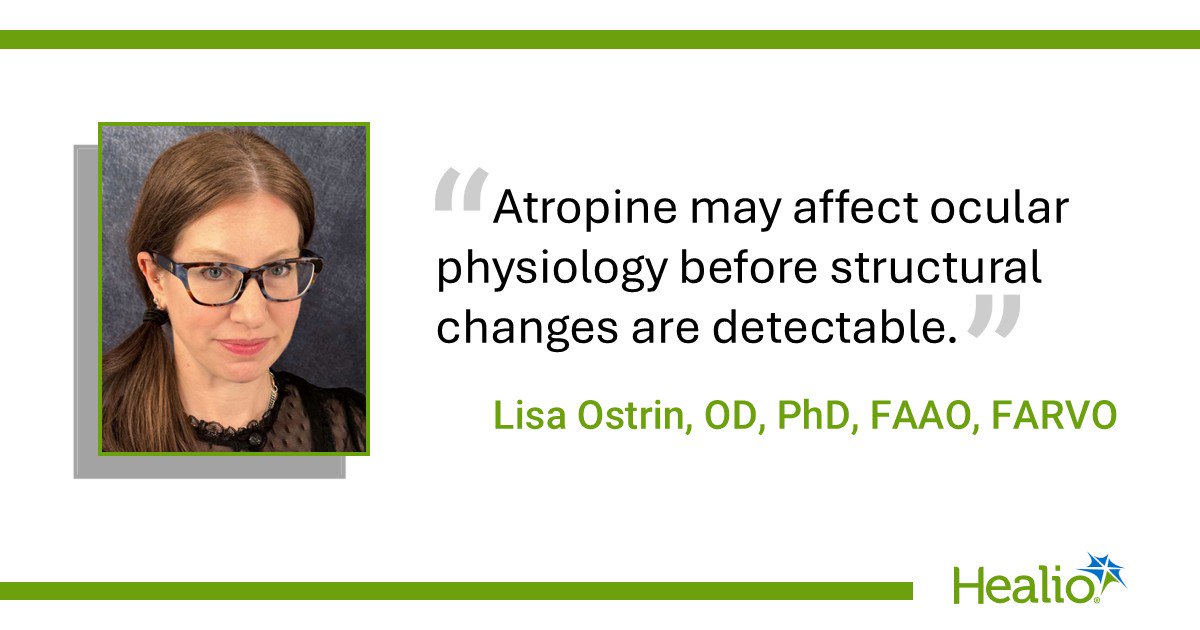
The temporary perfusion change hints at an early physiological pathway through which atropine may control myopia, guiding future trials and therapeutic strategies.
Key Takeaways
- •Single low-dose atropine reduces superficial retinal perfusion after 1 hour.
- •Perfusion reduction disappears by 24 hours, independent of concentration.
- •No changes observed in axial length, retinal or choroidal thickness.
- •Study involved 20 healthy adults, double‑masked, randomized design.
- •Findings suggest early vascular response may inform myopia‑control mechanisms.
Pulse Analysis
Atropine eye drops have become a cornerstone of myopia control, yet clinicians still debate how a muscarinic antagonist curtails eye growth. While long‑term studies demonstrate slowed axial elongation in children, the short‑term physiological cascade remains elusive. By focusing on retinal vascular dynamics, the recent double‑masked trial adds a new layer of insight, suggesting that atropine may first alter blood flow in the superficial vascular complex before any measurable structural changes appear. This aligns with emerging theories that ocular perfusion and metabolic signaling influence scleral remodeling.
The investigation enrolled twenty healthy adults with a mean age of 25.5 years, exposing each participant to a single dose of 0.01%, 0.025%, 0.05% or 0.1% atropine or placebo across five sessions. Optical coherence tomography angiography revealed a statistically significant dip in perfusion density around the fovea one hour post‑instillation (P=.02), an effect that dissipated by the 24‑hour mark and showed no dose‑response relationship. Importantly, axial length, retinal thickness, and choroidal thickness remained unchanged, underscoring that vascular modulation precedes anatomical adaptation. A companion analysis confirmed that pupil dilation and reduced accommodation persisted up to a day, highlighting distinct time courses for functional versus structural outcomes.
These findings carry practical implications for clinicians and researchers alike. If transient vascular shifts are part of atropine’s mechanism, pediatric trials should incorporate perfusion metrics to identify early responders and refine dosing regimens. Moreover, understanding the temporal window of physiological change could inform combination therapies that target both vascular and structural pathways. As myopia prevalence climbs globally, elucidating every facet of atropine’s action will be essential for optimizing treatment efficacy and safety.
Atropine shows temporary effect on retinal perfusion
Comments
Want to join the conversation?
Loading comments...