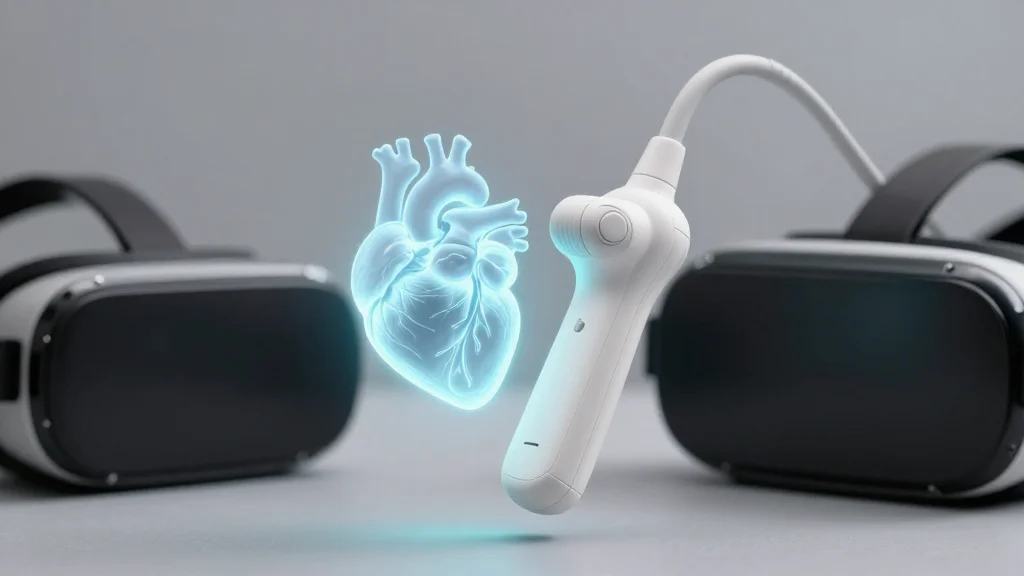
Augmented Reality Improves Novice Users' Ultrasound Skills
Why It Matters
By democratizing 3D ultrasound visualization, AR‑VIU could reduce training barriers, cut procedure time, and expand access to advanced imaging in cost‑sensitive settings.
Key Takeaways
- •AR‑VIU boosts novice ultrasound accuracy to expert levels
- •System creates 3D images from standard 2D scans via VR headset
- •Prototype costs less than traditional 3D ultrasound machines
- •Study of 18 participants shows higher task performance and preference
- •Real‑time rendering reduces exam time and training complexity
Pulse Analysis
Ultrasound remains the most portable imaging modality, yet its reliance on 2D slices hampers spatial understanding, especially for trainees. Traditional 3D ultrasound systems address this gap but demand expensive hardware and specialized expertise, limiting widespread adoption. Augmented reality offers a middle ground: overlaying digital depth cues onto real‑world views, thereby enhancing perception without overhauling existing workflows. The emergence of AR‑VIU reflects a broader push to embed immersive technologies into routine diagnostics, aligning with hospitals' goals to improve efficiency while controlling costs.
AR‑VIU’s architecture blends a compact, square‑array probe with a chirped data acquisition pipeline that streams compressed voxel data to an Unreal Engine graphics module. The engine translates raw ultrasound signals into a manipulable 3D volume rendered in real time on a consumer‑grade VR headset. This approach sidesteps the need for dedicated 3D transducers, slashing equipment expenses and simplifying integration with current ultrasound suites. Moreover, the use of widely supported software stacks accelerates development cycles and facilitates future upgrades, such as AI‑driven segmentation or remote collaboration.
The clinical implications are twofold. First, medical schools and residency programs can leverage AR‑VIU to shorten the learning curve, allowing novices to achieve expert‑level interpretation faster, which translates into reduced scan times and higher patient throughput. Second, point‑of‑care environments—emergency rooms, intensive care units, and remote clinics—stand to benefit from more intuitive imaging, potentially improving diagnostic accuracy for cardiac, obstetric, and vascular assessments. As the technology matures, investors and device manufacturers are likely to explore scalable production, positioning AR‑VIU as a catalyst for the next generation of affordable, high‑fidelity ultrasound solutions.
Augmented reality improves novice users' ultrasound skills
Comments
Want to join the conversation?
Loading comments...