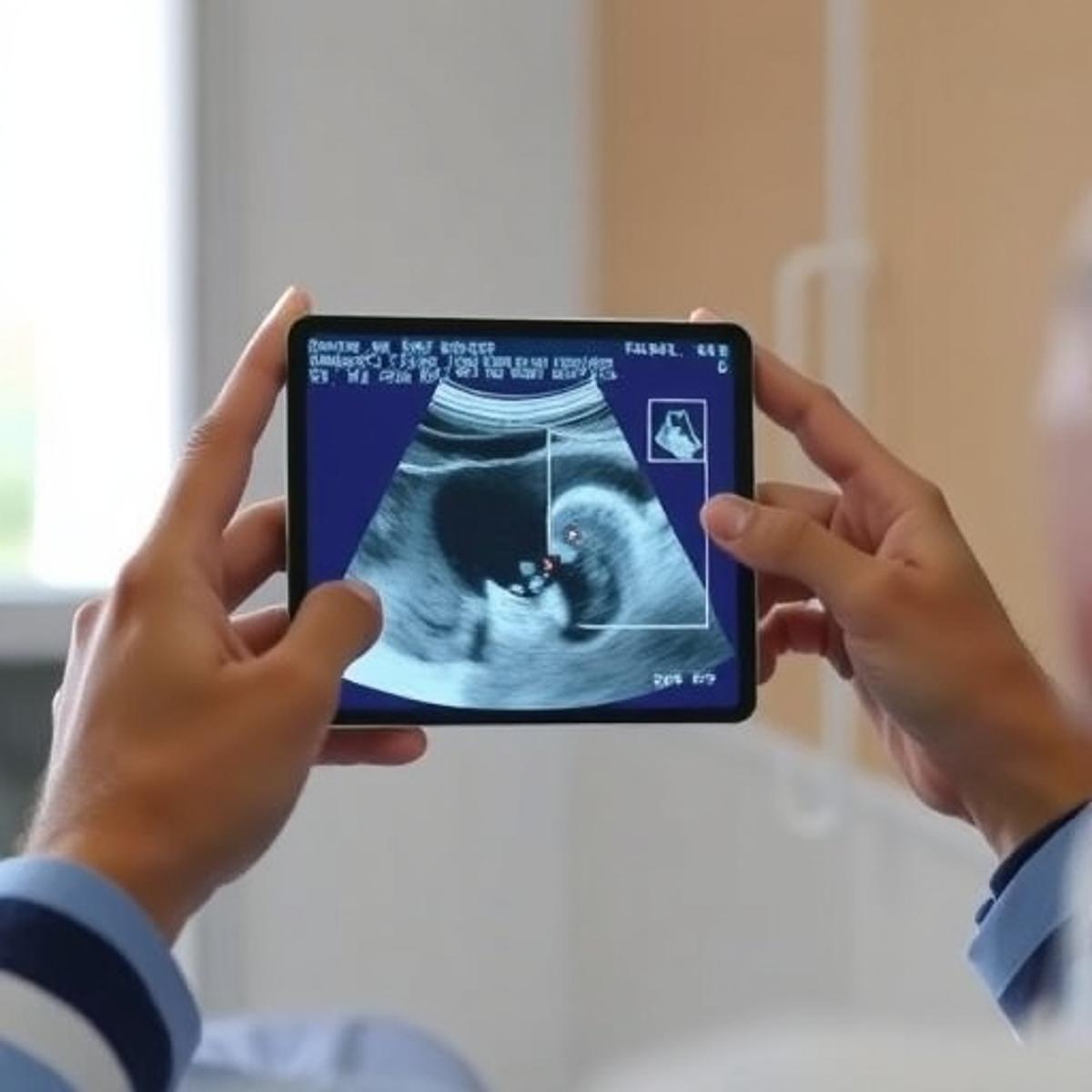
Augmented Reality Technology Promises to Simplify Interpretation of Medical Ultrasounds
Why It Matters
By simplifying image interpretation, the AR solution accelerates patient triage, lowers training barriers, and expands ultrasound’s reach into underserved settings, reshaping diagnostic workflows across healthcare.
Key Takeaways
- •AR headset overlays real‑time ultrasound data for clinicians
- •Study shows 30% faster diagnosis with AR assistance
- •Technology compatible with existing portable ultrasound machines
- •FDA cleared prototype expected to launch Q4 2027
- •Market forecast $1.2B by 2032, driven by radiology demand
Pulse Analysis
Augmented reality is poised to transform point‑of‑care imaging by merging live ultrasound feeds with spatially anchored graphics. The platform uses depth‑sensing cameras and AI‑driven segmentation to project organ outlines, flow measurements, and diagnostic suggestions directly onto the patient’s body. Because it plugs into standard ultrasound probes via a universal interface, hospitals can adopt the technology without replacing existing hardware, preserving capital expenditures while unlocking new capabilities.
Clinical trials across three major academic centers demonstrated that physicians using the AR overlay identified liver lesions and vascular anomalies up to 30% faster than with conventional screens. Trainees reported a steeper learning curve, achieving competency after half the typical number of supervised scans. Moreover, the hands‑free interface reduces the need for eye‑hand coordination, decreasing fatigue during lengthy procedures and improving sterility by limiting screen adjustments.
The commercial outlook is equally compelling. The FDA’s clearance of the prototype clears a regulatory hurdle that has slowed previous AR medical devices. Market analysts estimate the global AR‑ultrasound segment will grow to roughly $1.2 billion by 2032, driven by demand in emergency medicine, obstetrics, and remote tele‑health clinics. Venture capital has already flowed into the startup behind the technology, positioning it for strategic partnerships with major ultrasound manufacturers and rapid scaling once the Q4 2027 launch commences.
Augmented Reality Technology Promises to Simplify Interpretation of Medical Ultrasounds
Comments
Want to join the conversation?
Loading comments...