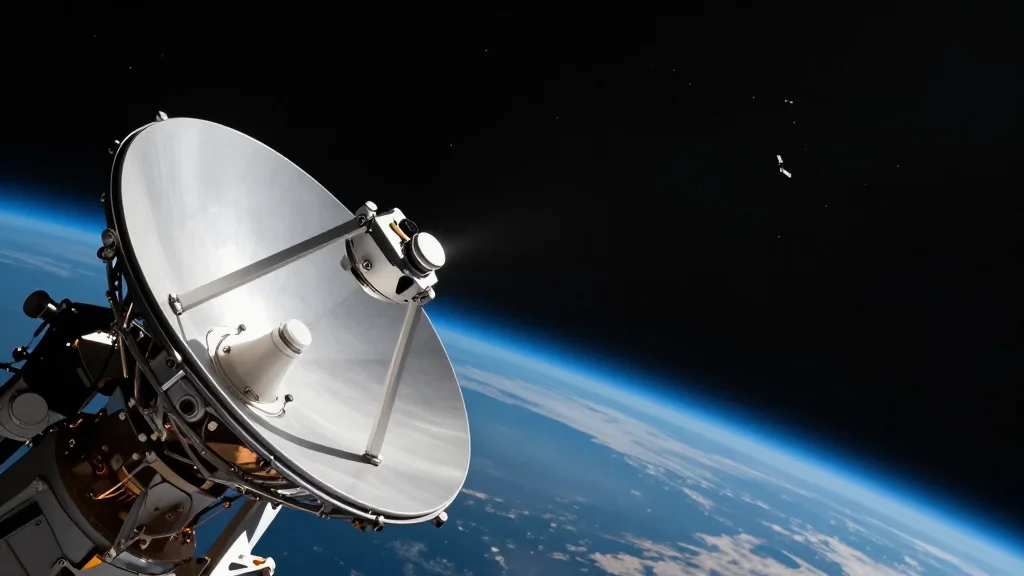
Author Correction: Satellite Megaconstellations Will Threaten Space-Based Astronomy
Why It Matters
The amendment shows that while megaconstellations still threaten space‑based astronomy, the severity is lower than initially feared, influencing risk assessments for upcoming missions like ARRAKIHS and guiding mitigation policy.
Key Takeaways
- •Corrected ARRAKIHS trail count: 3.22 per exposure vs 69 originally
- •With 1 000 000 satellites, trails drop to 4.97 per exposure
- •Field‑of‑view coverage falls to 0.914% from 22.3%
- •92 % of ARRAKIHS images still affected by trails
- •Correction stems from minimum Earth‑limb angle change to 55.7°
Pulse Analysis
The rapid deployment of satellite megaconstellations has sparked intense debate among astronomers, who worry that bright trails will corrupt observations from ground‑based and orbital telescopes. In December 2025, Nature published a high‑profile analysis that warned of severe contamination for the proposed ARRAKIHS mission, a fast‑implementation ESA telescope designed to probe exoplanet atmospheres. The study’s alarming figures—up to 127 satellite streaks per exposure with a million satellites—prompted calls for stricter orbital regulations and mitigation technologies.
A recent author correction clarifies a critical modeling error: the original work assumed a minimum Earth‑limb angle of 7.6°, identical to Hubble’s, rather than the mission‑specific 55.7°. This adjustment slashes the expected trail frequency to 3.22 per exposure for a 560 000‑satellite constellation and to 4.97 for a million satellites, while the portion of the field of view obscured by trails falls to under 1%. Despite the reduction, roughly 92% of ARRAKIHS exposures would still contain at least one streak, underscoring that even a corrected outlook leaves substantial observational risk.
The revised numbers reshape how stakeholders evaluate the trade‑off between commercial satellite growth and scientific return. Satellite operators may need to adopt lower orbital altitudes, coordinated maneuvering, or reflective coatings to lessen brightness, while astronomers are likely to prioritize adaptive scheduling and post‑processing algorithms. Policymakers, too, can use the corrected data to craft evidence‑based guidelines that balance economic benefits with the preservation of critical space‑based research capabilities.
Author Correction: Satellite megaconstellations will threaten space-based astronomy
Comments
Want to join the conversation?
Loading comments...