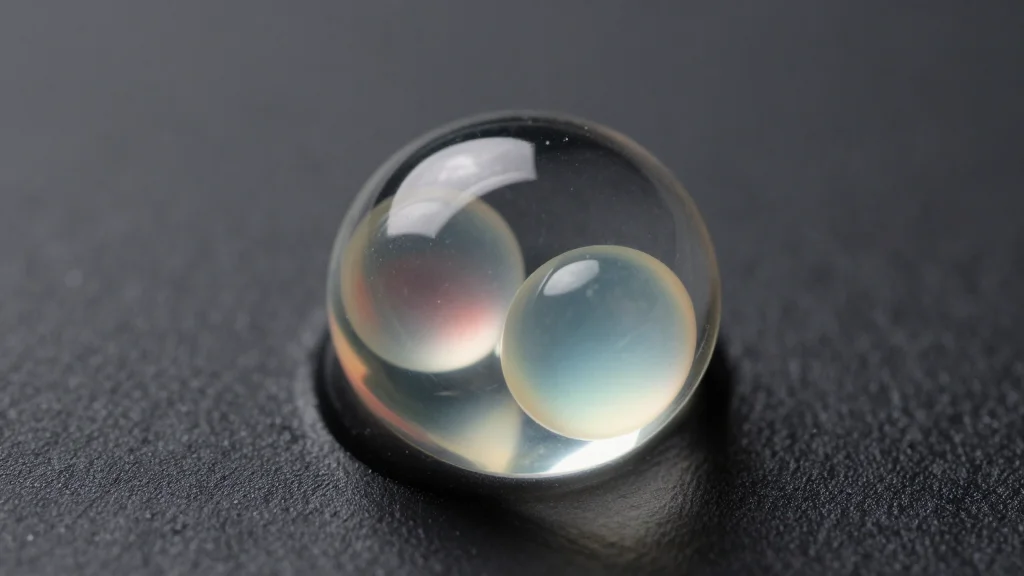
Autonomous and Communicative Microcapsule Systems for Life‐Like Homeostatic pH Regulation
Why It Matters
The technology demonstrates a scalable route to embed self‑regulating chemical functions in soft matter, opening new markets for smart biomedical devices and adaptive environmental sensors. Its autonomous control reduces reliance on external hardware, lowering system complexity and cost.
Key Takeaways
- •Dual microcapsules enable programmable pH oscillations via enzymatic feedback
- •Hybrid‑junction 3D‑printed microfluidics produce defect‑free capsules
- •Adaptive shell permeability provides pH‑mediated negative feedback
- •Inter‑capsule communication stabilizes pH without external control
- •Platform opens pathways for autonomous biomedical and environmental soft materials
Pulse Analysis
The quest to replicate life‑like homeostasis in synthetic systems has long been hampered by the difficulty of integrating autonomous feedback loops into soft materials. Traditional approaches rely on external actuators or static chemical reservoirs, limiting scalability and responsiveness. By leveraging a dual‑microcapsule architecture that couples urease‑driven alkalinization with esterase‑mediated acidification, the new platform introduces a self‑balancing pH network that can be programmed to oscillate or settle at a target value, mirroring cellular regulation.
Key to this breakthrough is the use of hybrid‑junction 3D‑printed microfluidic devices with epoxy‑modified channels. This design eliminates surface defects that typically cause droplet instability, enabling the production of monodisperse capsules with precisely tuned shell permeability. The shells respond dynamically to ambient pH, tightening or loosening to modulate substrate exchange, which creates a built‑in negative feedback mechanism. When urease and esterase capsules coexist, they exchange chemical cues through the shared medium, orchestrating collective behavior that stabilizes the system without any external monitoring.
From a commercial perspective, the ability to embed autonomous chemical regulation into soft matrices unlocks a suite of high‑value applications. In biomedical devices, such capsules could maintain optimal pH for drug release or tissue engineering scaffolds, reducing the need for power‑intensive control electronics. Environmental sensors could self‑adjust to fluctuating conditions, extending operational lifespans in remote deployments. As industries seek greener, more adaptable materials, this microcapsule technology positions itself as a foundational component for the next generation of intelligent, low‑maintenance soft systems.
Autonomous and Communicative Microcapsule Systems for Life‐Like Homeostatic pH Regulation
Comments
Want to join the conversation?
Loading comments...