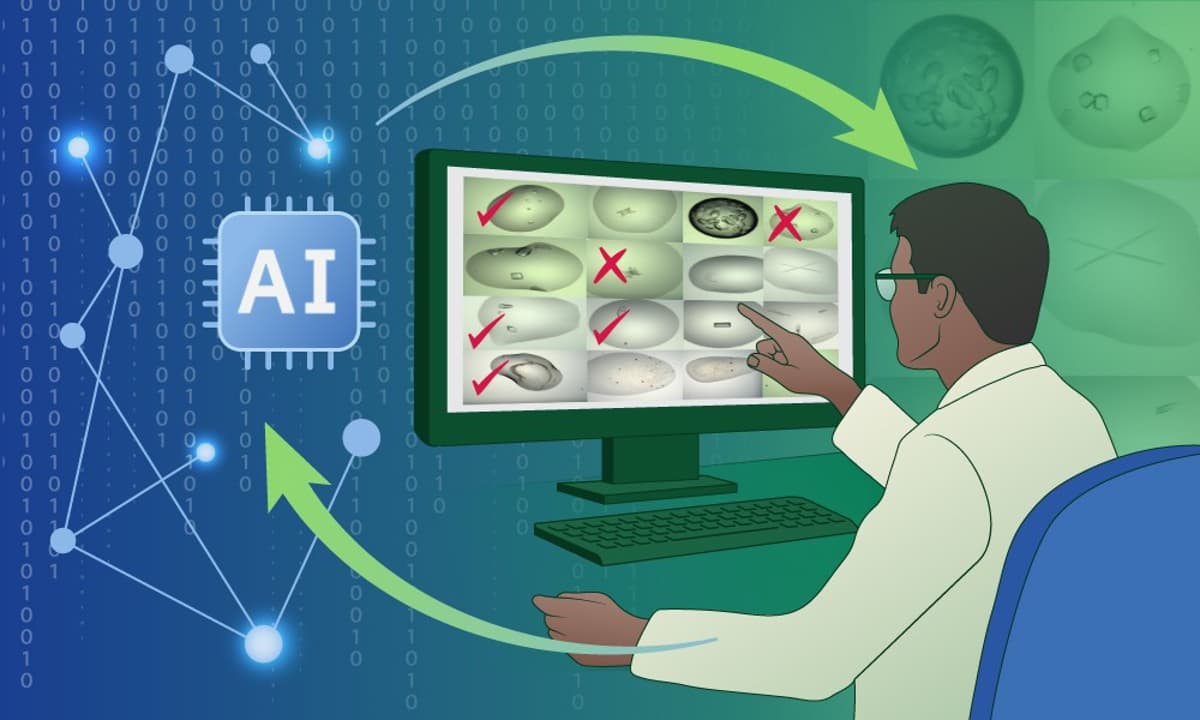
AXIS: A Lab-in-the-Loop Machine Learning Method for Automating Crystal Screening
Why It Matters
By eliminating a major bottleneck in macromolecular crystallography, AXIS accelerates structure‑based drug design and reduces labor‑intensive image analysis, delivering faster insights for both basic research and pharmaceutical development.
Key Takeaways
- •AXIS automates analysis of ~13,000 crystal images per screen
- •Lab‑in‑the‑loop training boosted prediction accuracy after two iterations
- •Model is open‑source on Hugging Face for global adoption
- •Integration with CRIMS enables end‑to‑end crystallography workflow
- •Future work explores self‑supervised learning and automated crystal harvesting
Pulse Analysis
Macromolecular crystallography remains a cornerstone of structural biology, yet the sheer volume of images generated during crystal screening has long required painstaking manual inspection. Each screening can produce upwards of 13,000 photographs, with only a small fraction revealing viable crystals. This data deluge creates a bottleneck that slows downstream X‑ray diffraction and, ultimately, the pace of drug discovery. As laboratories adopt robotics and remote experiment control, the need for intelligent, scalable image analysis has become increasingly urgent.
The AXIS system addresses this gap by marrying a large Vision Transformer model with a lab‑in‑the‑loop training regimen. Researchers first pre‑trained the model on millions of generic images, then fine‑tuned it using a curated crystallography dataset before applying a second round of expert‑guided corrections. This iterative feedback loop dramatically reduced false positives and "silly" errors, delivering near‑real‑time crystal identification directly within the CRIMS platform. Because the trained weights are hosted on Hugging Face, any lab can download and adapt the model, fostering a collaborative ecosystem that extends beyond EMBL Grenoble.
Beyond immediate efficiency gains, AXIS signals a broader shift toward fully automated crystallisation pipelines. Ongoing work explores self‑supervised learning on unlabelled image archives, promising even richer feature extraction without costly annotation. Coupled with upcoming automated crystal‑harvesting hardware, the technology could streamline the entire workflow from protein sample to diffraction data. Backed by EU Horizon 2020 funding, AXIS exemplifies how AI can unlock higher‑throughput structural studies, accelerating the translation of molecular insights into therapeutic candidates.
AXIS: a lab-in-the-loop machine learning method for automating crystal screening
Comments
Want to join the conversation?
Loading comments...