Backyard Astronomer Wins National Medal for 100 Exoplanet Discoveries

Why It Matters
The recognition of Chris Stockdale underscores the democratization of astronomical research, where high‑quality contributions can come from individuals outside traditional institutions. By validating exoplanet candidates, citizen scientists accelerate the pipeline from detection to characterization, enabling faster scientific returns from costly space missions. Moreover, the award signals to funding bodies and research consortia that supporting amateur networks can yield tangible scientific dividends. As exoplanet catalogs swell, the bottleneck shifts from detection to confirmation—a role that distributed, automated backyard observatories are uniquely positioned to fill.
Key Takeaways
- •Chris Stockdale received the 2026 Berenice & Arthur Page Medal for confirming up to 100 exoplanets.
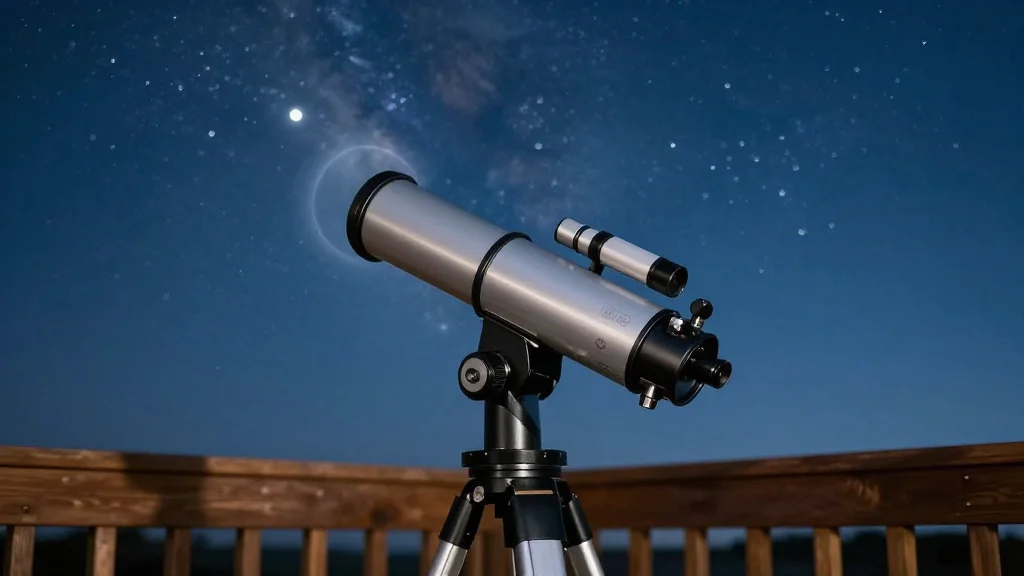
- •His backyard observatory uses a 320‑mm automated telescope to capture transit light curves.
- •Stockdale’s data support NASA‑linked missions such as TESS and the upcoming PLATO mission.
- •He has contributed to more than 100 peer‑reviewed scientific papers on exoplanet discovery.
- •The award highlights the growing institutional acceptance of citizen‑science contributions in astronomy.
Pulse Analysis
The medal awarded to Stockdale reflects a tipping point where amateur contributions are no longer peripheral but integral to the exoplanet discovery ecosystem. Historically, professional observatories dominated follow‑up work, but the sheer volume of candidates from missions like TESS has forced a re‑evaluation of resource allocation. By leveraging a global network of skilled amateurs, the community can achieve near‑continuous coverage, reducing validation latency from months to weeks.
Economically, the model is compelling. A modest investment in a high‑quality backyard setup yields data that would otherwise require expensive telescope time. This cost‑effectiveness is prompting agencies to formalise partnerships with citizen scientists, offering data pipelines, training, and even micro‑grants. The trend mirrors other scientific domains—such as biodiversity monitoring—where crowdsourced data have become a cornerstone of research.
Looking forward, the synergy between space‑based surveys and ground‑based amateur networks will likely deepen. As missions target smaller, potentially habitable worlds, the need for precise timing and multi‑wavelength follow‑up will increase. Stockdale’s recognition serves as a proof‑point that with the right tools and coordination, the line between professional and amateur astronomy is blurring, ushering in a more inclusive era of discovery.
Backyard Astronomer Wins National Medal for 100 Exoplanet Discoveries
Comments
Want to join the conversation?
Loading comments...